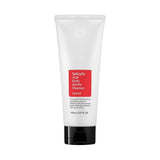
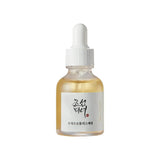
Korean Hair Care

This selection of Korean hair carebrings together shampoos, masks, and scalp treatments from Korea, for dry, fine, or color-treated hair, or scalps that get oily quickly. K-Beauty approaches hair just as it does the face: you start with the skin—in this case, the scalp—before treating the lengths. A Korean shampooshould therefore be chosen first according to your roots, and a Korean hair maskaccording to the condition of your ends.

The products available here are selected for their composition and real-world use: a suitable cleansing base, active ingredients listed on the label rather than vague promises, and textures that rinse out without weighing hair down. We preferred a short, clear selection over an endless hair aisle, so that you can build your Korean hair routinein two steps, not ten. Below the grid, you will find how to choose based on your scalp and answers to the most frequently asked questions.

0 products

No products found
Use fewer filters or remove all

How to choose your Korean hair care product?

Choose your Korean hair care based on your scalp, not your lengths. An oily or irritated scalp calls for a gentle, targeted shampoo, while dry ends call for a mask or a leave-in treatment. The third criterion is the cleansing base, which makes all the difference for fragile hair.

Which Korean shampoo for an oily scalp?

A scalp that gets greasy in a day or two needs regular but gentle cleansing. A shampoo that is too stripping can leave the scalp feeling tight and uncomfortable without solving the problem, which is why Korean formulas focused on the roots, often called scalp shampoos, are so beneficial.

Check the ingredient list: refreshing extracts like rosemaryor mint, and gentle exfoliants like salicylic acid, help to unclog without being harsh. Massage the roots for a good minute before rinsing; that’s where the product does its work.

Which Korean hair care for dry and damaged hair?

For dry, brittle, or bleached lengths, the shampoo matters less than what comes after. A Korean hair mask applied to the lengths and ends, never the roots, provides the nourishment that a shampoo cannot.

These formulas often contain proteins, ceramides, or light oils, with short application times. If your hair is fine, prefer a very light leave-in treatment, in small quantities, to maintain volume.

Sulfate-free Korean shampoo: for whom?

Sulfates, like sodium lauryl sulfate, are effective but powerful cleansing agents. A sulfate-free Korean shampoo uses gentler bases, often derived from amino acids or coconut, which foam less but are kinder to the hair fiber and scalp.

It is worth it if your hair is colored, curly, or dry, or if your scalp feels tight after washing. On a very oily scalp or one with a lot of product buildup, a more classic shampoo once a week can still be useful for a deep clean.

Your Reviews of Our Korean Hair Care and Holy Skin Products

4 steps, that's all you need to get started

Cleanse, treat, moisturize, protect: our routines are designed according to the principles of Korean skincare, in a simplified version.

 
Routine-Mature_1_37787616-540d-4e69-a357-df0339c4c531 - Holy Skin

We take care of the selection. All you have to do is apply a routine adapted to your skin.

I SHOP MY ROUTINE
Purito-Wonder-Releaf-Centella-Serum-Unscented-3 - Holy Skin

Don't know your skin type? In just a few questions, our diagnostic tool will guide you towards the right routine.

I MAKE MY DIAGNOSIS

The best Korean hair brands

A good Korean haircare brand can be identified by three verifiable factors: a readable ingredient list, certifications issued by a third-party organization, and a range designed for the scalp, not just the lengths.Aromaticaticks all three boxes: founded in 2004, manufactured in its own factory in Korea, certified by The Vegan Society, and featuring rosemary as the signature ingredient in its haircare line. It is the first brand in our hair selection, chosen for its serious approach to scalp care.

Holy Skin’s advice for choosing the right products

Noa, co-founder of Holy Skin, builds our daily K-Beauty routines, and she applies the exact same logic to hair.

“Your scalp is skin. You wouldn’t put a harsh cleanser on your face, so don't do it on your head. Start with a shampoo suited to your roots, save the mask for your ends, and give your routine two or three weeks before judging it.”

This timeframe matters: a change in shampoo should be judged over several washes, not just the first one. And if you want to understand why overly harsh cleansing disrupts the skin, whether on your face or scalp, read how the skin barrier works.

Frequently asked questions about Korean hair care

checkbox

What is the best Korean hair product?

There is no single best product: the right Korean hair care depends on your scalp and the condition of your lengths. If you only have to choose one, start with the shampoo, as it is what touches the roots with every wash.

A shampoo adapted to your scalp—oily, dry, or sensitive—is the foundation upon which everything else rests. The mask comes next, as a supplement, once or twice a week on the lengths.

checkbox

How do Korean women get such beautiful hair?

Hair texture is partly dependent on genetics, and that cannot be copied. What can be copied is a method: the Korean hair routine treats the scalp like skin in its own right, with gentle cleansing, sometimes a scalp scrub, and then targeted treatments for the lengths.

The rest lies in the techniques: massaging at the roots when washing, drying by patting rather than rubbing, and using moderate heat from a hair dryer. None of these actions are spectacular on their own; it is their consistency that counts.

checkbox

What is the Korean hair care routine?

A Korean hair care routine consists of three or four steps: a shampoo adapted to the scalp, a conditioner or mask on the lengths, and then a leave-in treatment or a light oil on the ends. Once or twice a week, some people add a scalp exfoliant before shampooing.

You don't have to do everything. Start with the shampoo and mask, observe your hair for a few weeks, and then only add a step if a specific problem persists.

checkbox

Can a Korean shampoo help with hair loss?

Shampoo only stays in contact with the scalp for a few minutes, which limits its effectiveness against established hair loss. Korean so-called anti-hair loss shampoos often combine extracts like rosemary, ginseng, or caffeinefor a healthier scalp, not to regrow hair.

Regarding evidence, a 2015 study compared rosemary oil to 2% minoxidilover six months, with similar results, but on a small group and in the form of oil, not shampoo (Source: Panahi et al., SKINmed, 2015, link to be added manually). If your hair loss is sudden or lasts for more than a few months, consult a doctor or dermatologist.

checkbox

How to use a Korean hair mask?

After shampooing, towel-dry your hair, then apply the Korean hair mask from mid-lengths to ends, avoiding the roots so as not to weigh them down. Leave it on for the time indicated on the packaging, then rinse with lukewarm water.

Once or twice a week is enough for most hair types. For very dry or bleached hair, you can increase this to three times, simply replacing your conditioner on those days.

Want the same approach for your face? Our free skin diagnosticsuggests a Korean routine tailored to your skin type in just a few questions.

  • to_redeem

    Free delivery

    From 60€ of purchases

  • verified

    100% authentic care

    Imported directly from Korea

  • encrypted

    Secure payment

    Buy with confidence

  • local_shipping

    Express shipping

    2 to 3 business days in France