
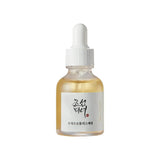
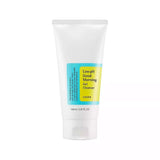


Double cleansing is the technique that distinguishes truly clean skin from "almost clean" skin. In two complementary steps, you eliminate what a single product cannot remove on its own: oily makeup, pollution, SPF, then residual toxins and excess sebum. Result: the active ingredients in your routine penetrate better, pores are unclogged, and your complexion brightens in just a few weeks.
In this guide, you'll discover how to perform double cleansing according to your skin type, how often, and which mistakes Koreans have been avoiding for decades.
Looking for a Korean cleansing duo? Selection of Korean cleansers suitable for every skin type, formulated without harsh sulfates. (see cleansing oils and Korean cleansing gels)
What exactly is double cleansing? 🧴
Double cleansing is a two-step Korean method: a first lipid-based product (oil, balm, or oily micellar water) dissolves oily impurities, followed by a second water-based product (gel, foam, or milk) that cleanses the skin's surface. The two steps are complementary and not interchangeable.
The chemistry is simple: like dissolves like. Waterproof makeup, SPF, and oxidized sebum are oil-soluble. A cleansing gel alone cannot effectively capture them. Cleansing oil, applied to dry skin, emulsifies these residues upon contact with water to rinse them away without compromising the skin barrier.
The second cleanse then removes water-soluble impurities (sweat, fine pollution, residues from the first product) and regulates the skin's pH to prepare it for subsequent treatments. This precise sequencing explains why Korean skin is renowned for its fine texture and absence of visible pores.
A 2023 study published in the Journal of Cosmetic Dermatology shows that a double cleansing approach reduces the amount of residual PM2.5 pollution particles on the skin by 62% compared to a single cleanse.
How to perform a perfect double cleanse, step by step? ✋

The correct technique is done only in the evening, on dry skin for the first step. Here is the precise protocol:
- Step 1 — Cleansing oil on dry skin. Pump 2 to 3 presses of cleansing oil into your palms. Massage your face in circular motions for at least 60 seconds: temples, T-zone, around the nose, chin. Emulsification (the texture becoming milky upon contact with water) indicates that impurities are loosening. Add a few drops of lukewarm water, massage for another 15 seconds, then rinse.
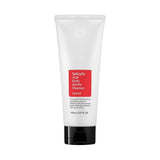
- Step 2 — Cleansing gel or foam on damp skin. Apply the second cleanser to still slightly damp skin. Lather between your palms before applying to avoid rubbing concentrated product directly on the skin. Massage for 30 to 45 seconds, then rinse with cool or lukewarm water to close the pores.
Expert tip: many people rinse cleansing oil too quickly without allowing enough time for emulsification to occur. If your skin feels greasy after rinsing, it means you didn't wait long enough for the water-oil contact. Always allow 10 to 15 seconds after adding water before rinsing.
Double cleansing according to your skin type: concrete adaptations 🎯
Double cleansing adapts to every skin type. The method remains the same, but the choice of products drastically changes the results.
| Skin Type | 1st Step | 2nd Step | Caution |
|---|---|---|---|
| Oily Skin | Light non-comedogenic cleansing oil (jojoba, grape seed) | Purifying foaming gel without sulfates | Do not over-cleanse: more than 2x a day = sebum rebound effect |
| Combination Skin | Light oil or oily cleansing gel | Gentle gel or balancing foam | Focus on T-zone in the 1st step, gentler on cheeks |
| Dry or Sensitive Skin | Nourishing cleansing balm or rich oil | Cleansing milk or fragrance-free creamy gel | Avoid water that is too hot, which aggravates dehydration |
| Acne-Prone Skin | Non-comedogenic oil (centella, diluted tea tree) | Salicylic acid gel or mild BHA | Never rub: rubbing irritates and spreads bacteria |
| Normal Skin | Universal oil or light balm | Gentle foaming gel | Basic routine without specific adjustments |
For oily skin double cleansing, the key is a light, non-comedogenic cleansing oil: contrary to intuition, oil does not clog pores if it is well emulsified and rinsed. For example, Anua Heartleaf Pore Control Cleansing Oil is specifically suitable for oily or blemish-prone skin thanks to its sebum-regulating formula.
How often should you double cleanse? Morning, evening, or both? 🌙
The short answer: double cleansing should be done only in the evening, in the vast majority of cases. In the morning, the skin has only accumulated night care residues and nocturnal sebum. A single gentle cleanser is sufficient. Double cleansing every morning risks weakening the skin barrier, especially on dry or sensitive skin.
The only exception: if you wear makeup or a dense SPF in the morning, double cleansing in the evening is non-negotiable. A single cleanse is not enough to remove UV filters, which are formulated to resist water and sweat. SPF residues left on the skin overnight oxidize and contribute to premature aging.
Regarding double cleansing morning and evening: Korean dermatologists systematically advise against it, except in cases of extreme pollution or very oily, hyper-seborrheic skin. Evening once remains the norm.
Should you double cleanse if you don't wear makeup? 🤔

Yes, even without makeup. SPF alone justifies double cleansing: UV filters are formulated to adhere to the skin against water and sweat. A classic cleansing gel does not remove them completely. Oxidized sebum, pollution particles, and product residues also accumulate in an oily layer that only an oil-based first step can dissolve.
If you use neither makeup nor SPF, the question is different. In this case, a gentle cleansing oil followed by a water-based cleanser remains beneficial for oily or combination skin. For dry and sensitive skin without sun exposure, a single gentle cleanser may suffice.
The practical rule: if you wear SPF every morning (and you should, even in winter), double cleansing in the evening is essential, makeup or not.
The 4 mistakes that cancel out the benefits of double cleansing ❌
The technique is simple, but these mistakes occur regularly and explain why some people see no results.
- Applying oil to damp skin. Oil cannot dissolve impurities if the skin is already wet. Water-before-oil contact prevents emulsification and leaves a residual greasy film. Always start on dry skin.
- Using water that is too hot. Hot water temporarily dilates pores but degrades the skin's lipid barrier. Use lukewarm water to rinse the oil, and cool or lukewarm water for the second cleanse.
- Rubbing with a terry towel. Mechanical rubbing irritates and promotes micro-lesions. Gently pat dry with a clean microfiber or soft cotton towel.
- Skipping the second step because "the skin is clean." Emulsified oil leaves a surface residue. Without a second cleanser, this film can gradually clog pores. The two steps form a system, not two independent options.
Want to go further in building a complete routine? Discover how Koreans structure their skincare in our guide on habits for smooth skin.
Which Korean products for effective double cleansing? 🇰🇷
K-Beauty popularized double cleansing precisely because its brands formulate oils and gels designed to work together. Some characteristics to check on the label:
- First step: silicone-free formula (non-rinseable), with emulsifying agents (PEG-20 glyceryl triisostearate or natural equivalent), neutral pH.
- Second step: no SLS (sodium lauryl sulfate) or SLES at the top of the INCI list, slightly acidic pH (4.5 to 6.5) to respect the skin microbiome.
Korean brands like Anua, COSRX or Beauty of Joseon formulate their cleansers to be used in pairs, with calibrated pH levels and complementary active ingredients. Unlike Western cleansers which are often too alkaline (pH 7 to 9), Korean gels respect the hydrolipidic film.
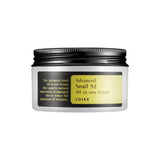
For more context on COSRX products in your routine, check out our detailed review of COSRX and their iconic cleansers.
Key takeaways 📌
Facial double cleansing works because it respects the chemistry of skin impurities: oil first, then water. Concrete benefits appear in 2 to 3 weeks: less visible pores, more even complexion, better absorption of serums. The key is consistency in the evening and choosing products adapted to your skin type.
Three points to keep in mind: always apply oil to dry skin, never skip the second step, and practice the technique only in the evening in almost all cases.
Next step: discover Korean cleansing oils and adapted cleansing gels according to your skin type. If you're not sure about your skin type, our free skin diagnostic will guide you in 2 minutes.

