

Does your skin feel tight, red, and reactive to everything? The skin barrier is often the culprit. This natural protective membrane regulates hydration, blocks external aggressors, and maintains your skin's balance. When it's weakened, everything goes awry. And unfortunately, many skincare routines, even well-intentioned ones, contribute to damaging it without us knowing.
In this guide, you'll understand exactly how your skin barrier works, how to tell if it's damaged, what mistakes weaken it, and most importantly, how to repair it with appropriate care. Korean skincare has a particularly effective approach to this topic, and we'll explain why.
What exactly is the skin barrier? 🧱

The skin barrier, also called the hydrolipidic film or epidermal barrier, is the protective layer that covers your entire skin. It is composed of dead cells (corneocytes) linked together by intercellular lipids, mainly ceramides, cholesterol, and free fatty acids. Basically, imagine bricks and mortar: the cells form the bricks, and the lipids play the role of the mortar.
Its role is twofold. On one hand, it prevents water from evaporating from inside the skin, which is called transepidermal water loss (TEWL). On the other hand, it blocks external aggressors: pollution, UV rays, bacteria, irritants. When this system works well, your skin remains supple, resilient, and radiant. When it fails, everything spirals.
The natural pH of the skin surface also plays a key role: it is around 4.5 to 5.5, slightly acidic. This acidic level creates a hostile environment for pathogenic bacteria and activates enzymes responsible for the production of skin lipids. A product that is too alkaline (classic soap, certain harsh foaming cleansers) disrupts this pH and immediately weakens this natural protection.
Source: KFDA Publication on Skin Microbiome Regulation and Barrier Integrity (link to be added manually).
How to tell if your skin barrier is damaged? 🔍
A damaged skin barrier sends clear signals. The problem is that we often confuse them with other skin types or issues. Here are the characteristic symptoms of a weakened skin barrier:
- Persistent tightness: the skin feels tight even after applying a moisturizer. Water evaporates faster than usual.
- Reactive redness: your skin easily reddens with heat, cold, after cleansing, or when applying even gentle skincare products.
- Unusual breakouts: a damaged barrier allows bacteria and irritants to pass through, triggering inflammatory reactions, sometimes mistaken for acne.
- Burning or stinging sensations: products you used to tolerate now cause a burning sensation. A strong sign of abnormal skin permeability.
- Chronic dehydration: your skin is constantly dry, even after changing moisturizers. Water does not stay in the tissues.
- Dull, lackluster skin: cell renewal slows down, and the skin surface becomes uneven.
A reliable sign to distinguish a damaged barrier from simply dry skin: if your skin reacts even to products you've always tolerated well, the barrier is the cause, not the product.
Expert tip: Many people think that using more products will "repair" their skin faster. It's the opposite. Too many products, especially with powerful active ingredients like AHAs, BHAs, or retinol, prolong the inflammatory state and prevent reconstruction. Simplifying your routine to a maximum of 3 steps is the first thing to do.
What destroys the skin barrier? ⚠️
The skin barrier weakens more easily than we think. The most common causes are not always the ones we imagine:
- Over-cleansing: cleansing your skin twice a day with a foaming or strong surfactant cleanser removes the hydrolipidic film with each use. Evening cleansing is sufficient for most skin types.
- Overuse of chemical exfoliants: AHAs (glycolic, lactic acid) and BHAs (salicylic acid) are effective but accelerate cell renewal by forcing desquamation. Used more than 2-3 times a week, they prevent the barrier from rebuilding.
- Overly alkaline products: pH above 7 (classic soaps, certain solid cleansers) neutralize the skin's natural acidity and disrupt the skin microbiome.
- Heat and climatic variations: hot bath or shower water, heating in winter, air conditioning in summer – all these factors increase TEWL.
- Stress and lack of sleep: cortisol slows down ceramide production and weakens the junctions between cells. Clinical studies show a direct correlation between cortisol spikes and TEWL.
- Improper sun exposure: UV rays degrade intercellular lipids and accelerate barrier breakdown. Daily SPF is a direct protection for this structure.
Source: Kim, J. et al. (2019), "Skin barrier function and its correlation with stress hormones"
How long does it take to repair the skin barrier? 🕐
This is the most frequently asked question, and the honest answer is: it depends on its current condition. Generally, a slightly weakened barrier recovers in 2 to 4 weeks with the right routine. A seriously damaged barrier (dermatitis, eczema, chronic over-exfoliation) may require 4 to 12 weeks of active recovery.
The cell renewal cycle lasts approximately 28 days in a young adult, but it slows down with age. After 35, count up to 45 days. This is why patience is non-negotiable in a repair protocol.
Signs of recovery to watch for: the disappearance of tightness first (often within 1 to 2 weeks), then a reduction in reactive redness, and then the return of radiance. If after 4 weeks of a simplified routine you see no improvement, consult a dermatologist to rule out an underlying pathology (psoriasis, atopic eczema).
How to repair the skin barrier: step-by-step method 🔄
Skin barrier repair is based on three principles: reducing aggressions, providing missing lipids, and protecting during reconstruction.
Step 1: Radically simplify your routine
Stop chemical exfoliants, retinol, and powerful active ingredients for at least 4 weeks. Your skin in the repair phase cannot absorb transformative actives without worsening the situation. You'll get back to them, but not now.
Step 2: Switch to a gentle, pH-balanced cleanser
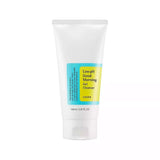
A low-foaming cleanser with a pH between 4.5 and 6 is key. In K-Beauty, cleansers based on ferments, centella asiatica extract, or oil are formulated precisely to respect this pH. The Korean double cleanse (oil + gentle gel) is relevant for removing makeup without irritating the skin.
Step 3: Provide ceramides
Ceramides are the major lipids of the barrier (approximately 50% of intercellular lipids). Ceramide-based products, coupled with cholesterol and fatty acids, physically rebuild this structure. Korean formulations often combine them with madecassoside (centella asiatica extract) or Panthenol (provitamin B5) to accelerate surface healing.
Step 4: Seal with an occlusive
A light occlusive (shea butter, thin layer of petroleum jelly, or a Korean barrier cream) applied as the last step retains water in the tissues and protects overnight. This technique, called "slugging" in the K-Beauty community, is particularly effective for dry or very damaged skin.
Step 5: SPF every morning without exception
UV rays are one of the main causes of barrier degradation. An SPF 30 minimum sunscreen provides direct protection during reconstruction. Korean formulations are lightweight, non-comedogenic, and easily applied as the last step of your routine.
Looking for Korean skincare specifically formulated for skin barrier repair? The Dr. Althea 345 Relief Cream is a prime example of this type of formulation, designed for reactive skin and weakened barriers.
Why Korean skincare is particularly effective for the skin barrier 🌿
The K-Beauty philosophy has long been based on a principle that Western dermatology is rediscovering: caring for the barrier above all else. This approach explains the success of Korean routines for sensitive, reactive, or weakened skin.
Several iconic Korean ingredients directly act on barrier reconstruction:
| Ingredient | Mechanism of Action | Emblematic Product |
|---|---|---|
| Centella Asiatica (madecassoside, asiaticoside) | Anti-inflammatory, healing, strengthens cell junctions | SKIN1004 Centella Ampoule, Anua Heartleaf Toner |
| Snail Mucin (snail secretion filtrate) | Provides allantoin + repairing glycoproteins, reduces TEWL | COSRX Advanced Snail 96 Mucin Power Essence |
| Ceramide NP, AP, EOP | Direct reconstruction of intercellular lipids | Dr. Althea 147 Barrier Cream, Etude Soon Jung 2X |
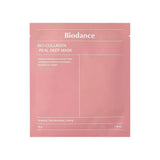
| Panthenol (Pro-vit. B5) | Deeply moisturizing, accelerates epidermal healing | Isntree Hyaluronic Acid Watery Sun Gel, Biodance products |
| Beta-Glucan (oat, mushroom) | Stimulates collagen synthesis, soothes inflammation | Round Lab 1025 Dokdo Toner |
What Korean formulations do particularly well is combine several of these ingredients in superimposed layers (layering) rather than compressing them into a single product. This stratification technique respects the gradual reconstruction of the barrier and avoids overloading with active ingredients.
If you're new to K-Beauty, the article on the best Korean skincare brands will give you an overview of ranges focused on barrier care.
Which cream to repair the facial skin barrier? 🎯

To choose an effective skin barrier cream, three criteria are non-negotiable:
- The presence of ceramides: they must appear in the first third of the INCI list. If you find them at the end of the list, their concentration is probably insufficient.
- A pH formulated between 4.5 and 6: most serious brands indicate this. If in doubt, Korean formulations are generally calibrated in this range.
- Absence of irritants: fragrance, denatured alcohol, certain preservatives like MIT (methylisothiazolinone) should be avoided during the repair phase.
Among the K-Beauty formulations recognized for their action on the barrier, the Dr. Althea 147 Barrier Cream is often cited. It combines ceramides, Panthenol, and an anti-inflammatory complex that simultaneously works on repair and soothing. It is designed for reactive skin, post-dermatological treatments, or during recovery after over-exfoliation. Our full review of Dr. Althea creams details the differences between the range's references.
The Etude Soon Jung 2X Barrier Intensive Cream is another, more economical option, based on madecassoside and Panthenol, fragrance-free, often recommended as a first repair cream for sensitive skin.
FAQ about the Skin Barrier 💬
What is the skin barrier?
The skin barrier is the superficial protective layer of the skin. It is formed by dead cells linked by lipids (ceramides, cholesterol, fatty acids) and maintains a dual balance: it retains water inside and blocks external aggressions (bacteria, pollution, UV). Its natural pH, around 4.5 to 5.5, is essential for its proper functioning.
How to tell if your skin barrier is damaged?
The most reliable signs are: persistent tightness despite hydration, reactive redness during cleansing or application of usual skincare products, stinging or burning with products that previously caused no problems, and chronic dehydration that no longer responds to classic creams. If several of these symptoms appear at the same time, the barrier is most likely weakened.
How long does it take to repair a damaged skin barrier?
Between 2 and 4 weeks for slight weakening, up to 12 weeks for a seriously damaged barrier (chronic over-exfoliation, dermatitis). The cell renewal cycle lasts approximately 28 days in a young adult, longer after age 35. Patience is non-negotiable: results are not immediate even with the right routine. You can use the Holy Skin diagnostic tool to identify the right products for your situation.
What is the best cream to repair the skin barrier?
There isn't a single answer, but three essential criteria: the presence of ceramides in the first third of the INCI list, a pH formulated between 4.5 and 6, and the absence of fragrance or denatured alcohol. In K-Beauty, Dr. Althea 147 Barrier Cream (ceramides + Panthenol + anti-inflammatory complex) and Etude Soon Jung 2X Barrier Intensive Cream (madecassoside + Panthenol, fragrance-free) are two solid references. One or the other is suitable depending on budget and the intensity of the weakening.
Can retinol or AHAs be used when the skin barrier is damaged?
No, and this is one of the most frequent mistakes. Retinol accelerates cell renewal and causes desquamation, which prevents reconstruction. AHAs (glycolic, lactic acid) and BHAs (salicylic acid) have the same effect. These active ingredients must be completely paused for at least 4 weeks, until the barrier regains sufficient integrity to tolerate them without further inflammation.
Key takeaways 📌
The skin barrier is the foundation of any good skincare routine. Before trying to treat acne, dark spots, or aging, ensuring this barrier is intact radically changes the results obtained.
The three key points to remember: first, reduce aggressions (over-cleansing, frequent exfoliants), provide ceramides to physically rebuild the barrier, and protect with daily SPF to prevent UV rays from degrading what you've just rebuilt.
K-Beauty excels precisely in this area, with formulations designed to respect skin pH and restorative ingredients in effective concentrations. This is often where Korean routines make a difference compared to conventional skincare.
If you don't yet know your skin type or what care you need most, the free Holy Skin skin diagnosis gives you a personalized starting point in less than 2 minutes. And if you want to go further into routines adapted to each skin type, the article on the Koreans' secrets for smooth skin is a good complement.