


Are your breakouts itchy, resistant to all standard anti-acne treatments, and reappearing despite your skincare routine? It's likely not typical acne. Fungal acne is caused by a yeast, not bacteria, which explains why usual treatments don't work. Here is how to identify it and what to do about it.
In this article: the unmistakable symptoms, the causes, effective natural treatments, and the appropriate Korean skincare routine to stop relapses.
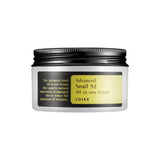
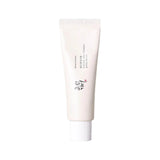
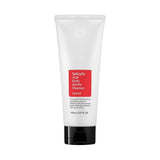
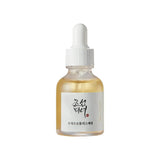
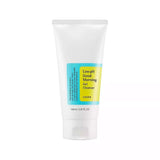
Looking for skincare directly adapted to fungal acne? Here is a selection of Korean products formulated without ingredients that feed Malassezia yeast. (view acne and blemish collection)
Fungal acne or typical acne: how to tell the difference? 🔍
The most common mistake is treating fungal acne like ordinary bacterial acne. The result: the breakouts persist, sometimes worsen, and frustration builds up. However, the distinction is clear once you know what to look for.
Typical acne is caused by an overgrowth of the bacteria Cutibacterium acnes, associated with excess sebum and clogged pores. Fungal acne, on the other hand, is due to an overpopulation of Malassezia, a yeast naturally present on the skin. These two forms require completely opposite approaches.
| Criterion | Typical Acne | Fungal Acne |
|---|---|---|
| Cause | Bacteria + excess sebum | Malassezia yeast |
| Appearance of breakouts | Varied sizes, blackheads, comedones | Small and uniform (1-2 mm), clustered |
| Itching | Rare | Frequent, sometimes intense |
| Affected areas | Face (forehead, nose, chin) | Forehead, back, chest, shoulders, cheeks |
| Reaction to antibiotics | Improvement | Possible worsening |
| Effective treatment | Salicylic acid, BHA, retinoids | Antifungals (ketoconazole, sulfur) |
What are the symptoms of fungal acne? 🧐

Three characteristic signs make it possible to identify fungal acne, even without a dermatological consultation.
Itching: This is the most distinctive sign. Typical acne generally doesn't itch. If your breakouts make you want to scratch, it's a strong signal in favor of fungal acne.
Small and uniform breakouts, grouped in patches, on the forehead, cheeks, upper back, or chest. Unlike typical acne, there are no comedones (blackheads) or pimples of widely varying sizes.
Resistance to standard anti-acne treatments. If your breakouts persist or worsen despite salicylic acid, benzoyl peroxide, or oral antibiotics, fungal acne should be seriously considered. Antibiotics are particularly counterproductive: by eliminating the good bacteria of the skin flora, they promote the proliferation of Malassezia.
Specialist tip: many people apply exfoliating acids (AHAs, BHAs) to "disinfect" fungal acne. It's a classic trap. These actives do not target the yeast and can aggravate an already weakened skin barrier. It is better to opt first for sulfur or propolis, which are effective against Malassezia without being harsh on the skin.
Fungal acne on the face, back, and forehead: areas to watch 🗺️
The location of fungal acne is linked to two factors: the density of sebum (which Malassezia feeds on) and local heat or humidity.
Fungal acne on the face: the cheeks and forehead are the most affected areas. Wearing masks, hats, or helmets maintains heat and humidity that promote yeast proliferation. On the face, fungal acne often appears on the sides rather than the center (nose, chin), unlike typical acne.
Fungal acne on the forehead: an area particularly exposed to sweat during sports or when wearing accessories. If you have small, uniform breakouts on the forehead that itch slightly, fungal acne is a probable hypothesis.
Fungal acne on the back and chest: the upper back, shoulders, and décolleté are areas with high sebaceous gland density, ideal for Malassezia. Wearing synthetic clothing or not changing quickly after exercise maintains favorable conditions.
Causes and triggers: why Malassezia proliferates 🌡️
The yeast Malassezia is present on the skin of all healthy individuals. It is its imbalance that causes fungal acne, not its mere presence. Several factors create this imbalance.
- Prolonged heat and humidity (sport, humid climates, tight clothing)
- Antibiotics and topical or oral corticosteroids, which disrupt the skin flora
- An unsuitable skincare routine: rich vegetable oils (coconut, jojoba, argan) feed the yeast directly
- A weakened immune system or chronic fatigue
- Oily skin, a prime environment for Malassezia, which feeds on lipids
A study by Rubenstein and Malerich (2014) in the Journal of Clinical and Aesthetic Dermatology establishes that Malassezia folliculitis is frequently confused with acne vulgaris, which delays appropriate treatment by several months on average.
Natural treatments for fungal acne: what really works 🧪
The standard treatment prescribed by a dermatologist relies on oral (ketoconazole, fluconazole) or topical antifungals. If you want to try an over-the-counter approach first, here is what has a solid foundation.
Sulfur: a natural antifungal active ingredient found in certain purifying Korean formulas. It acts directly on the yeast without aggressively drying the skin. It is the most effective active ingredient among over-the-counter solutions.
Propolis: extracted from beehives, propolis has well-documented antifungal and antibacterial properties. It is present in several Korean skincare products for blemish-prone skin, notably at COSRX, whose propolis range is specifically formulated not to feed yeast.
Manuka honey as a localized mask on the affected areas, 15 minutes followed by a gentle rinse, 2 to 3 times per week.
Sulfur or zinc pyrithione in an antifungal shampoo applied briefly to the affected areas of the back or chest before rinsing, if the affected areas are large.
What to avoid at all costs: vegetable oils (they feed Malassezia), rich and occlusive creams, overly aggressive exfoliants, and clay masks used daily.
The Korean skincare routine adapted for fungal acne 🌿

K-Beauty is particularly suited to fungal acne because it prioritizes light, layered formulas and targeted actives rather than rich textures. The golden rule: do not put anything on the skin that contains free fatty acids capable of feeding the yeast.
Morning:
- Gentle, foaming cleanser with a physiological pH (5-5.5)
- Oil-free toner, preferably with propolis or centella asiatica to soothe
- Light serum (niacinamide or propolis) without vegetable oils in the first ingredients
- Light mineral sunscreen (check for the absence of fatty acid esters that feed yeast)
Evening:
- Double cleanse if wearing makeup: micellar makeup remover first, then foaming cleanser
- Soothing toner
- Targeted antifungal treatment (sulfur, concentrated propolis)
- Light cream, gel, or emulsion without vegetable oil
To find Korean products compatible with fungal acne, the Holy Skin acne collection was curated by excluding formulas based on oils that feed Malassezia. You can also take the free skin diagnostic to get a personalized selection based on your skin type and concerns.
When to see a dermatologist for fungal acne? 🩺
A natural approach may be enough for mild cases. But in these situations, a consultation is necessary without delay:
- Breakouts persist after 3 to 4 weeks of an adapted routine
- The affected areas are spreading or worsening
- You have taken antibiotics recently and acne appeared or worsened as a result
- You have a history of dermatitis or eczema
The dermatologist can confirm the diagnosis (sometimes through a swab), prescribe an oral antifungal in a short course, and guide you on a long-term prevention routine.
What to remember 📝
Fungal acne is caused by Malassezia yeast, not bacteria: standard anti-acne treatments are ineffective and often counterproductive. The three key signals are itching, small uniform clustered breakouts, and resistance to standard care. First-line, over-the-counter approach: remove vegetable oils from your routine, incorporate antifungal ingredients (sulfur, propolis), and keep the skin clean and dry after exercise.
To learn more, find suitable Korean products in the Holy Skin acne and blemish collection, or read the article on COSRX skincare if you want a detailed review on a range specifically formulated for reactive skin.

