

A clean skincare routine is built on transparent formulas. Every ingredient has a clear purpose, and anything that doesn't benefit your skin is left out. The term has no official definition: it's a personal choice, not a label. To follow it, you simply need to learn how to read an ingredient list and keep your routine short.
Good news: Korean skincare fits this approach perfectly. In our selection of Korean face products, you'll find skincare designed around a few well-known active ingredients. This guide explains what to look for, which misconceptions to ignore, and which products to choose for your skin.
Clean cosmetics: what the term means and what it doesn't guarantee
Depending on the brand, clean cosmetics refers to a "clean" formula: few unnecessary ingredients, useful active ingredients, and a transparent list. The problem is that every brand sets its own criteria. One excludes fragrance, another silicones, and a third mineral oils. Two "clean" products can therefore follow opposite rules.
What you can take away from this boils down to a few simple facts:
- Clean does not mean organic. Organic products are based on certified standards. Clean products are not.
- Clean does not mean natural. An active ingredient made in a laboratory can be more stable and better tolerated than a raw plant extract.
- Safety is already regulated for everyone. In Europe, every cosmetic product must undergo a safety assessment before being placed on the market, whether it claims to be clean or not.
- Animal testing is not a sorting criterion. In the European Union, animal testing of cosmetics has been banned for all brands since 2013.
Whether you're looking for clean skincare, clean skin care, or clean beauty, the starting idea remains the same: knowing what you put on your skin and why. That's where the ingredient list becomes your best tool.
How to read an ingredient list (INCI) without being a chemist
On the back of every product, the INCI list follows an international nomenclature. It may look daunting, but four simple steps are enough to decode it.
- Read the beginning of the list. Ingredients are listed in descending order of concentration. The first ones make up the largest proportion of the formula. If the active ingredient touted on the packaging only appears at the end of the list, there is very little of it.
- Identify the 1% threshold. Below this threshold, ingredients can be listed in any order. The end of the list therefore does not tell you the dosages.
- Look for fragrance. It appears under the word "Parfum" or "Fragrance". Some fragrance substances must also be listed individually. If your skin reacts quickly, this is a priority to watch out for.
- Translate the Latin names. Plants are written in Latin: Centella Asiatica Extract for centella, Houttuynia Cordata Extract for heartleaf, Oryza Sativa for rice. "Aqua" simply means water.
A word on alcohol. "Alcohol Denat." placed at the beginning of the list can dry out dry or sensitive skin. On the other hand, fatty alcohols like Cetearyl Alcohol are emollients that soften the skin. They have nothing to do with the alcohol that dries out the skin: it's the name that is misleading, not the ingredient.
The misconceptions that cloud the choice of a clean skincare routine
"Natural, so gentle"
An essential oil is natural, yet it can irritate reactive skin. Natural does not guarantee tolerance. What matters is how the formula is constructed and dosed.
"Chemical, so bad"
Everything is chemical, including water and rice extract. The opposition between natural and chemical does not help you choose. The only good question: is this ingredient useful for my skin?
"Preservatives should be avoided"
A product containing water must be protected against bacteria and mold once opened. The preservative does this job. A formula without one must compensate in another way, through airtight packaging or a waterless composition. The preservative is not the enemy of a clean routine: it is what keeps your product safe until the last use.
"The shorter the list, the better"
A short list is easier to read, that's true. But it is not necessarily better tolerated. As co-founder Cédric summarizes: "A short list is not a guarantee of gentleness: what matters is that every ingredient has a reason to be there."
Clean Korean skincare: why K-Beauty is well suited to it
Korean skincare loves well-identified active ingredients: centella, heartleaf, rice, propolis, niacinamide. Several brands build an entire range around a star ingredient, which makes the lists easier to follow.
If you are looking for minimalist formulas, look at Purito, Benton, Anua, or Beauty of Joseon. These brands highlight products centered on a few active ingredients, without multiplying promises. Our detailed review of Purito also scrutinizes their approach.
The other strength of K-Beauty is the "less, but better" philosophy. Skinimalism is its most refined version: three or four well-chosen products are better than a shelf full of products. A clean routine also means fewer layered products, and therefore fewer opportunities to overload your skin.
Which clean Korean products to choose for your skin
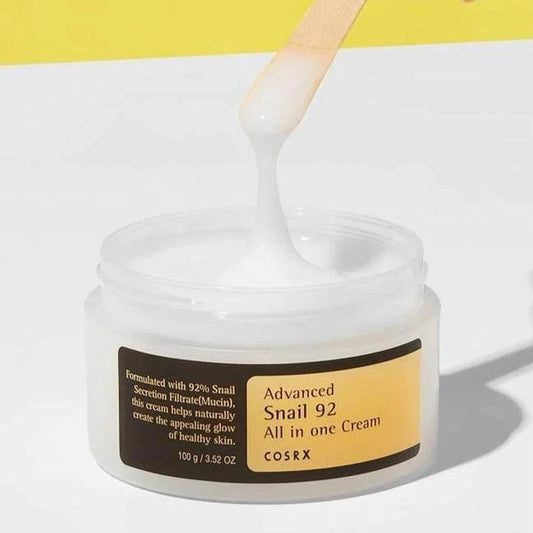
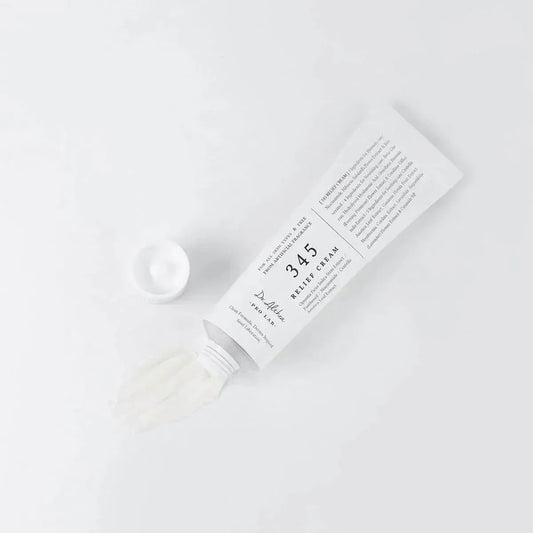
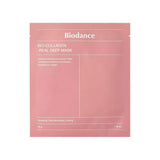
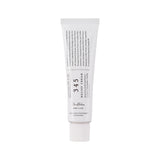
In our online sales over the last 12 months in the face collection, the top three include the Biodance Bio-Collagen Real Deep Mask, the COSRX Advanced Snail 92 All In One Cream, and the Dr. Althea 345 Relief Cream. Three very different products, which show that there is no single profile of a clean product. It all depends on your skin.
Combination to oily skin: gentle and targeted cleansing
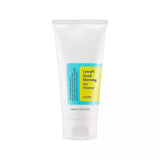
The COSRX Low pH Good Morning Gel Cleanser is suitable for combination to oily skin that wants a gentle cleansing, without a stripped-skin feeling. In a customer review left on our site, fziat_ wrote: "A light and gentle cleanser to combine with a makeup remover beforehand. It does not strip the skin or make it feel tight, the must-have for sensitive skin (a little extra freshness as a bonus)".
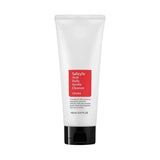
If your skin marks easily, the COSRX Salicylic Acid Daily Gentle Cleanser is designed for acne-prone skin and pores that clog quickly. In a customer review left on our site, Oriane says: "It is part of my routine, I highly recommend it for acne-prone skin."
For an uneven complexion and shine, the Beauty of Joseon Glow Serum: Propolis + Niacinamide is designed for combination to oily skin that wants a single serum, without stacking bottles.
Sensitive skin or skin marked by redness
The Dr. Althea 345 Relief Cream is designed for skin that retains redness or an uneven texture after imperfections, and that needs soothing. Helene describes it in a customer review left on our site: "Very good moisturizing cream whose effect lasts all day on my mature skin. [...]"
The COSRX Advanced Snail 92 All In One Cream is suitable for skin whose skin barrier is weakened and which feels tight quickly. Delphine testifies in a customer review left on our site: "The texture is strange at first but it is the first time a cream does not feel sticky and leaves the skin soft, without tightness for many hours."
Dry, dehydrated, or dull skin
The Biodance Bio-Collagen Real Deep Mask is designed for dehydrated, dull, or tired skin that needs an occasional boost, for example before an evening out. Aelia summarized it in a customer review left on our site: "This mask is incredible and my skin was completely smooth afterwards."
All skin types: sun protection, a non-negotiable step
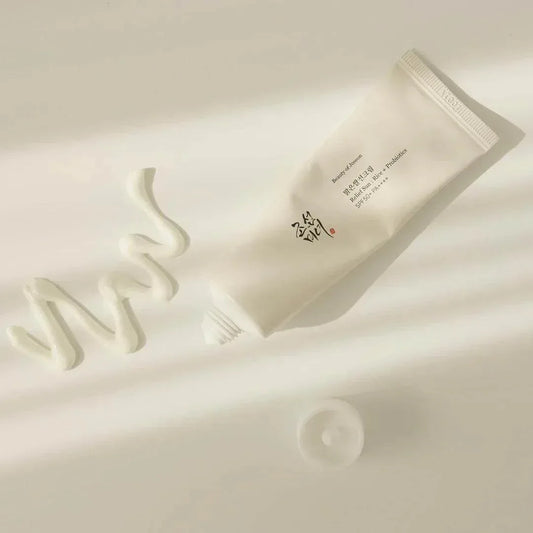
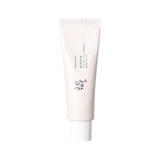
A clean routine without sun protection remains incomplete. The Beauty of Joseon Relief Sun Rice + Probiotics is suitable for all skin types, including combination and oily skin. Delphine writes in a customer review left on our site: "I like the texture and it does not feel sticky even when you sweat."
For sensitive or reactive skin, the COSRX Aloe Soothing Sun Cream combines protection and soothing. An honest piece of feedback to keep in mind, left by A. in a customer review on our site: "Good product but the finish is quite 'shiny'."
Comparison: which clean Korean product for which step
| Product | Routine step | For which skin | What it provides |
|---|---|---|---|
| COSRX Low pH Good Morning Gel Cleanser | Cleansing | Combination to oily, sensitive | Gentle cleansing that does not make the skin feel tight |
| COSRX Salicylic Acid Daily Gentle Cleanser | Cleansing | Acne-prone, clogged pores | Targeted cleansing for pores |
| Beauty of Joseon Glow Serum | Serum | Combination to oily, uneven complexion | Helps even out the complexion and reduce shine |
| Dr. Althea 345 Relief Cream | Cream | Marked skin, redness | Daily soothing and hydration |
| COSRX Advanced Snail 92 All In One Cream | Cream | Weakened barrier, tight skin | Comfort and suppleness |
| Biodance Bio-Collagen Real Deep Mask | Occasional mask | Dehydrated, dull | A boost of radiance and bounce |
| Beauty of Joseon Relief Sun Rice | Sun protection | All skin types | Comfortable daily protection |
| COSRX Aloe Soothing Sun Cream | Sun protection | Sensitive, reactive | Protection and soothing |
Clean routine order and mistakes to avoid

A clean routine consists of a few steps, always from lightest to richest:
- Cleanser, morning and evening.
- Serum, if you have a specific need (complexion, shine).
- Moisturizer, to keep water in the skin.
- Sun protection, every morning, as the last step.
The mask is added occasionally, when your skin needs a boost. Here are now the pitfalls that derail a clean approach:
- Changing everything at once. Introduce one product at a time: you will know what really suits you.
- Believing the label rather than the list. The word "clean" on a bottle does not replace reading the INCI.
- Banning an ingredient because of its complicated name. A Latin or chemical name says nothing about its gentleness.
- Skipping sunscreen. Its filters are precisely there to protect your skin.
- Combining exfoliants. If your cleanser already contains salicylic acid, there is no need to add several exfoliating products on top.
Don't know where to start? Our free skin assessment helps you identify your skin type and the right products, in a few questions.