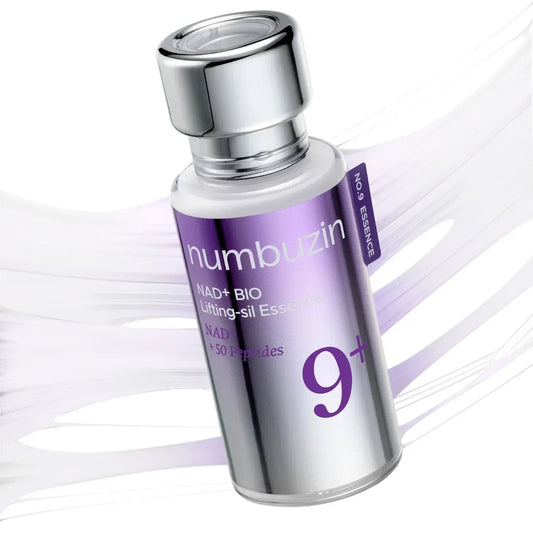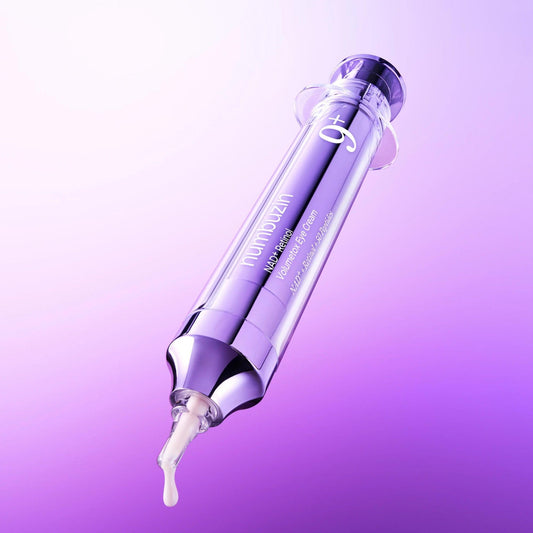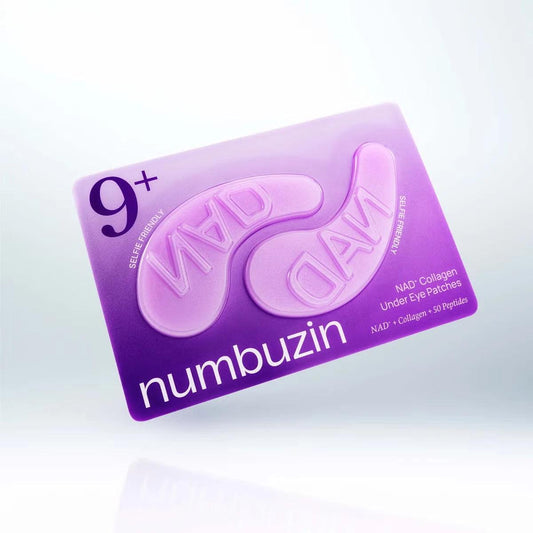
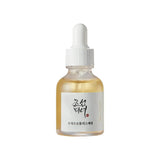


NAD+ is a coenzyme present in every cell, and its level decreases with age. Korean brands have jumped on the bandwagon, but the announced benefits need to be sorted out.
Here's the short answer: NAD+ fuels reactions that produce cellular energy and repair DNA. When its levels drop, your skin cells renew less effectively. Applied to the skin, however, its benefits are still largely based on laboratory work, not clinical trials.
You've seen the new Korean NAD+ serums and toners and are wondering if they deserve a place in your routine or if it's just another star ingredient of the season. The question is legitimate, and the honest answer is: a bit of both.
In this article, you'll understand why this molecule interests formulators, how to differentiate it from its supplement version, when it becomes relevant depending on your age, and how to integrate it into your routine. Without promises of rejuvenation in three weeks.
Looking directly for NAD+ skincare products? A short Korean selection, with formula details. (view NAD+ skincare products)
What exactly is NAD+? 🔋

NAD+, or nicotinamide adenine dinucleotide, is an essential coenzyme for cellular metabolism. It is involved in reactions that convert nutrients into energy and activates two key enzyme families: sirtuins, linked to cellular longevity, and PARPs, which repair damaged DNA.
For your skin, this simply means: less available NAD+ means less energy to renew cells and less ability to repair damage caused by UV rays.
This decline is documented. According to a review published in the International Journal of Molecular Sciences, NAD+ depletion is associated with human skin aging and a degraded response to DNA damage. In animals, NAD+ deficiency increases skin sensitivity to UV and genomic instability.
Source: Fania et al., Role of Nicotinamide in Genomic Stability and Skin Cancer Chemoprevention, Int J Mol Sci, 2019 (DOI), via PubMed.
So far, the logic holds. What happens next is worth a closer look.
NAD+ in serum or supplement: it's not the same thing 💊
NAD+ as a dietary supplement targets the entire body: energy, metabolism, longevity. NAD+ in cosmetics acts only on the layers of the skin it reaches. The two uses share a molecule, but not an objective, not a dosage, and especially not the same level of evidence.
This is a very common confusion, fueled by the fact that both markets have exploded simultaneously. When you read an enthusiastic article about NAD+, always check what it's talking about: capsules and injections fall under nutrition and medical use, not skincare.
Three concrete differences.
| Criterion | In cosmetics | In supplements or injections |
|---|---|---|
| Target | Epidermis and superficial dermis | Entire organism |
| Regulation | Cosmetic regulation | Dietary supplement or medical act |
| Level of evidence on skin | Primarily in laboratory | No demonstrated cutaneous effect to date |
This article only deals with the first use. For anything related to ingestion or injection, that's a question to ask a healthcare professional, not a skincare brand.
The real benefits of NAD+ on the skin, and what remains to be proven 🔍
Applied topically, NAD+ has shown protective effects against UV-induced aging and intrinsic aging. These benefits involve better activation of sirtuins, autophagy, and mitochondrial function. Translation: cells clean themselves better internally and produce their energy more efficiently.
The nuance is important: these results come from in vitro experiments, conducted on human fibroblasts in culture. Not on real skin, under real conditions, over several months.
This study, published in Cells in 2024, also shows that NAD+ alone is not enough: its effects were significantly enhanced by the addition of quercetin and enoxolone, two plant compounds that block an enzyme called CD38, which consumes NAD+. In other words, applying NAD+ to the skin without protecting it from its own degradation yields limited results.
Source: Kang et al., Novel Approach to Skin Anti-Aging, Cells, 2024 (DOI), via PubMed. Note: this work was carried out by a research laboratory belonging to a Korean cosmetic group.
What this means for you: topical NAD+ is a credible research avenue, not yet a clinically validated active ingredient like retinol or vitamin C.
The detail no one tells you: the size of the molecule 📏
For an active ingredient to work deeply, it must cross the stratum corneum, the superficial barrier that protects your skin. Formulators use a simple benchmark: beyond approximately 500 daltons, a molecule has difficulty crossing this barrier.
NAD+ weighs approximately 663 daltons. It is also hydrophilic and electrically charged, two characteristics that further complicate passage through an essentially lipid barrier.
Now compare that to niacinamide, vitamin B3, which weighs about 122 daltons. Five times lighter. It crosses without difficulty, and its effectiveness has long been established in cosmetics.
However, niacinamide is precisely the direct precursor of NAD+. Your skin converts it into NAD+ itself through a metabolic pathway called the salvage pathway. A review published in Antioxidants confirms that nicotinamide supplementation restores the cellular NAD pool and mitochondrial energetics, and that its topical application reduces the progression of skin aging in clinical trials.
Source: Boo, Mechanistic Basis and Clinical Evidence for the Applications of Nicotinamide to Control Skin Aging and Pigmentation, Antioxidants, 2021 (DOI), via PubMed.
Look at the INCI list of your NAD+ serum: in several Korean formulas, niacinamide appears among the first ingredients, meaning at a significant concentration, while NAD+ appears much lower. This is not a scam; it's even quite clever. But it means that some of the benefits you attribute to NAD+ probably come from what niacinamide does for the skin.
Expert tip: the classic mistake is to pay extra for a NAD+ serum when you've never tried a simple 5% niacinamide. You risk attributing to NAD+ a result that your budget could have achieved for half the price. Start with the precursor, observe for two months, and then upgrade if you want to go further.
For whom NAD+ makes sense, and for whom it's too early 🎯
This active ingredient targets cellular aging, not surface problems. Its benefits therefore do not have the same interest depending on your age and skin condition.
| Profile | Relevance | Why |
|---|---|---|
| Skin 18 to 25 years old | Low | Your NAD+ stores are still high. Daily SPF will benefit you much more |
| Skin 25 to 35 years old, for prevention | Moderate | Interesting if your basic routine is already solid, not before |
| Mature skin, loss of firmness | Good | This is when NAD+ decline becomes measurable |
| Dull skin, tired complexion | Good | The cellular energy aspect corresponds to this need |
| Reactive skin or damaged barrier | Postpone | First repair your barrier, active ingredients will come later |
| Active acne | Irrelevant | This is not the target of this active ingredient |
If you're unsure about your skin profile, a diagnosis will give you a more reliable basis than intuition.
How to integrate it into your routine, and what to associate it with 🧴
NAD+ usually comes in a serum or toner, so apply it on clean skin, before richer textures. The usual rule applies: from thinnest to thickest.
- Cleansing
- Toner
- NAD+ serum on still slightly damp skin, absorption is better
- Moisturizer
- Sunscreen in the morning, systematically
Two practical points. First, evening is the most logical time: cellular repair processes are most active at night, and this active ingredient is precisely supposed to support that. Second, there's no need to double up on serums: only one anti-aging active at a time, otherwise you'll never know which one does what.
If your formula combines NAD+ and PDRN, this regenerating active derived from salmon DNA, you have a coherent duo: both aim at cellular repair through different mechanisms. This is indeed the bet of several recent Korean formulators.
| Active Ingredient | Association | Precaution |
|---|---|---|
| Niacinamide | Excellent | Often already in the same formula, check INCI |
| Peptides | Excellent | None, very frequent combination |
| Hyaluronic acid | Excellent | None |
| PDRN | Good | None, complementary mechanisms |
| Retinol or retinal | Possible | Alternate evenings if your skin is sensitive |
| Pure Vitamin C | Space out | Vitamin C in the morning, NAD+ in the evening |
| Exfoliating acids | Space out | Never in the same application |
Is there a danger to using NAD+ on the skin? ⚠️

In cosmetics, NAD+ is not an irritating active ingredient per se. Nicotinamide applied topically is described as well tolerated by the skin in dermatological literature, which is rather reassuring for this family of ingredients. No specific adverse effects are associated with this use.
The real risk comes from elsewhere: accumulation. A routine with six serums always ends up damaging the skin barrier, regardless of the active ingredient involved. Redness, tightness, and stinging after application almost always come from this, not from an isolated ingredient.
Simple reflex if your skin is reactive: apply a small amount to the crook of your elbow and wait 48 hours before applying to your face.
These products do not replace medical advice. If you are undergoing dermatological treatment, are pregnant, or breastfeeding, consult a healthcare professional before adding a new active ingredient to your routine.
How long before you see something ⏱️
No active ingredient that acts on cellular metabolism yields visible results in a few days. Epidermal renewal takes about 28 days for young skin, and this cycle lengthens with age.
| Timeline | What you can reasonably observe |
|---|---|
| 2 weeks | Comfort and hydration, mainly related to the product's texture |
| 4 to 6 weeks | More even complexion, less dull skin |
| 3 months | Refined skin texture, first effects on suppleness |
| 6 months and more | Effects on firmness, if used regularly |
If a product promises you a facelift in ten days, the argument is commercial, not biological. And if you don't wear daily sun protection, no anti-aging active will compensate for UV damage. It's frustrating to hear, but it's by far the most determining factor.
Key takeaways 📌
Three ideas to keep in mind.
The benefits of NAD+ on the skin are a serious avenue, not yet a clinical certainty. Existing topical data primarily comes from laboratory studies on isolated cells.
Its precursor already does much of the work. Niacinamide penetrates better, costs less, and has solid clinical trials backing it.
The right time matters more than the right active ingredient. Before age 30 with an incomplete routine, daily SPF will serve you better.
If you want to try, check out the Korean NAD+ skincare products in the selection, checking the position of niacinamide in the INCI list. And if you're not sure this active ingredient suits your skin, start with the skin diagnostic.