

No, makeup does not cancel out your sunscreen, but it can seriously compromise it if you don't follow two simple application rules. Here is exactly what happens to your skin and how to avoid the most common mistakes.
The confusion stems from a logical intuition: putting something over a protective layer must necessarily weaken that protection. In practice, it's more nuanced. What threatens your SPF isn't the foundation itself, but the amount of sunscreen applied beforehand, the time elapsed since its application, and the way you touch it up. A study published in the Journal of Investigative Dermatology points out that the vast majority of people apply 25 to 50% of the amount of sunscreen needed to achieve the SPF indicated on the packaging. Source: Journal of Investigative Dermatology
In this article, we cover the real mechanism, the mistakes to avoid, and how to concretely adapt your morning routine so that your SPF remains effective all day long, whether you wear makeup or not.
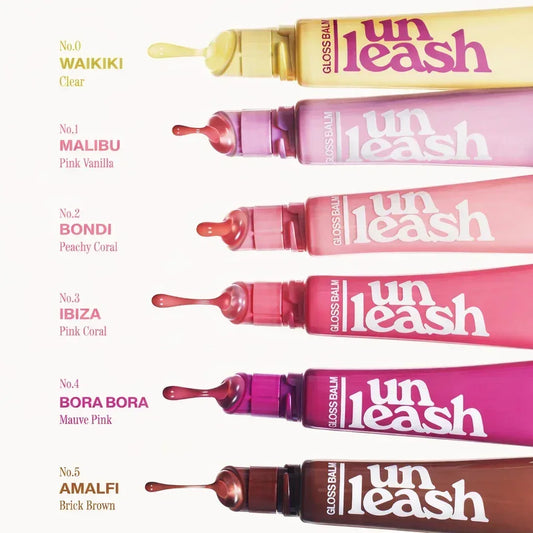
Are you looking for a sunscreen that is compatible with makeup? The Holy Skin collection features light, non-greasy textures designed to go under foundation without a white cast or pilling. (view Korean makeup)
What really happens under your foundation 🔬
UV filters, whether chemical (like octocrylene or avobenzone) or mineral (titanium dioxide, zinc oxide), work by forming a continuous layer on the surface of the skin. For an SPF 50 to actually function at SPF 50, you must apply 2 mg per cm² of skin, which corresponds to about half a teaspoon for the face alone. That is two to three times more than what most people apply.
When you apply foundation over it, two phenomena occur. First, if the sunscreen hasn't had time to dry (ideally 5 to 10 minutes), the foundation mixes with it and mechanically dilutes the concentration of UV filters in the first few layers. Second, the layer of foundation absorbs some of the UV radiation, but in a random way and never to the level of a true lab-tested SPF.
The result: your actual protection often goes from a theoretical SPF 50 to an effective SPF of 20 to 30, depending on the textures used and the amount applied. It’s not zero. But it’s not what you thought you were getting.
Specialist tip: many people think they can compensate by choosing a foundation with built-in SPF. This is not a bad idea as a complementary layer, but it is physically impossible to apply enough foundation to get the SPF displayed on the packaging. What it protects is your consistency: it maintains a decent level between touch-ups, not a full-strength SPF 50.
The mistake 80% of makeup wearers make with their SPF ⚠️
Reapplication is the real problem. UV filters degrade under the effect of light, heat, and perspiration. Even when applied in sufficient quantity in the morning, they lose a significant part of their effectiveness after 2 hours of direct exposure. All dermatological recommendations converge on this point: reapply every 2 hours when outdoors, or after sweating.
When wearing makeup, reapplying a fluid sunscreen over your foundation seems impossible. That’s where the right formats make all the difference:
- Sun sticks can be applied without friction, directly over makeup, without smudging or spreading it. Two crossed strokes on each area are enough.
- SPF sprays allow for quick reapplication in any situation, but they require a correct application distance (about 20 cm) for even coverage.
- Powders with SPF are practical for oily skin, but their coverage is less uniform than a stick or spray.
If you don't use any of these formats and you are exposed to the sun for more than 2 consecutive hours, your actual protection is close to zero after noon, regardless of the quality of your morning sunscreen.
What morning routine should you actually adopt? 🌅
K-Beauty has a structural advantage here: its sunscreens are formulated to integrate into a multi-layer routine without weighing down the skin or creating a "pilling" effect under foundation. This is precisely what differentiates Korean sunscreens from classic European formulas, which are often greasier and less suitable for daily use under makeup.
Here is the order and timing to follow:
- Active serum (vitamin C, niacinamide): let absorb for 2 minutes.
- Moisturizing cream if needed: let absorb for 2 minutes.
- SPF 50+ sunscreen: apply in sufficient quantity (insist on often-neglected areas, around the eyes, on top of the ears, neck). Wait 5 to 10 minutes before proceeding.
- Base or primer if used.
- Foundation: apply by patting rather than rubbing so as not to displace the lower layers.
Respecting the waiting time after SPF is the step most often skipped, and the most decisive. 5 minutes is enough for chemical filters to activate and the texture to set, which significantly reduces their dilution by the foundation.
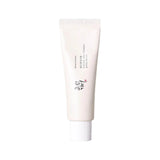
For those looking for a Korean sunscreen with a light finish that is compatible with makeup, the article on the Beauty of Joseon sunscreen details the textures and skin profiles concerned.
The types of makeup that best preserve your SPF ✅
Not all textures behave the same way over a sunscreen base. Here is what makes the difference:
| Type of foundation | Impact on SPF | Recommendation |
|---|---|---|
| Light fluid (low coverage) | Minimal if SPF is left to dry | Ideal for daily use |
| Matte fluid (high coverage) | Moderate, absorbs some filters | Increase the amount of SPF |
| Loose/pressed powder | Low if applied after SPF has dried | Compatible, avoid on dry skin |
| Cream foundation | High if applied by rubbing | Always pat, never rub |
| Cushion with SPF | Neutral or even complementary | Good option for touch-ups during the day |
Korean makeup (cushion, BB cream, tone-up cream) is designed to work in synergy with skincare. Most K-Beauty cushions incorporate a real SPF, formulated to be applied over a skincare base, making them good complementary touch-up options.
What K-Beauty changes in this equation 🇰🇷
In Korea, sunscreen is culturally integrated into the daily routine just like cleanser or serum, not as a beach product to be used only in summer. This approach has pushed Korean brands to develop formulas that solve a real problem: how to make daily SPF compatible with makeup, in all weathers, without a white cast, without pilling, without shine.
Korean formulas use next-generation filters (Tinosorb S, Uvinul A Plus) that offer broad-spectrum UVA and UVB protection, with serum, water, or gel textures that absorb in seconds. This explains why sunscreens like those from Beauty of Joseon or Round Lab are so often cited as the best Korean sunscreens by those who test them: they deliver on their promise of a light texture while providing a measurable SPF 50+.
The Korean SPF culture also entails a refusal to see sun exposure as an aesthetic norm; protected skin is valued for its radiance, not for its tan. This paradigm shift partly explains why reapplication habits are more deeply rooted in Asia than in Europe.
In summary: what you should take away from this article 📋
Three points to remember before closing this page:
- Makeup does not neutralize your SPF, but it can dilute it if you apply your foundation too soon or by rubbing. Let it dry for 5 to 10 minutes between SPF and foundation, and pat.
- Reapplication is non-negotiable after 2 hours of exposure. Use a sun stick or spray to touch up over makeup without undoing everything.
- The amount of SPF applied in the morning is the most underestimated factor. Half of people apply twice too little to get the displayed SPF. Be generous.
If you want to optimize your complete routine from the inside, start with the free skin diagnostic: it gives you recommendations adapted to your skin type, your daily context, and your expectations. And if you are looking to supplement with Korean makeup designed to fit into a skincare routine, the Holy Skin Korean makeup selection brings together the formulas we have selected for their compatibility with active ingredients and SPF.