


Have you ever wondered why Korean women's (and Korean men's) skin always looks luminous, plump, almost unreal? Is it an Instagram filter effect? Exceptional genetics? Or… ultra-sophisticated formulations? Spoiler alert: the answer is a little bit of everything, but above all, a selection of smart ingredients , used consistently and methodically.
And that's where the doubt creeps in. When you read a label with Centella Asiatica , Snail Mucin , or Fermented Rice Extract , you think: "OK... but what does that actually do for my skin?" Good question, right? So sit back, let's break down together which ingredients are common in Korean skincare , why they've become cult favorites, and how to seamlessly integrate them into your routine.
Why are ingredients at the heart of the K-Beauty philosophy?

Before even discussing INCI lists, it's essential to understand one key point: in Korea, skincare isn't about correction, it's about prevention . You don't "fight" the skin, you work with it. The result? Ingredients chosen to respect, strengthen, and repair the skin barrier, rather than disrupting it.
Another key point: K-Beauty loves lightweight yet ultra-effective textures . Behind this "water on the skin" sensation often lie highly concentrated active ingredients, sometimes inspired by traditional Korean medicine (hanbang), sometimes derived from modern biotechnology. Tradition and innovation, hand in hand. Pretty good, right?
Centella Asiatica: the star ingredient for soothing 🌿
If only one could remain… it would probably be this one. Centella Asiatica , also known as tiger grass , is ubiquitous in Korean formulas. And for good reason: it ticks (almost) all the boxes.
On the one hand, it's soothing, healing, and anti-inflammatory . On the other, it stimulates collagen production, improves elasticity, and helps skin repair itself faster. Blemishes, redness, sensitivity, fragile skin? It's there for you, without ever being harsh.
Published studies show that its active components promote skin repair and reduce inflammation. No wonder it's found in so many Korean serums, ampoules, and creams.
👉 At Holy Skin , Centella is at the heart of several ready-to-use routines . And if you're still unsure, the free skin analysis can help you get a clearer picture, with no obligation.
Snail mucin: strange, but remarkably effective 🐌
Admit it, the first time you heard "snail mucin," you grimaced. That's normal. And yet… Snail Mucin is one of the most studied and acclaimed ingredients in K-Beauty.
Why? Because it is naturally rich in glycoproteins, hyaluronic acid, peptides, and antioxidants . The result: intense hydration, improved cell regeneration, and a gradual smoothing effect on acne scars.
Snail mucin improves skin barrier repair and overall skin texture. Proof that you should never judge an ingredient by its name…
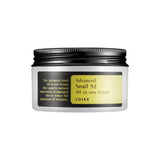
👉 Featured product:COSRX - Advanced Snail 92 All In One Cream
Rice and its fermented extracts: radiance and sweetness on the menu 🌾
Another pillar of Korean skincare is rice , used for centuries to beautify the skin. Today, it can be found in the form of extracts, rice water, or even ferments.
Rice is naturally rich in amino acids, B vitamins, and antioxidants . It helps even out skin tone, brighten the complexion, and strengthen the skin barrier. In its fermented form, its active ingredients become even more bioavailable, and therefore more effective. Magic? No, just biochemical.
Sources highlight the benefits of rice ferments for improving skin hydration and radiance. It's gentle, gradual, but remarkably effective in the long run.
👉 Featured product: I'm From - Rice Toner
Ginseng: K-Beauty's take on anti-aging 🌱
In Korean tradition, ginseng is considered a treasure. In cosmetics, it is best known for its anti-aging, energizing, and revitalizing properties. It stimulates microcirculation, helps the skin defend itself against oxidative stress, and restores radiance to tired complexions.
This isn't a quick-fix ingredient, but rather a long-term ally. Used regularly, it helps the skin become more resilient, firmer, and more even-toned. In short, a sure bet for those who prefer prevention to treatment.
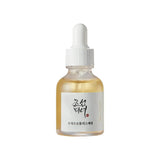
👉 Featured product: Beauty of Joseon - Revive Eye Serum: Ginseng + Retinal
Hyaluronic acid: hydration, but in a multi-layered version 💧
Yes, we already know about it. But in Korean skincare, hyaluronic acid is rarely used alone. They often talk about multi-molecular-weight hyaluronic acid , which can hydrate the skin at different levels.
The result? Deep hydration without any greasy residue, and skin that's plumper and more supple. This is one of the secrets behind that much sought-after "glass skin" effect. And no, it's not just for dry skin: even oily skin can benefit, if the formula is well-designed.
👉 Featured product: Round Lab - 1025 Dokdo Ampoule
Other common ingredients in Korean skincare you should know 🌸
Because we couldn't stop there, here is a (non-exhaustive) list of other commonly found assets:
- Niacinamide : regulates sebum, refines skin texture, evens out skin tone
- Heartleaf (Houttuynia Cordata) : ultra-soothing, perfect for acne-prone skin
- Propolis : a natural antibacterial agent, ideal for blemish-prone skin
- Green tea : a powerful antioxidant, protects against external aggressions
These ingredients aren't there by chance. They're chosen for their high tolerability and gradual effectiveness. No unrealistic promises, just visible results with consistency.
How can these ingredients be incorporated without making a mistake?

This is THE question everyone is asking. Because knowing which ingredients are common in Korean skincare is good. Knowing how to use them is better.
First tip: there's no need to mix everything together. An effective routine relies on a few well-chosen active ingredients, suited to your skin type . Second tip: consistency is always better than excess. A simple routine, morning and night, is far better than a cupboard full of products used haphazardly.
👉 That's exactly why Holy Skin offers ready-to-use Korean skincare routines , designed for specific skin types and concerns. Still unsure? The free skin diagnostic guides you step by step. Simple, quick, and genuinely helpful.
FAQ: What ingredients are common in Korean skincare? 💬
Are Korean ingredients suitable for sensitive skin?
Yes, mostly. K-Beauty favors gentle, soothing, and restorative ingredients. However, be careful with essential oils or exfoliants if your skin is very reactive.
Can Korean skincare be mixed with Western products?
Absolutely. What matters is the consistency of the routine and the compatibility of the assets. Not their geographical origin.
How long does it take to see results?
Generally, between 3 and 6 weeks. Korean skincare focuses on the long term, not on 48-hour miracles.
Does more ingredients equal more effectiveness?
Not at all. Too many active ingredients can even irritate the skin. It's better to use fewer, but well-targeted ones.
To conclude on the ingredients in Korean skincare 🌿
So, what ingredients are common in Korean skincare ? Soothing botanicals, smart ferments, and hydrating and repairing actives, carefully selected and used consistently. No gimmicks, just a skin-friendly approach.
K-Beauty's popularity is no accident. It's a philosophy, a gentle discipline, and above all, an invitation to listen to your skin more closely. And if you want to put theory into practice, you know where to find us: Holy Skin , with its personalized routines and free skin analysis, is here to support you, no pressure.

