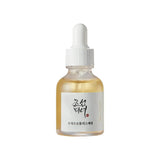


Exosomes are tiny vesicles produced by cells to communicate with each other. In Korean serums, thousands of ppm are concentrated to accelerate skin regeneration, smooth texture, and tighten pores. This is biotech in the truest sense, not just marketing.
If you've seen the Medicube Exosome Shot on social media and aren't sure what you're buying, this article explains exactly what exosomes do for your skin, who they're for, how to integrate them into your routine, and what to avoid. No unnecessary jargon.
Looking for an exosome serum directly? The Holy Skin selection includes concentrated Korean ampoules with biotech active ingredients, delivered in 2 to 3 business days from France. (see Korean serums)
What exactly is an exosome? 🔬

An exosome is an extracellular nanovesicle, about 30 to 150 nanometers in size, naturally released by almost all cell types. Its biological role: to transport information between cells in the form of proteins, lipids, amino acids, and RNA fragments.
In cosmetics, exosomes used in formulas primarily come from two sources: lactobacilli ferments (probiotic bacteria) or milk. These vesicles are extracted, purified, and then concentrated at doses expressed in ppm (parts per million). The higher the concentration, the greater the quantity of active vesicles.
What distinguishes exosomes from classic active ingredients like niacinamide or hyaluronic acid: they don't act on a single mechanism. They transport several bioactive molecules at once and can directly influence the behavior of skin cells, particularly fibroblasts responsible for collagen production.
Expert advice: Many confuse exosomes and peptides. They are not the same thing. A peptide is a unique molecule that acts on a specific receptor. An exosome is a multi-cargo vector; it transports several active ingredients at the same time and enhances their penetration. One targets, the other transports.
Why was K-Beauty the first to incorporate them into cosmetics? 🇰🇷
Korea has invested heavily in the convergence of aesthetic dermatology and consumer cosmetics since the 2010s. Exosomes were used in aesthetic medicine (injections, microneedling) long before appearing in ampoules available online.
Medicube was one of the first brands to transform this clinical technology into an accessible topical treatment, with concentrations ranging from 2,000 to 25,000 ppm depending on the version. The Korean logic is always the same: take what happens in aesthetic clinics and make it applicable at home, with a precise formulation and a clear protocol.
The result: ampoules that measurably increase the absorption of active ingredients. Medicube specifically indicates that the exosome vesicles in the 25,000 ppm version penetrate all 10 layers of the epidermis and increase active ingredient absorption by 262% compared to a classic serum.
Facial exosomes: what they actually do for the skin 💧
Exosomes do not have a single effect. Their action depends on what they carry. In current Korean formulas, here are the documented effects:
- Accelerated cell regeneration: vesicles stimulate fibroblasts, the cells that produce collagen and elastin. The skin rebuilds its structure faster.
- Texture smoothing: particularly visible on dilated pores and areas with uneven texture. The effect is generally observed after 3 to 4 weeks of regular use.
- Potentiation of associated active ingredients: exosomes increase the penetration of niacinamide, peptides, and adenosine present in the same formula.
- Skin barrier repair: lipid-rich vesicles support the reconstruction of the hydrolipidic film.
- Sebum regulation: in combination with niacinamide, the regulating effect on sebum production is enhanced on combination to oily skin.
What cannot be promised: immediate and definitive correction of deep wrinkles. Exosomes promote regeneration; they do not erase. Results are gradual and depend on the regularity of the routine.
Who are exosome treatments for, and who are they not for? ✅
Cosmetic exosomes are suitable for the majority of skin types. They are not inherently irritating, as they are neither acids nor retinoids.
Profiles that benefit most from exosomes:
- Skin with visible pores and uneven texture
- Combination to oily skin looking for an active treatment without excessive oiliness
- Mature skin or skin showing early signs of sagging
- Sensitive skin seeking a repairing active ingredient without acids or retinol
- Post-acne skin with textural aftermath
Profiles that should adapt usage:
- Skin with a very weakened barrier: introduce gradually, once a week, observe for 3 weeks before increasing frequency
- Pregnancy and breastfeeding: data on topical cosmetic exosomes is insufficient to guarantee safety. As a precaution, seek medical advice.
Exosomes in concentrated ampoules (7,500 ppm and above) are not daily care by default. The 7,500 ppm version of Medicube can be used up to 3 times a week. The 25,000 ppm version is a concentrated weekly treatment.
How to integrate an exosome serum into your Korean routine 🧴
Exosome ampoules are applied after toner, before moisturizer. This is the serum step in the classic Korean routine.
Protocol for the concentrated ampoule version (e.g., Medicube Exosome Shot):
- Cleanse your face with a Korean cleanser suited to your skin type
- Apply your usual Korean toner to prepare the skin surface
- Pour an appropriate dose of the ampoule into your palm
- Gently press with both palms onto your face to activate penetration, without rubbing
- Allow to absorb for 2 to 3 minutes
- Seal with your Korean moisturizer
- In the morning, always protect with a Korean sunscreen
Recommended frequency according to concentration:
| Concentration | Frequency | Target profile |
|---|---|---|
| 2,000 ppm | Daily possible | Beginner, maintenance |
| 7,500 ppm | 3x/week max | Uneven texture, pores |
| 25,000 ppm | 1x/week (treatment) | Very dilated pores, significant sebum |
Exosomes and compatibility: what to combine them with or not? ⚠️
Exosomes alone are compatible with almost all skincare active ingredients. It's when they are formulated with other active ingredients that caution is needed.
In the case of Medicube Exosome Shot 7,500 ppm, the formula already contains a gentle exfoliating trio: AHA, BHA, and PHA. Do not combine this treatment with another AHA or BHA on the same evening: the nanometric microneedles and mineral particles increase skin penetration, which also amplifies the potential irritation of acids. Alternate evenings or reserve acids for days without exosome shot.
Safe and effective associations:
- Niacinamide: already integrated into Medicube formulas, no compatibility issues
- Peptides: direct synergy, exosomes enhance the action of peptides
- Centella asiatica: compatible and complementary for sensitive skin seeking repair and soothing
- Hyaluronic acid: perfectly compatible, hyaluronic acid amplifies hydration
If you're wondering about compatibility with your current routine, the Holy Skin skin diagnostic provides a personalized recommendation in a few questions.
If you are more broadly interested in anti-aging and regenerating Korean skincare, the complete review of Medicube explores the entire range and its concrete results.
Facial exosomes danger: what we really know in 2026 🔎
Exosomes injected in aesthetic medicine are subject to varying regulations depending on the country, particularly because some non-standardized injectable preparations have caused reactions. This concerns in-office injections, not topical treatments.
Exosomes in topical cosmetics are vesicles applied to the skin's surface. They do not penetrate the bloodstream. Reported side effects in reviews remain marginal: slight transient redness in very reactive skin, usually related to associated active ingredients (acids, high-concentration niacinamide) and not the vesicles themselves.
The common-sense rule remains the same for any concentrated active ingredient: patch test on the inside of the wrist for 48 hours before the first application to the face.
Source: KFDA (Korean Food and Drug Administration) data on the regulation of biotech cosmetics in Korea
Exosomes or PDRN: what's the difference for your skin? 🧬

PDRN (Polydeoxyribonucleotide) and exosomes are often mentioned together in K-Beauty biotech. They are two very different active ingredients in their mechanism.
| Active ingredient | Origin | Main mechanism | Visible effect |
|---|---|---|---|
| Exosomes | Lactobacilli ferments, milk | Multi-cargo vector, cell regeneration | Texture, pores, firmness |
| PDRN | Salmon or trout DNA | A2A receptor stimulation, collagen synthesis | Radiance, hydration, healing |
The two active ingredients are often combined in advanced Korean formulas, as their mechanisms are complementary. PDRN repairs, exosomes regenerate and transport.
Key takeaways in three points:
- Exosomes are biological vectors, not active ingredients in the classic chemical sense. They transport and potentiate. That's why a 25,000 ppm formula does more than a 2,000 ppm formula, not just because there's more of it.
- The effect on texture and pores is the most documented and visible in the short term. The anti-aging effect is real but gradual, over 4 to 8 weeks of regular routine.
- Frequency of use depends on the concentration. Concentrated ampoules do not replace a daily routine serum; they are added as targeted treatments.
To find the exosome ampoule or serum suitable for your skin type, the Holy Skin selection brings together the most active Korean concentrates, available in stock in France. (see Korean serums and ampoules)