


Bakuchiol is a plant-based active ingredient extracted from the seeds of Psoralea corylifolia, capable of stimulating collagen production and reducing wrinkles without causing the irritation associated with retinol. In K-Beauty, it has been used for several years in precise, clinically validated formulas. If you are looking for a gentle, effective anti-aging treatment that is compatible with a Korean routine, this is likely the active ingredient you are missing.
In this article: what bakuchiol actually does to your skin, how to use it without making mistakes, which active ingredients it combines with, and who it is truly suited for.
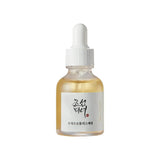
Looking for a bakuchiol serum? K-Beauty offers formulas with optimized concentrations, often combined with centella or black rice for a boosted effect. (view Korean serums)
What exactly is bakuchiol? 🌿

Bakuchiol is a meroterpene isolated from the seeds and leaves of Psoralea corylifolia, a plant native to India that has been used for centuries in Ayurvedic medicine under the name "babchi." Its modern extraction for cosmetics dates back to the 2010s, when a study published in the International Journal of Cosmetic Science (Chaudhuri & al., 2014) demonstrated that it activated the same gene receptors as retinoids, without belonging to their chemical family.
This point is crucial: bakuchiol is not a vitamin A derivative. It acts like retinol by stimulating RAR and RXR receptors, but its chemical structure is entirely different, which explains its better skin tolerance.
In concrete terms, on your skin:
- It stimulates the synthesis of type I and III collagen
- It inhibits metalloproteinases that degrade dermal fibers
- It increases the production of fibronectin, a protein that maintains the cohesion of the extracellular matrix
- It regulates sebum production via the inhibition of 5-alpha-reductase
- It possesses antioxidant properties that protect the skin from free radicals
Bakuchiol vs. retinol: what the science really says 🔬
The benchmark study on this subject is a randomized, double-blind trial published in the British Journal of Dermatology (Sivamani & al., 2019), conducted on 44 participants over 12 weeks. Each group applied either a 0.5% bakuchiol cream or a 0.5% retinol cream.
Results:
| Criterion | 0.5% Bakuchiol | 0.5% Retinol |
|---|---|---|
| Wrinkle reduction | Significant | Slightly superior |
| Skin tone evening | Significant | Slightly superior |
| Scaling | 10% of participants | 20% of participants |
| Stinging | Low | Significant |
| Photosensitization | No | Yes |
What this means in practice: retinol retains a slight advantage in terms of pure efficacy, but bakuchiol offers two decisive advantages. Firstly, it does not weaken the skin barrier. Secondly, it does not increase the skin's sensitivity to the sun, which makes it safe to use in the morning without additional risk.
Expert tip: A common mistake is to believe that bakuchiol is "less effective" and to compensate by applying an excessive amount. Overdosing does not accelerate results and can sensitize reactive skin. Consistency over 8 to 12 weeks counts much more than the dose.
What concrete benefits can you expect? ✨
Bakuchiol addresses four main concerns, with different realistic timeframes for each.
Wrinkles and fine lines: by stimulating fibroblasts, bakuchiol boosts the production of collagen and elastin. Initial texture improvements are visible between 6 and 8 weeks. Visible reduction of deep wrinkles requires 10 to 12 weeks of regular application.
Dark spots and hyperpigmentation: bakuchiol inhibits tyrosinase (the enzyme that synthesizes melanin) and reduces the expression of TRP-1 and TRP-2 proteins. Result: a more even complexion gradually over 8 to 12 weeks. It is particularly effective when combined with niacinamide or vitamin C.
Acne and blemishes: it acts simultaneously on the four acneic mechanisms. It inhibits the growth of Cutibacterium acnes, reduces inflammation via NF-kB and COX-2, regulates sebum production, and unclogs pores. A study comparing a 1% bakuchiol formula to salicylic acid on 60 people over 6 weeks showed comparable results (Marchio & al., 2011). Source: Cosmetics & Toiletries
Dull and flat skin: its antioxidant effect protects against free radicals and accelerates cell renewal, with a result on radiance noticeable from 3 to 4 weeks for skin sensitive to pollution.
Who is it suitable for, and who is it not? 🎯
Bakuchiol is one of the most versatile anti-aging active ingredients available in cosmetics. It is suitable for:
- Sensitive skin that cannot tolerate classic retinol
- Acne-prone skin looking for an anti-acne treatment with a simultaneous anti-aging effect
- Skin prone to rosacea (dermatological literature indicates good tolerance, unlike retinol)
- People who wish to use an anti-aging treatment in the morning without the risk of photosensitization
- Combination skin seeking to regulate sebum without drying out dry areas
It is not recommended if:
- You have a confirmed allergy to Psoralea corylifolia or its compounds (test with a patch test before use)
- You are pregnant or breastfeeding: although it is plant-based, there is a lack of studies on the safety of bakuchiol during pregnancy. As a precaution, consult a dermatologist or midwife before use
In K-Beauty, it is often combined with other soothing ingredients like centella asiatica, black rice, or heartleaf, which further strengthens its tolerance. Heartleaf is a good example of this logic: soothing and treating simultaneously without compromising the skin barrier.
Is bakuchiol really safe? 🛡️
The question comes up regularly, often amplified by anxiety-inducing content on social media. Here is what the data actually shows.
Bakuchiol has one of the best tolerance profiles in its category. It is not photosensitizing (unlike retinol), does not interfere with the lipid films of the skin barrier, and does not cause the initial irritation phase that beginners to retinol almost systematically experience.
Side effects reported in clinical studies are rare: slight redness or temporary tightness during the first applications on very reactive skin. No systemic effect has been documented for standard topical cosmetic use.
On the other hand, two precautions are legitimate:
- Do not combine bakuchiol with chemical exfoliants (AHA, BHA) in the same routine. Not because the combination is dangerous, but because it can increase skin permeability and therefore sensitivity to the sun
- Continue to apply SPF every morning: bakuchiol does not cause photosensitization, but UVA rays age the skin regardless of any active ingredient. Sunscreen remains non-negotiable
How to integrate bakuchiol into a Korean routine? 🧴

K-Beauty is particularly well-suited to bakuchiol because its routines are built in light layers, from the most fluid to the thickest texture. Bakuchiol integrates naturally at the serum step, after the toner and before the cream.
Morning routine:
- Gentle cleanser
- Hydrating toner
- Bakuchiol serum (2 to 3 drops)
- Hydrating cream
- SPF 50 (mandatory, even without photosensitization)
Evening routine:
- Double cleansing (oil + foaming cleanser)
- Hydrating toner
- Bakuchiol serum
- Hydrating cream or night cream
Bakuchiol can be used morning and evening. This is one of its advantages over retinol, which is used exclusively in the evening. If you are starting out, begin with an application in the evening only for 2 to 3 weeks, then add the morning depending on your skin's tolerance.
In K-Beauty, several serums combine bakuchiol with other active ingredients in multi-target formulas. The Haruharu Wonder Black Rice Bakuchiol Eye Cream, for example, combines bakuchiol with fermented black rice to simultaneously treat eye contour wrinkles and improve radiance in a single step.
Which active ingredients should you combine with bakuchiol? 🤝
Bakuchiol is one of the most compatible active ingredients in a skincare routine. It does not conflict with the majority of common ingredients.
| Active | Compatibility | Combined effect |
|---|---|---|
| Niacinamide | Excellent | Anti-spot + boosted sebum regulation |
| Vitamin C | Good | Radiance + amplified anti-pigmentation action |
| Hyaluronic acid | Excellent | Simultaneous hydration + anti-aging treatment |
| Centella asiatica | Excellent | Reinforced tolerance, ideal for sensitive skin |
| Retinol | Not recommended | Useless buildup, increased risk of irritation |
| AHA / BHA (same routine) | Avoid | May increase skin permeability |
The bakuchiol + niacinamide combination is particularly consistent for combination to acne-prone skin: both active ingredients regulate sebum through different and complementary mechanisms. If you want to delve deeper into the question of ingredient associations in a Korean routine, the guide on COSRX skincare details several layering logics applied in K-Beauty.
What results to expect and in how much time? ⏱️
Bakuchiol is not an instant-effect active ingredient. Like any active ingredient that acts on dermal structure and cell renewal, its efficacy takes hold gradually.
- 3 to 4 weeks: improvement in overall radiance, more even complexion, slight feeling of refined skin
- 6 to 8 weeks: visible reduction of imperfections, less dilated pores, initial effects on fine lines
- 10 to 12 weeks: measurable reduction of wrinkles, improvement in firmness, decrease in mild to moderate dark spots
These timeframes correspond to those documented in the Sivamani (2019) study on 44 participants. Maximum efficacy is reached at 12 weeks with twice-daily application (morning and evening).
If you use bakuchiol only once a day, results are present but slightly delayed. No irreversible effects have been documented if you stop: the skin simply returns to its initial state gradually.
What to remember about bakuchiol: it is a scientifically validated plant-based active ingredient, effective on wrinkles, spots, and acne, with a much higher tolerance than retinol. It integrates naturally into a Korean routine, morning or evening, and combines easily with niacinamide, vitamin C, and centella. Results are real but take 8 to 12 weeks.
If you are not sure which serum is best suited to your skin type, the free diagnostic will give you a personalized recommendation in 2 minutes. You can also explore Korean bakuchiol serums directly to find the formula that matches your concerns.

