
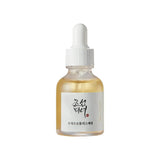
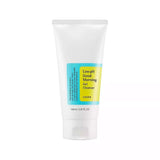


Vitamin C is the most studied active ingredient in cosmetics for radiance and dark spots. There is only one condition for it to truly work on the face: choosing the right form and using it correctly. This guide explains everything, with no shortcuts.
Formulated for decades in Korean laboratories, vitamin C applied to the skin acts on three distinct mechanisms: it neutralizes free radicals that dull the complexion, slows down the production of melanin responsible for dark spots, and stimulates collagen synthesis for firmer skin over time. All in a single active ingredient, provided you choose it well.
Looking directly for a Korean vitamin C face treatment? Our selection gathers the most stable Korean formulas on the market, tested on sensitive and reactive skin. (view our vitamin C range)
What vitamin C really does for the face 🔬

Vitamin C, in its main cosmetic form called L-ascorbic acid, acts from the very first layers of the epidermis. This is not a marketing promise: its mechanism of action is documented by dozens of clinical studies, including the landmark work of Sheldon Pinnell (Duke University, 2001).
The three main actions:
- Antioxidant: neutralizes free radicals generated by pollution, the sun, and oxidative stress. Visible result: a more even and less dull complexion after 3 to 4 weeks of regular use.
- Depigmenting: inhibits the enzyme tyrosinase, responsible for melanin synthesis. Existing dark spots gradually fade in 8 to 12 weeks. Vitamin C does not act as a bleaching agent but as a regulator.
- Pro-collagen: an essential cofactor for the synthesis of type I and III collagen. Daily application over 3 to 6 months helps improve firmness and reduce fine lines.
What is rarely explained: vitamin C also acts in synergy with vitamin E and sunscreens. Combined with an SPF in the morning, it reinforces protection against UVA rays by about 4 times according to a study published in the Journal of the American Academy of Dermatology (Lin et al., 2003). Source: JAAD
Who is it really suitable for? 🎯
Vitamin C for the face is suitable for the vast majority of skin types. A few nuances depending on your profile:
| Skin Profile | Suitable? | Recommended Form |
|---|---|---|
| Normal to combination skin | Yes, no restrictions | 10-15% L-ascorbic acid |
| Oily, acne-prone skin | Yes, regulates sebum and post-acne spots | L-ascorbic acid or ascorbyl glucoside |
| Dry skin | Yes, pair with a rich cream | Vitamin C derivatives (ascorbyl glucoside) |
| Sensitive, reactive skin | Yes, with caution | Stable derivatives at low concentration (5-10%) |
| Mature skin | Yes, particularly interesting collagen effect | 15-20% L-ascorbic acid as a treatment course |
If you have very sensitive or reactive skin, start with a concentration of 5 to 10% and increase gradually. Korean formulas often include soothing ingredients (centella asiatica, panthenol) that compensate for the slight tingling that may occur upon application.
How to use vitamin C on your face: the method that works 📋
Vitamin C is not a difficult active ingredient to use. But a few common mistakes reduce its effectiveness to almost nothing.
Order of application in the routine:
- Cleansing (double cleanse or foam depending on your skin type)
- Hydrating toner or essence
- Vitamin C serum (a few drops, pat gently onto slightly damp skin)
- Moisturizing cream
- Minimum SPF 30 in the morning (essential, not optional)
Wait 1 to 2 minutes between the serum and the cream to let the texture penetrate. On damp skin, absorption is better and any potential tingling is reduced.
The expert's advice: many people give up on vitamin C after 2 weeks because they don't see anything. That is the most common trap. The active ingredient works deeply on melanin and collagen, two processes that are slow by nature. Sticking with it for 8 weeks with a daily application is the minimum to evaluate a real result on dark spots.
Frequency: one application per day is enough. Morning is slightly preferable to benefit from the antioxidant effect against pollution during the day, but evening works just as well if you reserve the morning for other active ingredients.
Compatibilities: what you can mix (and what to avoid) ⚗️
Vitamin C has a reputation for being temperamental. It is a little, but less than some content says. Here is what is actually validated:
Combinations that work well:
- Vitamin C + SPF: proven antioxidant synergy. Priority combination.
- Vitamin C + niacinamide: the rumor of incompatibility comes from studies on very high concentrations in non-representative laboratory conditions. At the concentrations found in Korean serums (10-15%), no clinically significant negative interaction has been demonstrated. Many Korean formulas deliberately combine them.
- Vitamin C + hyaluronic acid: perfectly compatible. Hyaluronic acid buffers the slight acidity of vitamin C and improves comfort.
- Vitamin C + vitamin E: classic antioxidant synergy, one regenerates the other.
Combinations to avoid in the same application:
- Vitamin C + high-dose AHA/BHA: the overly acidic pH of exfoliants can destabilize the formula and irritate. Use alternately: vitamin C in the morning, chemical exfoliant in the evening.
- Vitamin C + high-dose retinol: cumulative irritation on sensitive skin. Alternate morning/evening or reserve retinol for the evening.
To learn more about compatibility with retinol and acids in a Korean routine, COSRX formulas are a good starting point: the brand often incorporates several active ingredients in a precise pH balance.
Why Korean vitamin C serums are different 🇰🇷
K-Beauty has solved a problem that Western formulas have been struggling with for years: the instability of vitamin C. Pure L-ascorbic acid oxidizes rapidly upon contact with air and light. Result: a serum purchased beige-yellow that turns orange in three weeks loses a large part of its effectiveness.
Korean laboratories have developed two complementary approaches:
- Stable derivatives (ascorbyl glucoside, 3-O-ethyl ascorbic acid, sodium ascorbyl phosphate): converted into active vitamin C in the skin, they do not oxidize in the bottle and are particularly suitable for sensitive skin.
- Formulated combinations: vitamin C combined with secondary antioxidants (niacinamide, centella, propolis) that extend its lifespan and reinforce its action on dark spots.
The result: light textures, often in liquid serum or thick essence, that penetrate quickly without the sticky film effect of high-concentration pure acid formulas. Ideal for a multi-step routine.
The "best Korean vitamin C serum" depends on your skin type, but formulas that combine vitamin C with post-acne brightening or an anti-spot effect are the most versatile. Our vitamin C collection gathers references tested and selected for the French market.
Realistic timelines and mistakes that sabotage results ⏱️
Vitamin C is not an active ingredient that impresses in 48 hours. Here is what is actually observed with daily use:
- Week 1 to 2: often nothing visible. Normal. The active ingredient is working on deep cellular processes.
- Week 3 to 4: the complexion evens out, skin texture looks clearer. This is the antioxidant effect manifesting first.
- Week 8: light pigment spots begin to fade. Deep spots (melasma, old acne scars) require a longer course.
- 3 to 6 months: gradual firming effect related to collagen stimulation.
Mistakes that cancel everything out:
- Using an oxidized serum (dark orange or brown color): the molecule is degraded, effectiveness is nil.
- Forgetting SPF: vitamin C reduces dark spots, but without sun protection, melanin re-synthesizes the very next day.
- Applying to irritated skin or with a compromised skin barrier: wait for healing before introducing vitamin C.
- Changing products every 3 weeks: impossible to evaluate real effectiveness without a minimum duration of 8 weeks.
For skin looking to treat established dark spots, vitamin C often works better in combination with a specific anti-spot serum. Formulas based on niacinamide + vitamin C cover both fronts in a single step. This is exactly the working angle of Korean laboratories, and notably what Beauty of Joseon offers with its "traditional ingredients + proven active ingredients" approach.
How to choose your vitamin C face serum 🛍️

Faced with the plethora of options, three criteria are enough to make the right choice:
1. The form of vitamin C based on your skin's tolerance
Robust skin: 10-20% L-ascorbic acid, maximum effectiveness but possible tingling. Sensitive or reactive skin: prioritize ascorbyl glucoside or 3-O-ethyl ascorbic acid, just as effective on dark spots, gentler in use.
2. The packaging
Opaque pump bottle or tinted glass bottle. Avoid wide-mouth jars: every contact with air degrades the formula. Korean serums are often designed in airtight packaging for this reason.
3. The associated active ingredients according to your goal
- Dark spots and hyperpigmentation: vitamin C + niacinamide or + alpha arbutin
- General radiance and dull complexion: vitamin C + vitamin E + botanical extracts
- Anti-aging and firmness: vitamin C + peptides or + retinol (alternating)
If you are not sure about your skin type, our free skin diagnostic directs you to the formulas adapted to your profile.
What to remember 💡
Vitamin C for the face is one of the best-documented active ingredients in cosmetics. Three rules for it to truly work: choose a stable form adapted to your tolerance, apply it daily to clean skin before your cream, and never leave without SPF in the morning. Results on radiance appear as early as 4 weeks; for dark spots, plan for 8 to 12 weeks minimum.
K-Beauty excels with this active ingredient precisely because its formulas integrate vitamin C into textures that are light, stable, and compatible with a multi-step routine. No compromises between effectiveness and comfort of use.
Next step: discover the Korean vitamin C products selected for the face or refine your routine with our skin diagnostic if you are new to K-Beauty.

