
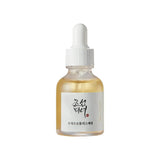


Snail mucin, or snail secretion filtrate, is a biological complex composed of glycoproteins, natural hyaluronic acid, allantoin, and glycolic acid. Hydrating, healing, and gently exfoliating, it suits almost all skin types. This guide explains what it truly contains, what it does (and doesn't do), and how to use it correctly.
What exactly is snail mucin? 🐌

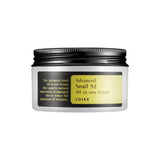
Snail mucin is the mucus naturally secreted by the snail (Helix aspersa or Cryptomphalus aspersa) when it is under mild physical stress. In Korean cosmetics, this fluid is filtered, purified, and formulated at concentrations ranging from 92% to 96% depending on the product, hence the names "96 Mucin Power" or "Snail 92 All-in-one Cream" that you see from COSRX.
Its molecular composition is what makes it unique:
- Glycoproteins: form a protective film on the skin and activate collagen and elastin synthesis
- Natural hyaluronic acid: captures and retains up to 1,000 times its weight in water in the superficial layers of the epidermis
- Allantoin: soothes irritations, accelerates cell regeneration, repairs micro-lesions on the skin
- Glycolic acid (traces): gentle exfoliation that improves the penetration of subsequent active ingredients
- Antimicrobial peptides: limit bacterial proliferation, especially useful in an acne context
Snail mucin is distinct from simple "snail slime" found in some French creams at low concentrations. In K-Beauty, high-concentration formulation (92-96%) is the norm, which explains the difference in effectiveness observed with use.
Source: Study on Cryptomphalus aspersa secretion filtrate, International Journal of Cosmetic Science.
What is snail mucin used for? Proven benefits ✅
Snail mucin simultaneously addresses four major skin concerns: hydration, healing, signs of aging, and acne. This multi-action effect has made it the most sought-after ingredient in K-Beauty, with queries for "snail mucin" increasing by +174% over one year in France.
Intense hydration and barrier effect
The natural hyaluronic acid contained in mucin acts as a humectant: it attracts water from the environment and retains it in the upper layers of the epidermis. Glycoproteins simultaneously strengthen the skin barrier, reducing transepidermal water loss. Immediate result: more supple skin, less tightness, with improved skin bounce from the first applications.
Healing and cellular repair
A study published in the Journal of Drugs in Dermatology demonstrated that snail secretion filtrate stimulates dermal fibroblast migration and accelerates cell proliferation. In practice: visible reduction of flat acne scars (post-inflammatory), attenuation of redness, and accelerated skin recovery after aggression (sun, cold, manipulation).
Documented anti-aging action
Snail mucin glycoproteins stimulate the production of type I and III collagen, the two forms responsible for skin firmness and elasticity. In vitro studies show an increase in collagen synthesis of +28% to +35% in human fibroblasts exposed to the secretion filtrate. Allantoin reinforces this effect by activating epidermal cell regeneration.
Sebum regulation and anti-acne action
The antimicrobial peptides naturally present in mucin inhibit the proliferation of Cutibacterium acnes (formerly Propionibacterium acnes), the bacteria involved in inflammatory lesions. Traces of glycolic acid help prevent pore obstruction. Snail mucin is not a medical treatment for acne, but it effectively supports an anti-acne routine by reducing inflammation and accelerating post-lesion healing.
Who is snail mucin for and who isn't it for? 🎯
Snail mucin is suitable for the vast majority of skin types. Its tolerance is high, its irritating profile is very low, which is one of the reasons why it is often recommended as a first approach to K-Beauty, before more concentrated active ingredients like retinol or AHAs.
Compatible skin types
- Normal skin: excellent humectant, strengthens a weakened skin barrier → see Holy Skin normal skin routine
- Combination skin: hydrates without weighing down dry areas, rebalances oily areas → see combination skin routine
- Oily to acne-prone skin: non-comedogenic watery texture, anti-inflammatory and healing action → see acne-prone skin routine
- Sensitive or reactive skin: allantoin is known for its soothing properties, one of the few essences tolerated on reactive skin→ see sensitive skin routine
- Mature skin: collagen stimulation and plumping effect via natural hyaluronic acid→ see mature skin routine
Special cases and relative contraindications
Snail mucin is an ingredient of animal origin. If you follow a vegan or vegetarian lifestyle, it does not meet your criteria. Some Korean brands offer vegan alternatives based on mushroom ferments or polysaccharides that partially replicate the effects of mucin.
In case of shellfish allergy, cross-hypersensitivity is theoretically possible, although reported cases are rare in medical literature. If you have a history of seafood or shellfish allergy, a patch test for 24 hours on the inside of the wrist is strongly recommended before any use on the face.
If you are unsure of your skin type, the free Holy Skin skin diagnostic helps you identify the ingredients suitable for your skin profile in 2 minutes.
How to incorporate snail mucin into your routine? 🧴
Snail mucin should always be used on damp skin; applying it to dry skin is the most common mistake.
Order of application in the K-Beauty routine
- Cleanser (double cleansing in the evening)
- Toner — skin still slightly damp
- Snail mucin essence or serum
- Active serum (vitamin C, niacinamide, etc.) if applicable
- Snail mucin cream
- SPF (morning only)
Frequency and dosage
Snail mucin can be used morning and evening, every day, without interruption. Unlike exfoliating active ingredients or retinoids, it does not require an acclimatization phase. For the essence, 2 to 3 pumps are enough to cover the face. More is not more effective: high-concentration mucin is concentrated by definition.
Expert note — The mistake that cancels 80% of effectiveness
Applying snail mucin to dry skin is the most common mistake. The natural hyaluronic acid contained in mucin is a humectant: it needs water to function. On dry skin, it will draw water from the deep layers of the epidermis — and can paradoxically dehydrate the skin if the ambient air is dry. The rule: always apply a few seconds after toner, when the skin is still slightly damp.
Compatibilities and incompatibilities with other active ingredients ⚗️
Snail mucin is one of the best-tolerated ingredients for layering. Its watery texture and pH close to that of the skin (around 5.5-6.5) make it an ideal intermediary between active ingredients. Here is a summary table of associations to prioritize or avoid.
| Active Ingredient | Compatibility | Recommended Order | Note |
|---|---|---|---|
| Niacinamide | ✅ Excellent | Snail mucin → niacinamide | Very effective duo for dark spots and pores |
| Centella asiatica | ✅ Excellent | Order is flexible | Double soothing and healing action |
| Hyaluronic acid | ✅ Excellent | Snail mucin → HA | Enhances moisturizing effect, no redundancy |
| Vitamin C | ⚠️ Caution | Vitamin C first, then snail mucin | Apply Vitamin C on clean skin, let absorb for 5 min before mucin |
| Retinol | ✅ Good (PM only) | Retinol → snail mucin on top | "Sandwiching" retinol with mucin reduces irritation |
| AHA (glycolic, lactic acid) | ⚠️ Prudence | AHA first, wait 20-30 min, then snail mucin | Mucin contains traces of glycolic acid — avoid over-exfoliation on sensitive skin |
| BHA (salicylic acid) | ✅ Good | BHA first, snail mucin after | Effective combination in anti-acne routine |
| Peptides | ✅ Excellent | Order is flexible | Anti-aging synergy with mucin glycoproteins |
Not to mix at the same time: snail mucin + pure vitamin C (L-ascorbic) in the same step. Vitamin C is unstable at high pH and slightly buffered mucin can reduce its effectiveness. Using them at different times (Vitamin C in the morning on clean skin, mucin after toner) completely solves the problem.
Common mistakes with snail mucin and how to avoid them ❌

Despite its ease of use, snail mucin is often misused, which explains the mixed reviews from some users. Here are the 5 most common mistakes.
- Applying it to dry skin: see expert note above. This is the #1 mistake; it negates much of the hydrating benefits.
- Expecting results in 3 days: collagen stimulation and healing of acne marks require 4 to 8 weeks of regular use. Hydration, however, is visible from the first applications.
- Using too much: a thin, even layer is sufficient. Excess creates a sticky feeling with no additional benefit, and can stifle active ingredients applied over it.
- Using it alone as an acne treatment: snail mucin supports an anti-acne routine but does not replace an active ingredient like salicylic acid or benzoyl peroxide for active lesions. It is complementary, not curative.
- Buying a low-concentration product: below 70-80% mucin in the formula, the benefits are significantly reduced. The concentration should be indicated in the name or in the INCI list (Snail Secretion Filtrate as the first or second ingredient).
For COSRX snail mucin products, which are the most scientifically documented, the concentration is directly stated in the product name (92% or 96%), making the choice easier.
FAQ: All your questions about snail mucin ❓
What exactly is snail mucin?
Snail mucin is the secretion filtrate produced by the snail Cryptomphalus aspersa when mechanically stimulated. This fluid is collected, filtered, and purified to remove impurities while concentrating the active compounds.
Its composition includes glycoproteins, natural hyaluronic acid, allantoin, low concentrations of glycolic acid, and antimicrobial peptides. This multi-functional combination explains its effectiveness on several skin concerns simultaneously.
What is snail mucin used for in skincare?
It fulfills four main functions: deep hydration (natural hyaluronic acid), healing and repair (allantoin + glycoproteins), collagen stimulation for signs of aging, and a slight anti-inflammatory action useful in an acne context.
It is one of the few ingredients in skincare that simultaneously treats hydration, repair, and skin aging, which explains its massive adoption in K-Beauty routines since the 2010s and its 174% increase in search queries in France over one year.
Is snail mucin suitable for all skin types?
Yes, in almost all cases. Its tolerance is very high, and its irritating profile is one of the lowest among active skincare ingredients. It is suitable for normal, combination, oily, sensitive, and mature skin. A patch test is still recommended if you have a history of mollusk allergy.
The only strong contraindication is ethical: snail mucin is of animal origin and is not suitable for people following a vegan lifestyle. Plant-based alternatives exist (mushroom polysaccharides, ferments), although they do not exactly replicate the active ingredient profile of mucin.
How to use snail mucin in your routine?
Snail mucin is applied after toner, on still slightly damp skin, in the middle of your routine. It precedes concentrated active serums (vitamin C, retinol) with few exceptions; see the compatibility table above. 2 to 3 pumps are sufficient to cover the face.
It can be used morning and evening, without rest days. In the morning, it integrates under cream and SPF. In the evening, it can be used before or after retinol according to the "sandwich" technique that reduces retinoid irritations.
Is snail mucin effective against acne?
Snail mucin is not an acne treatment in the dermatological sense. It does not replace salicylic acid for blackheads or benzoyl peroxide for active lesions. However, its antimicrobial peptides limit bacterial proliferation, and its healing action accelerates the disappearance of post-acne marks.
It is particularly useful in the post-acne phase: once lesions are treated, snail mucin helps reduce residual redness and fade flat scars. For a complete routine suitable for acne-prone skin, consult the Holy Skin acne-prone skin routine.
Can snail mucin be used with vitamin C or retinol?
With vitamin C: yes, but in sequence. Apply pure vitamin C first on clean skin, let absorb for 5 minutes, then apply snail mucin. Do not mix them directly because low-pH vitamin C can be destabilized by slightly buffered mucin.
With retinol: highly recommended combination, especially for retinol beginners. The "sandwich" technique involves applying snail mucin before retinol, then another thin layer of mucin or moisturizer over it. This method significantly reduces irritation associated with retinol acclimatization while maintaining its effectiveness.
How long does it take to see results with snail mucin?
Hydration and soothing are visible from the first applications, with more supple, less tight skin after 2-3 days. Effects on scars, texture, and early signs of aging require 4 to 8 weeks of regular daily use.
Collagen stimulation is a slow biological process: clinical studies on glycoproteins measure results over cycles of 8 to 12 weeks. Regularity takes precedence over quantity; moderate daily application is more effective than massive, spaced-out applications.
Is snail mucin animal-derived? Is it vegan?
Yes, snail mucin is an animal-derived ingredient — it is produced by snails. Serious K-Beauty brands certify that collection is done without harming the animal (mechanical or acoustic stimulation), but the product remains non-vegan.
It is also not certified Cruelty-Free in the strict sense according to certain certifications (PETA, Leaping Bunny), as it involves the use of animals. If animal ethics is a criterion for you, vegan alternatives exist in K-Beauty, especially based on ferments (yeast ferment filtrate) or polysaccharides.
What to remember about snail mucin 📝
Three key ideas to keep in mind:
- Snail mucin is multi-action: hydration, healing, mild anti-aging, and anti-acne support, all in one ingredient tolerated by almost all skin types.
- Effectiveness depends on concentration: aim for 92-96% Snail Secretion Filtrate in the formula, and always apply to damp skin.
- Consistency is everything: hydrating effects are immediate, while reparative and anti-aging effects are measured over 4 to 8 weeks of daily use.
Still not sure if snail mucin is right for your skin type or specific concerns? Take the free Holy Skin skin diagnostic: in 2 minutes, you'll get a personalized routine with the priority ingredients for you.

