
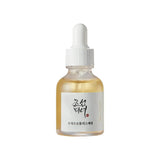
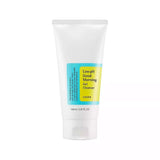


No, most micellar waters do not require rinsing unless the bottle states otherwise. However, the real question you should be asking yourself is not that: it's whether a micellar water alone is enough to clean your skin properly. The answer changes depending on your skin type, your routine, and the product you use.
Micellar water is often presented as an all-in-one makeup remover that doesn't need to be rinsed off. This is true for the majority of formulas on the market. What brands mention less often is that the surfactants that trap makeup and impurities remain on the skin if you don't rinse. This isn't dangerous for all skin types, but it's not entirely inconsequential either. Here is what you really need to know before using it.
Do you want to switch to a complete Korean cleansing routine? A cleansing oil as the first step and a water-based cleanser as the second: this is the basis of the K-Beauty double cleanse, which is more effective than micellar water alone. (see cleansing oils and Korean cleansers)
The short answer about rinsing 💧
No, a classic micellar water does not need to be rinsed off with water. That is precisely what distinguishes it from other makeup removers. Its formula is based on micelles, tiny spheres composed of amphiphilic molecules (a hydrophilic head that attracts water, and a lipophilic tail that attracts oils). These micelles encapsulate makeup and impurities, which you then remove with a cotton pad, without rinsing.
The majority of micellar waters sold in pharmacies and supermarkets follow this principle. Notable exception: some formulas with high makeup-removing power, especially those designed for waterproof makeup, expressly indicate rinsing on the packaging. Always read the instructions.
But is leaving surfactants on the skin really risk-free? 🔬

This is where the nuance is important. The surfactants present in micellar water are generally mild (polysorbate 20, cocamidopropyl betaine), but their accumulation on the skin without rinsing can, for some individuals, unbalance the hydrolipidic film or irritate reactive skin.
A 2018 study published in the Journal of Cosmetic Dermatology compared the effect of mild surfactants on the skin barrier depending on whether they were rinsed or not. The result: on skin with an already weakened barrier function, not rinsing increased markers of mild irritation after repeated use.
Concretely, if you have sensitive skin that is prone to redness or rosacea, rinsing with clear water after using micellar water is not a bad idea. If your skin is normal to combination and you don't wear heavy makeup, not rinsing works very well for daily use.
Cases where you should rinse, even if the brand doesn't say so 🚿
Three situations justify rinsing after micellar water, even if the product doesn't state it:
- You have applied long-wear foundation or waterproof mascara. Classic micellar water does not completely dissolve water-resistant formulas. Residues of silicones and pigments remain on the skin. Rinse, or better yet, add a cleansing oil before the micellar water.
- You are preparing your skin to receive active ingredients (retinol, vitamin C, AHAs). Leaving surfactant residues can alter the skin's pH and therefore reduce the effectiveness of these actives. A quick rinse or a splash of lukewarm water restores the pH to its optimal value (slightly acidic, around 5.5).
- You feel tingling, tightness, or get small breakouts after application. This is a signal that your skin does not tolerate residual surfactants well. Rinsing will often solve the problem without having to change products.
Korean micellar water: a different approach to cleansing 🌿
Korean skincare does not consider micellar water to be a complete cleansing step. It is a gentle makeup remover, often used as the first step of the Korean double cleanse: first an oil or balm to dissolve makeup and SPF, then a gentle water-based cleanser to deeply purify the skin.
In this logic, the question "do you have to rinse off micellar water" loses its relevance: micellar water is replaced by cleansing oil, and the cleansing gel that follows constitutes the rinse. This method is more complete because it better respects the skin microbiome and does not accumulate surfactants. According to INCI Beauty data, popular Korean cleansing oils like those from Banila Co or Anua contain emulsifiers that turn into a milk upon contact with water, thus eliminating the need for a separate micellar product.
To learn more about the difference between Korean and Western cleansing approaches, check out our full review of COSRX, whose cleanser is often used as the second step of the double cleanse.
The most frequent mistakes with micellar water ⚠️
Specialist advice: Rubbing the cotton pad on the skin instead of patting. This is mistake number one: rubbing creates friction that irritates and can, over time, weaken the skin barrier. The correct technique is to hold the soaked cotton pad on the area for a few seconds, then slide it without friction to remove the residue.
Four other recurring errors:
- Using micellar water as your only cleanser at the end of the day. It removes makeup, but it doesn't deep-clean. Pores accumulate pollution and sebum residues, which a cleanser formulated for that purpose removes much better.
- Thinking that a "fragrance-free" micellar water is necessarily gentler. Fragrance is not the only potential irritant. Certain preservatives (methylisothiazolinone) or more aggressive surfactants pose more problems than fragrance for reactive skin.
- Applying toner or serum immediately after without rinsing when skin is sensitive. On weakened skin, micellar residues and serum actives can conflict. It is better to rinse or wait 2 to 3 minutes.
- Storing micellar water in the bathroom. Humidity and temperature fluctuations accelerate the degradation of surfactants. A cupboard away from light extends the product's shelf life.
What dermatologists say about micellar water 🩺
Dermatologists have a fairly clear consensus: micellar water is an excellent gentle makeup remover, particularly suited to sensitive skin and for people who wish to avoid rinsing when on the go. But it is not a cleanser in the dermatological sense of the term.
Dr. Delphine Kerob, a dermatologist specializing in cosmetology, emphasizes that micellar water is often recommended for dry and atopic skin precisely because repeated rinsing with tap water (which is often hard) can aggravate dehydration. In this specific case, not rinsing is an advantage.
Conversely, for acne-prone or oily skin, not rinsing leaves residues that can promote clogged pores. Rinsing or, even better, using a specific cleanser for oily skin remains preferable.
Micellar water before or after cleansing gel? 🤔
Micellar water should be placed before the cleansing gel, never after. Its logic is to remove makeup and superficial impurities first. The cleansing gel is formulated to deeply purify the skin, clean the pores, and prepare the skin to receive subsequent treatments.
Using micellar water after a cleansing gel makes no sense: the skin is already clean, and you are redepositing surfactants for no reason. If you use a gentle cleansing gel in the morning, micellar water is not even necessary: save it for the evening to remove makeup.
If your evening routine already includes a Korean double cleanse, micellar water can replace the cleansing oil on days without makeup or SPF. On days with heavy makeup or sunscreen, oil remains more effective. To explore this approach, see our guide on Korean routines for smooth skin.
To summarize the key takeaways 💡
Micellar water does not need to be rinsed off in most cases, and that is intentional. But if you have sensitive or reactive skin, rinsing with clear water after application remains a legitimate precaution. And if you are looking for a truly complete cleanse at night, a single micellar water is not enough: it removes makeup, it does not deep-clean.
The three points to remember:
- No rinsing necessary for normal to combination skin with light makeup.
- Rinsing recommended for sensitive or acne-prone skin, or if you apply active ingredients afterward.
- In a Korean routine, micellar water is part of a double cleanse, which makes the question of rinsing less central.
The next natural step is to structure your cleansing. Our guide on facial double cleansing explains how to combine oil and water-based cleansers. You can also explore Korean cleansing oils directly or take the skin diagnostic if you don't know where to start yet.

