
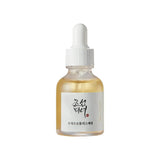
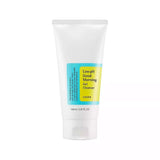


Rejuvenating your face without surgery or injections is possible, provided you understand what's really happening in your skin. Skin aging follows three precise mechanisms: collagen loss (approximately 1% per year after age 25), decreased cellular renewal, and alteration of the hydrolipidic barrier. The good news: proven active ingredients act directly on these three levers, without needles.
This guide details what truly works for rejuvenated skin, mistakes to avoid, and the routine to adopt according to your profile.
Do you want a routine tailored to your mature skin? Korean anti-aging formulas are designed for visible results in 4 to 8 weeks. (see mature skin routine)
Why does skin age faster on the face? 🔬
The face is the area most exposed to external aggressions: UV, pollution, thermal variations, repeated expressions. As a result, it shows signs of aging earlier than the rest of the body.
The 4 main causes of a face that ages:
- Loss of firmness: the degradation of elastin and collagen causes sagging of the oval and hollows out the cheeks.
- Expression lines: forehead, crow's feet, nasolabial fold, formed by accumulated daily micro-contractions.
- Loss of volume: cheekbones flatten, temples hollow, eyes look tired.
- Dull complexion: cellular renewal slows down (from 28 days to 45-60 days after 40), dead cells accumulate and dim radiance.
The good news: these four mechanisms can be addressed by topical active ingredients, provided they are used regularly and in the correct order.
Active ingredients that really rejuvenate the skin, without surgery ✨

Not all anti-aging active ingredients are created equal. Here are those whose effectiveness is documented by clinical studies, in order of impact.
Retinol (and its gentle derivatives)
The most studied active ingredient in anti-aging dermatology. Retinol stimulates collagen production, accelerates cell renewal, and reduces surface wrinkles in 12 to 24 weeks of regular use. K-Beauty has popularized encapsulated forms (retinal, retinyl ascorbate) that deliver the same results with less irritation, making them suitable for sensitive skin.
Common mistake: starting with too high a concentration. Starting at 0.025-0.05% in the evening, twice a week, avoids irritations that lead to discontinuing the treatment.
Niacinamide
Vitamin B3 acts on several fronts simultaneously: it reduces pigment spots, tightens the appearance of pores, strengthens the skin barrier, and improves radiance. A study published in the Journal of Cosmetic Dermatology (2004) showed a significant reduction in fine lines and spots after 12 weeks at 5%. It is the most versatile active ingredient in an anti-aging routine.
Hyaluronic acid
It attracts up to 1,000 times its weight in water, filling dehydration wrinkles and adding volume to the skin. It does not replace injections for deep volume loss, but for superficial wrinkles and overall plumpness, the effect is visible in a few days. Multi-molecular weight (combining high and low molecular weight sodium hyaluronate) is the most effective topical format.
Peptides
Collagen peptides (Matrixyl, Argireline) signal the skin to produce more collagen. Their action is gentler than retinol but complementary, especially during pregnancy or breastfeeding where retinol is contraindicated.
PDRN (salmon DNA extract)
This is the fastest-rising Korean trend for 2025-2026. PDRN stimulates cell regeneration and improves skin tonicity. Initially used in injectable aesthetic medicine, it is now available in topical formulas, and the first results at 8 weeks are promising for firmness.
Specialist's advice: Many people layer too many anti-aging active ingredients at once. Retinol + AHA + vitamin C on the same night is the best way to irritate your skin and abandon your routine. Choose one key active ingredient per time of day (vitamin C in the morning, retinol in the evening) and stick to it for 8 weeks before evaluating the results.
How to look 10 years younger without surgery? The 5-step routine 🌿
Looking 10 years younger without surgery relies on a daily routine that simultaneously addresses firmness, hydration, and radiance. Regularity takes precedence over complexity: a simple routine maintained for 8 weeks is better than an elaborate protocol abandoned after 10 days.
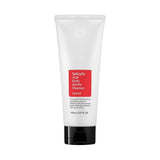
- Double cleansing in the evening: cleansing oil to dissolve SPF and makeup, followed by a gel or foaming cleanser. Single cleansing leaves residues that accelerate skin aging.
- Hydrating toner or essence: prepares the skin to better absorb subsequent active ingredients. Korean essence based on ferments or centella stimulates cell renewal.
- Active serum (morning or evening): stabilized vitamin C (sodium ascorbate or tetrahexyldecyl ascorbate) in the morning for radiance and antioxidant protection; retinol or peptides in the evening for regeneration.
- Occlusive moisturizing cream: locks in active ingredients and hydration. Look for formulas with ceramides, shea butter, or rice extract to support the barrier.
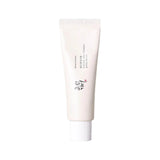
- SPF 50 in the morning, without exception: UV rays are responsible for 80% of visible skin aging (photoaging). No anti-aging active ingredient can compensate for the absence of daily sun protection.
In practice, rejuvenated skin after this protocol shows its first results on radiance and hydration at 2-4 weeks, on fine lines at 6-8 weeks, and on firmness starting from 12 weeks with foundational active ingredients like retinol or peptides.
The 5 mistakes that make skin age faster ⚠️

Before choosing the right products, you need to avoid behaviors that nullify their effects.
- Skipping SPF on cloudy days: UVA rays (responsible for deep aging) pass through clouds and windows. Indoors, near a window, the skin is exposed.
- Changing routines every month: cell renewal takes 28 to 60 days. Judging an anti-aging active ingredient before 8 weeks provides no reliable information.
- Neglecting the neck and décolleté: these areas age faster than the face because they are often forgotten when applying active ingredients.
- Over-exfoliating: AHAs, scrubs, peels used too frequently destroy the skin barrier and generate chronic inflammation that accelerates aging.
- Using retinol without occlusion: retinol dries out if applied alone. The "sandwich" technique (moisturize, apply retinol, moisturize again) reduces irritation by 40 to 60% according to dermatologists.
How do Korean women naturally rejuvenate their skin? The different approach 🇰🇷

K-Beauty approaches rejuvenation with a radically different philosophy from Western cosmetics: prevention rather than correction, skin barrier first, light layers rather than heavy formulas.
Where a typical French anti-aging cream concentrates 3 or 4 active ingredients in a single formula, the Korean routine stacks light layers where each product has a precise role. This layering allows addressing several issues simultaneously (wrinkles + spots + firmness) without overloading the skin.
Some Korean specificities that make a difference:
- SPF as a beauty treatment: In Korea, sunscreen is the number one anti-aging product, applied from age 20 as a daily reflex. Korean formulas (gel texture, invisible finish, no white residue) have made this reflex much easier to maintain.
- Fermented essences: galactomyces ferment filtrate, present in many Korean skincare products, improves radiance and tightens pores. Studies have shown significant improvement in texture and luminosity after 4 weeks.
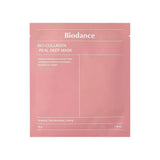
- Weekly sheet mask: rejuvenated skin is deeply hydrated skin. Korean sheet masks, used once or twice a week, provide a hydration boost that temporarily smooths surface wrinkles and improves the absorption of subsequent treatments.
To discover Korean brands specializing in anti-aging skincare like Medicube and its regenerative active ingredients, you will find a detailed selection.
Which product to choose according to your skin profile? 🎯
Rejuvenating your face doesn't work the same way depending on whether your skin is dry, combination, sensitive, or truly mature. Here are the priorities by profile:
| Skin Profile | Dominant Problem | Priority Active Ingredient | To Avoid |
|---|---|---|---|
| Dry / dehydrated | Dehydration wrinkles, dull complexion | Multi-molecular weight hyaluronic acid + ceramides | Retinol without occlusion |
| Combination / oily | Enlarged pores, nascent wrinkles | Niacinamide 5-10% + low-dose retinol | Overly occlusive formulas |
| Sensitive / reactive | Redness, loss of radiance | Peptides + centella asiatica | High-concentration retinol, AHA |
| Mature (45+) | Sagging, spots, deep wrinkles | Retinol + PDRN + vitamin C | Overly simplistic routine |
If you are unsure of your skin type or the routine to adopt, the Holy Skin skin diagnostic can identify the active ingredients and products suitable for your situation in a few minutes.
What to remember to naturally rejuvenate your face 💡
Naturally rejuvenating your face first means understanding that lasting results come from regularity, not the quantity of products. Three key points to remember:
- Daily SPF first: without sun protection, no anti-aging active ingredient can deliver on its promises in the long term. This is the non-negotiable foundation.
- One key active ingredient per time of day: vitamin C in the morning (antioxidant + radiance), retinol or peptides in the evening (regeneration). Simplicity is more effective than layering active ingredients.
- Maintain for at least 8 weeks before evaluating. Cell renewal takes time, and serious anti-aging active ingredients only show their effects after several cycles.
To start with a routine already designed for mature skin, discover the Holy Skin mature skin routine, built around the most effective Korean active ingredients for firmness and radiance. And if you want a selection truly adapted to your profile, start with the free skin diagnostic.

