
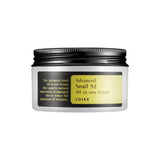
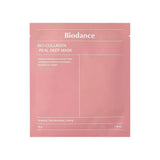
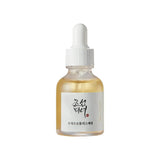
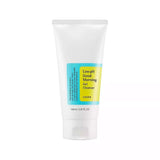


Eye cream is applied after cleansing and toner, before your moisturizer, morning and evening. This order maximizes the absorption of active ingredients on this thin and less sebaceous area. If you already use a serum, it goes after the serum.
This is a question many people ask too late: they've been using their eye cream for weeks, but in the wrong order or at the wrong time. As a result, the active ingredients don't penetrate properly, and the effects remain disappointing. In this article, we clarify exactly when to apply your eye cream, at what age to start, and the mistakes that sabotage results.
Looking for a Korean eye cream? K-Beauty formulas use targeted active ingredients (caffeine, collagen, encapsulated retinol) at effective concentrations, without heavy textures. (see Korean eye cream selection)
In what order should you apply eye cream in your routine? 🔢
The basic rule in Korean skincare is to go from lightest to thickest. Eye cream follows this logic, with an important nuance: it goes before moisturizer, regardless of its texture.
Here's the complete order:
- Cleanser
- Toner / essence
- Serum or ampoule (if you use one)
- Eye cream
- Moisturizer
- SPF (morning only)
Why eye cream before moisturizer? Eye care products have a more fluid texture than face creams. If you apply face cream first, its occlusive effect (it forms a protective film on the surface) blocks the penetration of the eye cream's active ingredients. By reversing the order, the active ingredients of the eye cream reach the superficial layers of the epidermis without obstruction.
Expert tip: Many people apply their eye cream after moisturizer because it's the last jar they grab. This is the most common mistake. The order of skincare products is not an arbitrary convention: it directly determines what your skin actually absorbs.
Eye cream morning or evening: do you have to choose? ☀️🌙

Both. The eye contour area is the least protected part of the face: the skin there is up to 5 times thinner than elsewhere, and sebaceous glands are almost absent. It therefore continuously loses water, both morning and evening.
In the morning, eye cream has two roles: to reduce signs of the night (puffiness, dark circles, tired eyes) and to create a hydrated base before SPF. Formulas with caffeine are particularly suitable for the morning: they activate microcirculation and quickly reduce swelling by draining excess fluid accumulated overnight.
In the evening, the priority is regeneration. At night, cells actively renew, and the skin is more permeable to active ingredients. This is the ideal time for firming formulas, peptides, encapsulated retinol, or anti-wrinkle active ingredients. An eye cream rich in collagen or hyaluronic acid in the evening supports this regeneration in an area that ages faster than the rest of the face.
If you only use one eye cream for morning and evening, it's perfectly viable. If you want to optimize, two different formulas yield better long-term results.
Eye cream before or after serum? 💧
Serum goes before eye cream in most cases. The logic is the same: serum is more fluid, more concentrated in active ingredients, and needs to penetrate without barriers.
There's one exception: if your serum is specifically formulated for the eye contour (caffeine eye serum, lifting serum for eyelids), it can replace eye cream or be placed before it, depending on its texture. In this case, apply the most fluid serum first.
The question "eye cream before or after serum" also comes up in the context of vitamin C or retinol treatments. If your face serum contains these active ingredients, avoid letting it spread to the eye area: the skin there is too thin to tolerate them at the same concentrations. Apply the serum leaving a one-centimeter margin around the orbital bone, then apply your eye cream separately to this area.
At what age should you start using an eye cream? 🎂
The short answer: from your twenties, as a preventive measure. The long answer: as soon as you notice signs of dehydration or fatigue in this area, regardless of your age.
Collagen synthesis begins to decline from age 25, at a rate of about 1% per year. The first dehydration fine lines around the eyes often appear between 20 and 28, long before deep wrinkles. They are not caused by chronological aging, but by a lack of hydration in a naturally unprotected area.
Light formulas in gel or hydrating emulsion are suitable from your twenties. Richer formulas with peptides, retinol, or firming active ingredients become relevant from age 30, or earlier if signs of sagging appear.
For dark circles and puffiness, there is no minimum age: these are problems that can occur at any age, with very different causes (genetics, lack of sleep, allergies, water retention). A caffeine eye cream works on vascular dark circles (bluish) and watery puffiness; a brightening eye cream targets pigmented dark circles (brown or golden).
How to apply eye cream correctly? 🖐️
Application technique is as important as the product itself. The periorbital area is delicate: repeated pulling weakens elastic fibers and accelerates sagging.
Here's the correct method:
- Take a pea-sized amount of product for both eyes.
- Pat (never rub) with your ring finger, following the orbital bone from the outside inwards, under the eye.
- Continue patting lightly on the upper eyelid towards the temple.
- Do not pull up or down. Patting motions are sufficient for the product to penetrate.
The ring finger is recommended because it is the weakest finger on the hand: the pressure exerted is naturally gentler. Some Korean formulas come with a metal rollerball applicator that cools the area and improves the draining effect, especially in the morning for puffiness.
Expert tip: Applying eye cream directly under the lashes or too close to the edge of the eyelids is a common mistake. The product migrates into the eye overnight or due to body heat, which can cause irritation or milia (small white cysts). Stay 3-4 millimeters away from the lash line.
Mistakes that negate the effect of your eye cream 🚫

Even with the right product and the right order, certain habits sabotage results:
- Too much product: an excess formula doesn't penetrate better; it stays on the surface and can migrate into the eye or clog pores in the area.
- Rubbing during application: friction damages fragile capillaries and worsens vascular dark circles in the long term.
- Changing products too often: anti-wrinkle and firming active ingredients (peptides, retinol) need 6 to 12 weeks of consistent use to show visible results. Changing before this period skews the evaluation.
- Ignoring SPF: UV rays accelerate collagen degradation in this area faster than elsewhere. A face SPF that covers the eye area (or a specific mineral SPF for the contour) is essential in the morning.
- Using face cream on the eye contour: face creams are formulated for thicker, more resilient skin. Using them on the eye area can cause irritation or milia if the formula is too rich or comedogenic.
What to remember 📋
Three essential points for effective eye cream use:
- Order matters: cleanser, toner, serum, eye cream, moisturizer, SPF. Always before face cream.
- Morning and evening, with formulas adapted to each time if possible: caffeine in the morning for drainage, peptides or regenerating active ingredients in the evening.
- Patting technique protects delicate tissues and improves penetration: never rub, always use your ring finger.
If you're not sure which formula matches your profile (pigmented dark circles, watery puffiness, sagging, first wrinkles), the free skin diagnostic will guide you towards active ingredients adapted to your specific concerns. And to discover the Korean eye creams selected by Holy Skin, all available products are on the Korean eye cream collection.

