


Clogged pores are one of the most common skincare complaints. And yet, most of our habitual reactions to them end up worsening the problem rather than solving it. Here is what you really need to know to take effective action without damaging your skin.
A clogged pore forms when a mixture of sebum, dead skin cells, and residue (makeup, pollution) accumulates in the hair follicle. Depending on the degree of oxidation, this results in a blackhead, a whitehead, or irregular skin texture. It is not just an issue for oily skin: combination, dry, and even sensitive skin types can be affected.
In this guide, you will understand why pores truly get clogged, which areas are the most exposed, which active ingredients work, and how to build an appropriate routine without falling into common traps.
Looking directly for treatments for clogged pores and blackheads? The Holy Skin selection features the most effective Korean formulas for this concern, containing targeted active ingredients like BHA and niacinamide. (see pore and blackhead treatments)
Why do your pores really get clogged? 🔍
Pore obstruction is never due to just one factor. It is the result of an imbalance between three elements: sebum production, the rate of cellular turnover, and the condition of the skin barrier.
When sebum is produced in excess, it mixes with dead skin cells that have not been shed quickly enough. This mixture forms a plug in the follicle. If this plug remains in contact with air, it oxidizes and turns dark: this is a blackhead (open comedone). If it stays beneath the skin's surface, it forms a closed comedone (a whitehead or micro-imperfection).
The main triggers are as follows:
- Sebum production stimulated by hormonal fluctuations (menstrual cycle, stress, adolescence)
- Slowed cellular turnover, which increases with age
- Insufficient or overly aggressive cleansing, which disrupts the hydrolipidic film and stimulates even more sebum production in response
- The use of comedogenic textures (certain occlusive fatty substances, thick makeup)
- Pollution and fine particles that become embedded in the pores
- A weakened skin barrier that reacts by overproducing sebum to compensate
Specialist tip: Many try to dry out their skin to stop sebum. This is counterproductive. Dehydrated skin compensates by producing even more lipids, which worsens the clogging. The right approach is to hydrate with lightweight textures while chemically exfoliating.
Clogged pores by zone: nose, cheeks, forehead 📍

The location of clogged pores provides useful information about their origin. It is no coincidence that certain areas concentrate more imperfections.
The nose is the most frequently cited area. The pores there are naturally larger, the density of sebaceous glands is higher, and exposure to external aggressors is at its peak. Blackheads on the nose are often sebaceous filaments rather than true comedones; they tend to return even after cleansing, which is completely normal.
The cheeks are more often affected in combination skin types and in people who use textures that are too rich on an area that does not need them. Clogged pores on the cheeks are frequently linked to residues from occlusive products or incomplete makeup removal.
The forehead reacts strongly to hormonal fluctuations and sweat. This is an area where closed comedones (subcutaneous whiteheads) are frequent, especially around the hairline if comedogenic hair products come into contact with the skin.
| Zone | Dominant type of clogged pore | Main cause |
|---|---|---|
| Nose | Blackheads, sebaceous filaments | High sebaceous density, oxidation |
| Cheeks | Diffuse clogged pores, irregular texture | Overly occlusive products, insufficient cleansing |
| Forehead | Closed comedones, whiteheads | Hormones, sweat, hair products |
| Chin | Inflammatory imperfections | Hormonal cycle, stress |
How to identify if your pores are truly clogged 👁️
The difference between a clogged pore, an enlarged pore, and a sebaceous filament is worth clarifying, as the appropriate actions differ.
A clogged pore contains a solid plug of sebum and dead skin cells. It forms a slight elevation on the skin's surface (whitehead) or a dark spot (blackhead). To the touch, the skin has a grainy or bumpy texture.
An enlarged pore is a pore that has lost its elasticity, often due to age, collagen loss, or chronic excess sebum. It is visible but not necessarily clogged.
A sebaceous filament (very common on the nose) is a thread of natural sebum that fills the follicle canal. It is not pathological; it returns systematically even after extraction and should not be treated as a comedone.
If you press lightly on an area and see small white or yellowish filaments coming out, it is likely a sebaceous filament. If you see a firm elevation with a well-defined dark or white point, it is a clogged pore that needs treating.
Active ingredients that truly unclog pores 🧪
Not all "pore treatments" are created equal. The following active ingredients have documented efficacy, provided they are used correctly.
Salicylic acid (BHA, 0.5 to 2%) is the gold-standard active for clogged pores. It is oil-soluble, meaning it penetrates inside the pore to directly dissolve the sebum plug, where AHAs cannot reach. A study published in the Journal of the American Academy of Dermatology confirms its efficacy on comedones at concentrations between 1 and 2%.
Niacinamide (5 to 10%) regulates sebum production by acting on the sebaceous glands and improves skin texture by strengthening the skin barrier. It does not directly unclog, but it reduces future sebum accumulation.
AHAs (glycolic acid, lactic acid) exfoliate the skin's surface and accelerate cellular turnover. They do not penetrate into the pore but remove the dead cells that contribute to obstruction.
Retinoids (retinol, retinal) normalize keratinization, which is the process by which skin cells renew and shed. They prevent the formation of new comedones in the long term. Results are visible after 8 to 12 weeks of regular use.
Zinc limits bacterial proliferation in the pores, which reduces the risk of inflammation and acne.
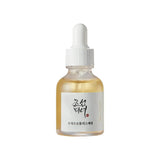
Within the K-Beauty range, the Korean serum ampoule from SKIN1004 (Madagascar Centella Poremizing Fresh Ampoule) combines zinc and Centella Asiatica to regulate sebum without damaging the skin barrier.
Mistakes that worsen clogged pores ❌

Most instinctive reactions to clogged pores are counterproductive. Here are the most frequent ones:
- Picking or manual extraction: this can push the obstruction deeper and trigger an inflammatory reaction that leaves a mark more difficult to treat than the initial comedone.
- Using an overly harsh cleanser: a cleanser that "strips" the skin or leaves a feeling of tightness after rinsing weakens the barrier. The skin compensates by secreting more sebum.
- Over-using mechanical scrubs: abrasive physical scrubs can micro-irritate the skin without dissolving the plug inside the pore. Use a maximum of twice a week, and only if your skin tolerates it.
- Neglecting hydration: even for oily or clogged-pore-prone skin, appropriate hydration is essential. Dehydrated skin produces more sebum to compensate.
- Layering too many actives: using BHA + retinoids + AHAs all at once on skin that isn't accustomed to them causes irritation that damages the skin barrier and worsens pores in the medium term.
K-Beauty routine for clogged pores: concrete steps 🌿
Korean skincare approaches clogged pores with a logic of gentle progression rather than occasional aggression. Here is a suitable routine framework.
Morning
- Gentle cleanser (gel or foam, without harsh sulfates): cleanses without disrupting the skin's pH.
- Hydrating toner: prepares the skin to better absorb the following active ingredients.
- Niacinamide serum (5-10%): regulates sebum, visually tightens pores.
- Lightweight, non-comedogenic cream.
- SPF 50: essential, as some active ingredients (BHA, AHA, retinol) make the skin photosensitive. Choose a non-comedogenic texture.
Evening
- Double cleanse: cleansing oil to remove SPF and makeup, followed by a gentle cleanser.
- Exfoliating toner or essence (BHA 1-2%): maximum 2 to 3 times a week at the start of the routine.
- Targeted serum (niacinamide, zinc, centella).
- Lightweight moisturizer.
For those new to active ingredients, it is best to start with niacinamide every evening for 4 weeks before introducing BHA. This progression reduces the risk of irritation.
If you aren't yet sure what your skin type is, the free skin diagnostic from Holy Skin allows you to identify your routine in 2 minutes.
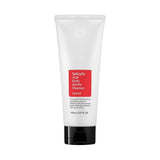
For further reading on K-Beauty active ingredients and the brands that formulate them, our article on COSRX skincare details the brand's most popular acne-fighting and pore-focused formulas.
3 key takeaways 📌
Clogged pores result from an imbalance between sebum, cellular turnover, and the condition of the skin barrier, not from a lack of hygiene. Aggressive actions (stripping, manual extraction, excessive scrubbing) worsen the problem by stimulating more sebum production and weakening the skin.
Effective active ingredients include: salicylic acid (BHA) to dissolve the sebum plug inside the pore, niacinamide to regulate production and strengthen the barrier, and retinoids to prevent the formation of new comedones over the long term.
The K-Beauty routine for this issue prioritizes gentle progression: hydration first, introducing actives one by one, and consistent SPF use. Results are visible within 4 to 12 weeks, depending on the active ingredients used.
To explore Korean skincare specifically formulated for clogged pores and blackheads: see the pore and blackhead selection.

