


Let's be honest: we've all had that moment in front of the mirror where we think, "OK... I put on a good cream, I drank water, I slept (more or less)... so why didn't my skin get the memo?" Well, sometimes the breakthrough doesn't come from yet another miracle product, but from something much simpler and more sustainable: what you put on your plate.
Now, I'm not going to sell you the "eat a carrot and voila, baby-soft skin" fantasy. Skin is a living organ, influenced by hormones, stress, sleep, sun, genetics… the whole shebang . But the good news is: certain fruits and vegetables provide nutrients that actually support radiance, hydration, the skin barrier, and even resistance to oxidative stress. And that's been documented.
And let's be smart: even with the best diet in the world, a consistent skincare routine is still the icing on the cake. That's exactly the idea behind Holy Skin : ready-to-use K-beauty routines tailored to your skin type, and if you don't know which one you are (which happens to a lot of people), you can take a free 2-minute skin analysis .
Why your plate can change your skin (without magic) 🥗

Your skin is a bit like a "window" to what's happening inside: it's constantly renewing itself, producing lipids to protect itself, fighting oxidation (pollution, UV rays, stress, etc.), and it needs building blocks to maintain its structure. These building blocks come partly from nutrients: vitamins, carotenoids, polyphenols, minerals, and so on.
A very concrete example: vitamin C. Without it, collagen synthesis and strength do not occur properly, and it also helps to neutralize oxidizing substances.
Another key point: skin doesn't like roller coasters. If you want a more even complexion, a more stable barrier, and less "angry skin," you need consistency : regular intake, not a 3-day sprint. This applies to diet... and to skincare.
So the goal here is simple: to give you a smart list (not just “eat fruit”), understand the “why”, then show you how to combine that with a K-beauty routine that does the job , without stressing you out.
The best fruits that give a real glow boost 🍊
Let's get down to brass tacks: which fruits are truly beneficial for your skin? The most interesting fruits are often those that combine vitamin C, antioxidants, and protective compounds. And yes, citrus fruits are classics, but they're not the only ones on the podium.
A helpful reminder: fruits and vegetables are an excellent natural way to get vitamin C, especially citrus fruits, but also peppers and tomatoes.
- Citrus fruits (orange, grapefruit, lemon) : vitamin C = collagen support + antioxidant action.
- Kiwi : very rich in vitamin C (perfect if you want a change from citrus fruits).
- Strawberry : vitamin C + polyphenols, handy when you want a "treat" snack that also benefits your skin.
- Papaya : vitamins + enzymes (often appreciated when you want a clearer and brighter complexion).
- Pomegranate : polyphenols (ellagitannins, anthocyanins) often studied for their antioxidant potential.
What I love about this list is its simplicity : no need to find a rare fruit costing €18 apiece. And if you're thinking, "OK, but I mostly have dark spots/a dull complexion," keep in mind that diet supports overall radiance, but the winning combination is diet + targeted active ingredients (vitamin C, niacinamide, TXA, SPF...).
Moreover, if your main objective is radiance and uniformity, you can also explore adapted routines based on skin type and let yourself be guided by the free diagnosis : this prevents you from making a basket “at random” (and your wallet will thank you).
Champion vegetables: skin barrier, imperfections, radiance 🥕
Vegetables are often the point at which people sigh (“yeah, well, I know…”). But honestly? They're packed with carotenoids, vitamin C, fiber, and protective compounds. And we're talking about things that can help skin better cope with daily life.
- Red bell pepper : very interesting for boosting vitamin C intake (and it goes everywhere: salad, wok, sauce).
- Broccoli, cabbage, cauliflower : good micronutrient intake + vitamin C.
- Carrots and sweet potatoes : rich in carotenoids (precursors of vitamin A), often associated with a healthy glow.
- Tomato (and tomato paste) : lycopene, a carotenoid studied for its ability to modulate the skin's response to UV over time (not an "edible SPF", mind you).
- Spinach : antioxidants + micronutrients, great as a daily base (smoothie, quick stir-fry).
Important: When we talk about carotenoids (beta-carotene, lycopene, etc.), we're talking about an effect that develops over time. There are scientific documents that discuss the "internal" photoprotection after several weeks of intake.
What are the best fruits and vegetables for your skin, according to YOUR goal? 🎯
Okay, we have a great list… but what exactly do you want? Because “dull skin,” “pimples,” “redness,” and “fine lines” are all different. So let’s keep it simple: you choose your skin concern, and then pick the right allies.
And if you're thinking, "I'm not really sure, I use a bit of everything depending on the week…", that's precisely where a skin analysis can help clarify your skin type (and therefore your routine). You can take the free Holy Skin skin analysis and then browse the product collection .
1) Dull complexion, lack of radiance?
Focus on vitamin C and polyphenols : citrus fruits, kiwi, strawberries, pomegranate, red bell pepper, broccoli. Vitamin C supports collagen and protection against oxidation.
When it comes to skincare, think "intelligent glow": antioxidants + hydration + SPF. (Yes, it's that again. The sun is an artist... but it loves to leave its mark.)
2) Imperfections, pores, oily skin?
Aim for consistency: vegetables rich in micronutrients (like cabbage), less sugary fruits, and above all… a gentle and stable routine. K-beauty emphasizes balance and a strong barrier, especially for blemish-prone skin.
If you want a ready-made base, you can take a look at the Acne Skin Routine : it's designed to avoid stripping and work gradually.
3) Redness, reactive skin, fragile barrier?
The idea here is to support the skin barrier and overall soothing. Omega-3s are often discussed for their role in inflammation and the barrier (even if it's a bit outside the realm of "fruits and vegetables," it still counts in the "calm skin" approach).
When it comes to vegetables, keep it simple: spinach, broccoli, sweet potato, and antioxidant-rich fruits. As for your routine, focus on soothing products like Centella, hydration, and SPF, without using 12 different active ingredients at once (that's risky).
The easy method: “1 rainbow a day” 🌈
Want a hack that works without counting milligrams? Keep it simple: aim for a rainbow . Each color represents a family of compounds (carotenoids, polyphenols, etc.) which, together, provide a more complete intake. No need to be perfect, just consistent.
The goal isn't to put pressure on you, but to create a daily routine that supports your skin. And if you miss a day? Well… you just pick it up again the next day. Consistency always wins.
- Red : tomato, strawberry, pomegranate
- Orange/yellow : carrot, sweet potato, citrus fruits
- Green : broccoli, spinach, kale
- Violet : blueberries, red cabbage
- White : cauliflower, onion (yes, that counts)
And while we're on the subject: no, it doesn't replace sunscreen. Even though some carotenoids have been studied for long-term internal photoprotective effects, it remains a support, not a shield.
So if you want to play the "clear skin team": you combine diet + skincare + SPF. And there you have a solid trio.
The winning combo: a plate of food + a Korean meal plan (without breaking the bank) 🧴

We've reached the point where many people make the classic mistake: eating better... then buying 10 random products. The result? Overloaded skin, a blown budget, and you don't even know what works. Whereas an effective Korean skincare routine is based on simple pillars: cleanse, treat, moisturize, protect. (The basics, but done right.)
At Holy Skin , the idea is precisely to simplify your life: you do your diagnosis, you identify your skin type, and you start with a ready-to-use routine adapted to you.
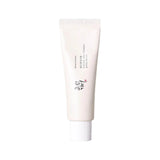
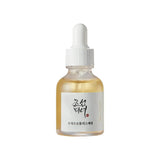
A concrete example: if your skin reacts badly to the sun and you want to prevent dark spots, daily SPF is essential. For this, you can look at a bestseller likeBeauty of Joseon – Relief Sun SPF50+ PA++++ (highly praised for its comfort).
And if you like the idea of "food-inspired ingredients," you can also explore Korean brands that work with extracts like rice, ginseng, etc. For example, the Beauty of Joseon collection fits into this traditional + modern vibe.
FAQ: Your (very) frequently asked questions about fruits, vegetables and skin ❓
How long does it take to see an effect on the skin?
Generally, we talk in terms of weeks, not days. Skin renews itself gradually, so you have to allow time for regularity to do its work.
The right approach? You set yourself a 4 to 8 week consistency (diet + simple routine + SPF), and you observe.
Does eating tomatoes "protect" you from the sun?
Let's say that some studies are looking at the phytonutrients in tomatoes (including lycopene) and how they can modulate the skin's response to UV radiation over the long term.
But (big BUT): it never replaces topical sun protection. Think of it as a "basic" support, not an edible SPF.
Should I take supplements (vitamin C, beta-carotene, etc.)?
Often, diet is enough. Fruits and vegetables are a natural and reliable way to get vitamin C.
And caution with high-dose supplements, especially beta-carotene in smokers/ex-smokers: reviews report an increased risk of lung cancer in this context.
If I have acne, which fruits and vegetables should I eat?
The most important thing is consistency and overall balance. Vegetables (cruciferous and leafy greens) are easy allies, and fruits rich in vitamin C can support general skin health. And above all: a routine that respects the skin barrier and doesn't irritate it is often a better approach than harsh, stripping products.
What if I don't know my skin type?
The easiest way: take the free Holy Skin skin diagnostic . Then, look at the ready-made routines and proceed step by step.
In conclusion, your skin doesn't need perfection, but a plan ✨
If you had to remember just one idea? Your skin doesn't "react" to a single fruit, it responds to a habit . A rainbow of fruits and vegetables, regular intake of vitamin C and antioxidants, a cautious approach with supplements, and a consistent skincare routine: that's the real combination.
And if you want to avoid headaches, do it in “guided” mode: the Holy Skin diagnosis gives you a clear direction, then you choose a suitable Korean routine (simple, effective, without overloading).

