


Brown spots on the face are almost always benign. The vast majority appear as a result of melanin overproduction triggered by sun, hormones, or scars from old pimples. This guide explains how to identify them, what makes them worse, and which active ingredients truly help reduce them with visible results in 4 to 8 weeks.
Brown spots (also called hyperpigmentation or age spots) affect about 90% of adults over 50, but they are appearing increasingly earlier, from age 20-25, especially in women on hormonal contraception or regularly exposed to the sun without protection. The good news: they respond well to a tailored routine, provided the right active ingredients are targeted.
Looking for Korean anti-spot treatments directly? Find our selection of serums, creams, and routines formulated to even out skin tone without irritation. (view anti-spot treatments)
Brown spots on the face: what exactly are they? 🔬

A brown spot is an area of skin where melanocytes (pigment-producing cells) have produced too much melanin, the substance that colors our skin. This excess deposits in the superficial layers of the epidermis and creates a darker area, whose color ranges from light beige to dark brown depending on your skin tone and the depth of the deposit.
There are 4 main types of benign brown spots, which it is useful to distinguish because the treatment is not exactly the same:
- Sunspots (actinic lentigines): flat, well-defined, appear on the most exposed areas (cheeks, nose, temples, forehead). They accumulate with age and cumulative exposure.
- Melasma (chloasma or mask of pregnancy): large, diffuse, symmetrical patches, often on the cheeks and forehead. Triggered by hormones (pregnancy, birth control pill). Particularly sensitive to UV light.
- Post-inflammatory hyperpigmentation (PIH): brown residue left by a pimple, irritation, or wound. Very common on darker skin tones. They fade spontaneously in 3 to 12 months, faster with the right active ingredients.
- Freckles (ephelides): small, numerous, reactivated by the sun. Genetic, more difficult to remove permanently.
Understanding where your spot comes from is the first step in choosing the right treatment. A post-inflammatory spot after a pimple will respond well to niacinamide and azelaic acid. Deep melasma requires a more progressive approach with TXA (tranexamic acid) or alpha-arbutin.
Why do brown spots appear on the face? ⚠️
Four triggers account for most cases. The sun is by far the primary one: UV rays directly stimulate melanogenesis as a defense mechanism. Without daily sun protection, any anti-spot treatment loses 60 to 80% of its effectiveness because the skin continues to produce pigment faster than it is eliminated.
The most common causes:
- Cumulative sun exposure: the #1 cause. A single day without SPF can reactivate a spot that was fading for 3 months.
- Hormonal variations: pregnancy, contraceptive pill, menopause. Hormonal melasma is the most recalcitrant form because it returns as soon as UV rays reactivate it.
- Skin inflammation: every poorly treated, rubbed, or picked pimple can potentially leave a brown mark. Acne and repeated eczema are the main causes of PIH.
- Skin aging: after 40-50 years, cell renewal slows down, pigment takes longer to rise to the surface and be naturally eliminated.
- Certain photosensitizing medications: antibiotics, anti-inflammatories, certain antihypertensives. If you take them, high sun protection is non-negotiable.
An often-ignored point: oxidative stress amplifies melanin production. Antioxidants (vitamin C, green tea extract, niacinamide) therefore act twofold: they inhibit pigmentation and protect against UV damage that triggers it.
Brown spots on the face and cancer: when to really worry? 🩺
The question often comes up in searches, and it deserves a frank answer: the vast majority of brown spots are benign and have no connection to skin cancer. Melanoma, however, is generally not a uniform brown spot but follows a specific evolution that dermatologists summarize with the ABCDE rule.
Consult a dermatologist without delay if a spot shows any of these signs:
- A — Asymmetry: the two halves do not look alike
- B — Border: irregular, jagged, blurry, or poorly defined
- C — Color: several shades within the same spot (dark brown, black, red, white)
- D — Diameter: greater than 6 mm (the size of a pencil eraser)
- E — Evolution: change in size, color, or shape in a few weeks; bleeding; persistent itching
A flat brown spot, stable for months, uniform, and well-defined generally does not show these signs. If you have any doubt, a dermatological consultation is always the right decision. A dermatologist can perform dermoscopy in a few minutes to decide.
Specialist's advice: Applying an anti-spot treatment to a suspicious, undiagnosed lesion is the mistake to avoid. If you are not sure what you are treating, first ask a doctor, then start your routine.
Active ingredients that truly erase brown spots (with realistic timelines) 🧴
The market is full of promises. Here's what research validates, with effective concentrations and realistic timelines to expect.
| Active Ingredient | Mechanism | Visible Timeline | For which type of spot |
|---|---|---|---|
| Niacinamide (3-10%) | Inhibits melanin transfer to the surface | 4 to 8 weeks | Post-inflammatory spots, light sunspots |
| TXA — Tranexamic Acid (2-5%) | Blocks UV-melanocyte communication | 8 to 12 weeks | Melasma, hormonal hyperpigmentation |
| Alpha-arbutin (1-2%) | Inhibits tyrosinase (melanin enzyme) | 6 to 10 weeks | Sunspots, PIH |
| Azelaic Acid (10-20%) | Inhibits tyrosinase + anti-inflammatory | 4 to 8 weeks | Post-acne PIH, sensitive skin |
| Stabilized Vitamin C (10-20%) | Antioxidant + inhibits melanogenesis | 6 to 12 weeks | Sunspots, dull complexion, prevention |
| Glycolic Acid (5-10%) | Chemical exfoliation, accelerates renewal | 3 to 6 weeks | Superficial spots, recent PIH |
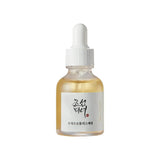
K-Beauty has popularized combinations that European formulas rarely use: TXA + niacinamide + centella asiatica, for example, targets both melanin production, its transfer, and underlying inflammation. This is the approach of the Anua niacinamide 10% + TXA 4% serum, one of the most prescribed in Korea for acne-prone skin with residual spots.
SPF is not an anti-spot active ingredient per se, but it conditions the effectiveness of all others. Without a minimum SPF 30 every morning, the active ingredients above work against melanin production that UV rays constantly restart.
How to build an effective anti-spot routine? 🌿

An anti-spot routine isn't improvised by layering 6 active ingredients. The most common mistake is to stack similar active ingredients (two tyrosinase inhibitors, for example) hoping to double the results, when this overloads the skin and can cause irritation that creates... new post-inflammatory spots.
The working structure:
- Gentle cleanser: avoid overly detergent formulas that weaken the barrier. Irritated skin produces more melanin.
- Hydrating toner: prepares the skin to absorb active ingredients. Hydration increases serum penetration by 30 to 40%.
- Anti-spot serum (morning and evening): the key step. Choose ONE main active ingredient based on your profile (TXA for hormonal melasma, niacinamide for post-acne PIH, vitamin C for dull complexion).
- Barrier moisturizing cream: maintains water in cells and reduces residual inflammation.
- SPF 30-50 in the morning: mandatory. Without this step, the rest is largely useless.
Korean anti-spot serums have a formulation advantage: they often combine the main active ingredient with centella asiatica or panthenol to calm inflammation while treating. As a result, sensitive skin tolerates the treatment better than with some European formulas that are more concentrated but less buffered.
Regarding timing: give your routine at least 8 weeks before evaluating. Melanin takes time to migrate to the surface and be eliminated. If you see no change at 8 weeks, it's time to re-evaluate the active ingredient or concentration, not to add an extra product.
Mistakes that worsen brown spots instead of erasing them ❌
As useful as good practices, avoiding bad habits saves several weeks on the result.
- Forgetting SPF some days: even on cloudy days, UVA rays penetrate windows and stimulate melanogenesis. A single weekend without protection can reset 3 weeks of treatment.
- Picking or rubbing pimples: the main cause of new post-inflammatory spots. Mechanical inflammation triggers melanin production as surely as UV rays.
- Using pure lemon on the skin: lemon is photosensitizing. Applied in the morning, it can worsen existing spots and create chemical burns with sun exposure.
- Changing products every 3 weeks: anti-pigmentation active ingredients need 4 to 12 weeks to show results. Stopping before means never letting the treatment work.
- Layering irritating acids with retinol: chemical peel + retinol + AHA in the same evening routine can lead to severe irritation that... creates post-inflammatory spots.
Specialist's advice: The trend of grandmother's remedies (baking soda, lemon juice, apple cider vinegar) is a classic trap. These ingredients can temporarily lighten the surface, but their aggressive pH or photosensitizing effect often worsens the situation within a few days. 5% niacinamide is gentler, better tolerated, and clinically validated: prefer the proven active ingredient over the intuitive remedy.
Brown spots: when to consult a dermatologist? 🏥
Cosmetics work well on superficial, mild to moderate spots. Certain situations warrant a dermatological consultation before starting a routine:
- Spot that has changed shape, size, or color in less than 3 months
- Spot that bleeds, persistently itches, or has an irregular surface (crusty, raised)
- Deep melasma (does not respond to cosmetics alone): the dermatologist may prescribe hydroquinone, tretinoin, or refer to a medical peel
- Very old and resistant spots: Q-switched laser or IPL treatment provides results on spots that topical treatments cannot diminish
The cost of a dermatologist consultation for brown spots is reimbursed by the Social Security (sector 1: €30, 70% reimbursed). A dermatologist can also quickly rule out a suspicious lesion and allow you to start your routine with peace of mind.
To go further: if you are not sure about your skin type or the profile of your spots, our free skin diagnostic gives you a personalized routine in 2 minutes. To directly discover Korean skincare formulated against hyperpigmentation, the selection is here: Korean anti-spot treatments.

