


Retinol is the best-documented anti-aging active ingredient in dermatology. Derived from vitamin A, it stimulates collagen production, accelerates cell renewal, and fades dark spots. If you're wondering if it's really worth adding to your routine, the answer is yes, provided you choose the right concentration and format for your skin.
In this article, you will find the benefits of retinol supported by clinical studies, the mistakes that cause irritation, and why Korean formulas with bakuchiol are a game-changer for beginners.
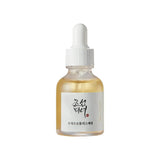
Looking for a Korean retinol serum right away? Some By Mi offers 0.1% formulas combined with bakuchiol, dermatologically tested and designed for reactive skin. (see the Some By Mi range)
What exactly is retinol, and why is everyone talking about it? 🔬
Retinol belongs to the retinoid family, which are vitamin A derivatives. Discovered in 1931 in mackerel liver oil, it is now synthesized in labs and used in concentrations ranging from 0.025% to 0.3% in leave-on cosmetics.
After application, retinol undergoes two enzymatic conversions to become retinoic acid, its active form. It is this retinoic acid that interacts with RAR (retinoic acid receptor) and RXR (retinoid X receptor) receptors in skin cells, triggering a cascade of signals that regulate the expression of certain genes involved in cell renewal.
In practical terms: it speeds up the life cycle of your skin cells, stimulates the synthesis of collagen and elastin, and clears out pores. It is this triple mechanism that makes it such a versatile active ingredient.
Specialist tip: Many people start with a concentration that is too high to "see results faster." This is the most common trap. A 0.3% retinol on unaccustomed skin generates redness, flaking, and often results in abandoning the ingredient after two weeks. Starting at 0.025% or 0.05%, twice a week, and then increasing gradually over 8 to 12 weeks helps avoid the rebound effect and achieve lasting results.
Benefit 1: retinol really does reduce wrinkles, and studies prove it 📊

Skin aging results from dual pressure: internal biological factors (drop in collagen, elastin, and hyaluronic acid) and external aggressors (UV, pollution, tobacco). Retinol acts on both fronts.
The most cited study on the subject was conducted by Majmudar and his team in 2015. 41 women aged 35 to 55 applied a 0.1% retinol serum for 12 weeks. The results measured by confocal microscopy were as follows: an average increase of 46.28% in epidermal thickness, a 63.74% reduction in cheek wrinkles, and a 38.74% reduction in eye contour wrinkles.
The mechanism is twofold. First, retinol stimulates fibroblasts to produce more type I collagen and elastin, which redensifies the dermis. Second, its antioxidant properties neutralize free radicals—unstable molecules generated by oxidative stress that degrade structural proteins and accelerate aging.
The realistic timeframe to observe a visible improvement in wrinkles is 8 to 12 weeks of regular use. The effects on texture (skin grain, smoothness) generally appear sooner, around the 4th week.
Benefit 2: acne, blackheads, and blemishes—does it really work? 🎯
Retinol is an ally for acne-prone skin, but not for the reasons often thought. It is not an antibacterial. Its action occurs through the regulation of keratinocyte differentiation: by accelerating epidermal cell renewal, it prevents dead cells from accumulating and clogging pores.
The concrete result: fewer closed comedones (whiteheads), fewer blackheads, and skin whose pores remain cleaner over time. Retinol does not cause epidermal peeling like a chemical exfoliant; it simply accelerates the natural renewal cycle.
A study by Natakankitkul and his team (2009) compared the efficacy of a 0.2% retinol formulation, a vitamin C derivative (5% sodium ascorbyl phosphate), and a combination of both on 45 participants suffering from acne over 8 weeks. The most significant reductions in the number of acne lesions were observed in the group that received the retinol + vitamin C combination.
Note: prescription retinoids (adapalene, tretinoin) are significantly more powerful for severe inflammatory acne. Cosmetic retinol is relevant for mild to moderate acne-prone skin, or as maintenance after dermatological treatment.
Benefit 3: dark spots and uneven skin tone—retinol as a skin-tone evener 🌟
Hyperpigmentation results from a localized overproduction of melanin. It can be caused by UV exposure, post-acne inflammatory processes (red or brown marks that persist after a pimple), or skin aging. Retinoids act on this mechanism via two pathways.
First pathway: the acceleration of cell renewal allows for faster elimination of melanin-loaded cells in the stratum corneum. Second, retinoids inhibit the expression of tyrosinase, the key enzyme in melanogenesis, as well as TRP-1 and TRP-2 proteins.
A study by Erkiert-Polguj and his team (2020) evaluated 0.3% and 0.5% retinol formulations on 37 volunteers showing signs of photoaging over 12 weeks. A significant decrease in hyperpigmentation was measured for both concentrations, with comparable results between 0.3% and 0.5%, suggesting that concentration is not the limiting factor beyond a certain threshold.
For recent post-acne marks, combining retinol with niacinamide (5 to 10%) boosts the evening effect. This is precisely the angle of Korean formulas, which often combine several active ingredients at moderate concentrations rather than a single active at a high dose.
If you want to know more about Korean ingredients that pair well with retinol, the article on the COSRX range discusses anti-blemish actives that complement this type of routine in detail.
Why Korean retinol formulas are different from classic formulas 🇰🇷
Korean skincare has approached retinol with a different philosophy than Western cosmetics: rather than maximum concentrations for quick results, it favors progressive concentrations combined with soothing agents to minimize irritation.
The retinol + bakuchiol combination is the best example of this approach. Bakuchiol is a functional retinoid of plant origin (extracted from Psoralea corylifolia seeds) that activates the same receptors as retinol without the irritating effects. A study published in the British Journal of Dermatology demonstrated that 0.5% bakuchiol is comparable to 0.5% retinol for reducing wrinkles and hyperpigmentation, with significantly less flaking and stinging.
The Some By Mi Retinol Intense Reactivating Serum illustrates this positioning: 0.1% retinol combined with bakuchiol (1,000 ppm), non-comedogenic formula, dermatologically tested. It is the ideal entry-level retinol for skin that has never used this active, or for sensitive skin that has had bad experiences with classic Western formulas.
The most common mistakes with retinol (and how to avoid them) ⚠️
The retinol purge, chronic irritation, and persistent redness are not inevitable. In most cases, they are linked to identifiable usage errors.
Error 1: using it every night from the start. The recommended protocol is 2 times a week for the first 4 weeks, then 3 times the following week, and then gradually every night. The skin's liver (the skin barrier) needs time to adapt so it doesn't react to the acceleration of cell renewal.
Error 2: skipping moisturizer after application. Retinol increases transepidermal water loss (TEWL) in the first few weeks. Applying a rich moisturizer after the retinol serum does not decrease its efficacy but significantly reduces discomfort and the risk of irritation.
Error 3: using it morning and night. Retinol degrades in light and sensitizes the skin to UV. It is used exclusively at night, followed by SPF the next morning without exception.
Error 4: layering it with strong acids the same night. Combining retinol and AHAs or BHAs in the evening doubles the irritation potential without doubling the benefits. These exfoliating actives should be used on alternating nights.
To build a complete routine incorporating retinol, the page dedicated to the secrets of smooth Korean skin gives an overview of the order of actives and winning combinations.
Retinol and sensitive skin: concentration, timing, alternatives 🌿
Sensitive skin can use retinol, but with an adapted protocol and the right formula choices.
The starting concentration recommended for sensitive skin is 0.025% to 0.05%, once a week for the first two weeks. European Regulation (EC) No 1223/2009 limits the concentration of retinol in leave-on cosmetic products to 0.3%, which already corresponds to an effective dose for most skin types.
The "sandwich" technique is particularly well-suited to sensitive skin: apply a light layer of moisturizer, then the retinol, then a second layer of moisturizer. This buffer method slows penetration and reduces the risk of reaction without compromising long-term efficacy.
For highly reactive skin, using bakuchiol alone (0.5%) for 8 to 12 weeks constitutes an excellent "pre-adaptation" period before introducing retinol. Clinical data show comparable improvements for the most sensitive skins that struggle to tolerate the synthetic molecule.
The use of retinol is contraindicated during pregnancy and breastfeeding, regardless of the format or concentration.
What to remember about the benefits of retinol 💡
Retinol remains the best-documented anti-aging active in cosmetics: its effects on collagen, blemishes, and pigment spots are proven by reproducible clinical studies. The key is in progressiveness, not concentration.
Korean formulas, especially those combining retinol and bakuchiol, offer a gentler and better-tolerated entry point than classic high-concentration formulas. For skin that has never used retinol, it is the smartest starting point.
Three points to remember before starting: start at a low concentration (0.025 to 0.05%), use it only at night, and always apply SPF in the morning. It is not the active ingredient itself that irritates, it is using it without these three precautions.
To find the retinol serum suited to your skin type, the Some By Mi range offers progressive formulas designed for Korean skin, meaning tested on reactive profiles. (see Some By Mi retinol products) If you are not yet sure of your skin type, the free Holy Skin diagnostic will give you a personalized recommendation.

