
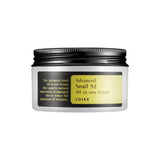
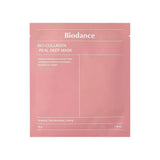
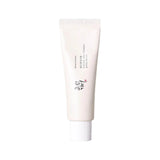
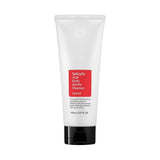
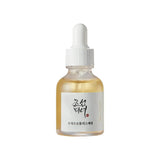
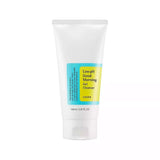


Do you see the picture? On one side, the Korean routine that promises the "glass skin" effect and makes you want to layer everything like a mille-feuille. On the other, the more minimalist Japanese routine that whispers: "Calm down, keep it simple, be consistent." And you, caught in the middle, are wondering: Korean or Japanese beauty routine , which one actually works… for your skin?
Good news: there's no "best country" when it comes to skincare. What matters is a logic, a method, and a few basic rules (spoiler alert: sun protection is non-negotiable). We'll walk you through it, with clear guidelines, concrete steps, and everything you need to build a routine that delivers results without breaking the bank or getting discouraged.
Why are you doubting (and it's normal) 😅

If you type "K-Beauty routine" or "J-Beauty routine", you quickly stumble upon endless lists. Your brain goes: "Okay... so I need an oil, a gel, a toner, an essence, two serums, an ampoule, a cream, a sleeping mask, SPF, and maybe a little moonlit healing chant?" Honestly, it can be dizzying.
And then there's the real trap: believing that multiplying steps equals better results. In reality, an effective routine relies primarily on order , regularity , and products suited to your skin type . Dermatologists remind us: a solid foundation is cleansing, moisturizing, and protecting. The rest is a "smart bonus," not a requirement.
Philosophy: K-Beauty vs J-Beauty (for real) 🌸
From Korea (K-Beauty) : we love the idea of "lightweight layers," gradual hydration, and luxurious textures. The approach is often very focused on "skin barrier," comfort, radiance, and targeted correction (blemishes, spots, redness, etc.). You can adapt it endlessly, like a wardrobe: you add a piece when you need it, you remove it when your skin says enough.
From Japan (J-Beauty) : the focus is on simplicity, consistency, and gentle techniques. Fewer products, but a calm discipline. The idea is: "Do less, do it well, do it for a long time." In practice, this often translates to a shorter routine, heavily focused on thorough cleansing, hydration, and protection. And yes: this is sometimes what helps easily irritated skin remain stable.
The common factor that changes everything: the order of the steps 🧴
Whether you're team Korea or team Japan, there's a simple rule: go from lightest to richest . And in the morning, finish with sunscreen. This order helps the products do their job better, rather than "slipping" onto an overly occlusive layer applied too early.
When it comes to sunscreen, it's not just "at the end," but also "in sufficient quantity" and "reapplied frequently." The American Academy of Dermatology specifically recommends reapplication approximately every two hours outdoors, and after swimming or sweating. Yes, it's a pain. Yes, it makes a difference.
Korean or Japanese beauty routine: how to choose according to your skin type? 🤔
If you want to choose one, ask yourself these questions:
- Does your skin feel tight easily? If so, a short and ultra-gentle routine is best (often a strong point of J-Beauty), then add a maximum of 1 active ingredient at a time.
- Do you have imperfections, clogged pores, blackheads? A well-constructed K-Beauty routine, with effective cleansing + targeted treatment, can be great (without necessarily piling on 10 steps).
- Do you want "glow" and bouncy hydration? Light layers (toner/essence/serum) K-Beauty style are often perfect… if your skin tolerates them.
- Do you give up easily when things get complicated? Then choose the simplest version possible (you know, the one you'll actually do in 2 months).
And if you don't know your skin type? No need to play guessing games in front of the mirror at 11 pm. Holy Skin offers a free skin diagnosis : you answer a few questions, and you leave with a clear (and above all, consistent) recommendation.
The "core" routine (morning): simple, effective, universal ☀️
In the morning, the goal is not to strip away the skin. It's to awaken the skin, remove excess sebum/sweat, and then prepare it for the day.
Morning steps (short version that works):
- Gentle cleanser (or rinse with water if your skin is very dry and you tolerate it better that way).
- Targeted serum (if needed: radiance, spots, imperfections... just one, and observe).
- Moisturizing cream (light or rich depending on your skin).
- SPF sunscreen (the real star).
At Holy Skin, if you want to maintain a clean and cost-effective routine, you can build a solid foundation with: a gentle cleanser + a serum + a cream + SPF, then adjust as needed. And if you want to save time, you can check out our ready-made routines for each skin type.
The "clean" routine (evening): where everything happens 🌙
In the evening, you want to remove pollution, sebum, makeup, and especially sunscreen. That's where the famous double cleansing can make sense… when you need it.
Double cleansing is simple: oil/balm first, then a water-based cleanser . The idea? To dissolve oil (SPF, makeup, sebum) and then finish with a clean cleanse. This method is widely described as "oil then water cleanser" in explanations from beauty brands and media outlets aimed at the general public.
Evening steps (adaptable):
- Cleansing oil (if SPF/makeup/very oily skin).
- Gentle cleanser .
- Hydration (toner/essence if you like, otherwise straight to serum/cream).
- Targeted treatment (1 active ingredient at a time: gentle exfoliant, retinol, anti-blemish… depending on tolerance).
- Cream (and possibly a night mask 1–2 times/week).
K-Beauty: the “intelligent layering” version

If you want the Korean look without going overboard, think "thin layers" + "specific goal." For example: is your skin dehydrated and tight, but you get shiny easily? You can use a light essence + a gel cream, instead of a single, heavy cream that suffocates your skin.
The secret is to maintain a consistent approach: soothe + hydrate + target . And if you're prone to breakouts, don't confuse "more products" with "fewer spots." Sometimes, skipping two steps and calming the skin barrier is exactly what's needed (yes, it's frustrating… and yes, it's often true).
Looking for a ready-made approach? On Holy Skin, you can start with a pre-structured Acne-Prone or Sensitive Skin Routine , then adjust it as the weeks go by. Simple, straightforward, and you know exactly why each product is there.
J-Beauty: the "less but better" version
J-Beauty shines when you want consistency: gentle movements, few simultaneous active ingredients, a short routine that's repeatable even when you get home exhausted. Because yes: the best routine in the world is the one you create. even on Thursday night at 00:12.
In practice, you can do this: gentle cleansing → hydrating lotion/toner → cream → SPF in the morning. In the evening: makeup removal (if needed) → cleansing → moisturizing. And you add just one "treatment" product if you have a specific goal (blemishes, texture, imperfections). This avoids the risk of irritation.
Common mistakes (and how to avoid them) 🚫
Mistake #1: Changing your entire routine at once. Your skin isn't a laboratory. Introduce one product at a time, and allow 2–3 weeks (minimum) to observe the results. Otherwise, you'll never know what helps... or what makes you flare up.
Mistake #2: Skipping sunscreen "because it's cloudy." UV rays penetrate even when the sky is overcast. And if you use active ingredients (AHAs/BHAs/retinoids), protection becomes even more crucial. Reapplying sunscreen outdoors is also a key point emphasized by medical and advocacy sources.
Mistake #3: Confusing effective cleansing with squeaky-clean skin. If your skin feels tight after cleansing, it's often too harsh. And a weakened skin barrier means more redness, more sensitivity… and sometimes more blemishes (yes, the irony).
Mistake #4: layering three active ingredients "because it's faster." Spoiler alert: it mostly just leads to... irritation. A well-chosen, well-tolerated active ingredient, applied regularly, is far better.
Mini-guide: Build YOUR routine in 10 minutes 🧭
Okay, let's get down to brass tacks. Here's a super simple plan to decide, without overthinking it:
- Step 1: Choose your base (cleanser + cream + SPF).
- Step 2: Add a "pleasure/hydration" product (toner/essence) if your skin likes it.
- Step 3: Add a single targeted treatment (a serum) for your main objective.
- Step 4: Observe. Adjust. And only then, consider a "bonus".
If you want to speed things up (and avoid the wrong choices), take the free Holy Skin diagnostic : you'll save time and build a consistent routine from the start. And if you prefer a "turnkey" approach, our skin type-specific routines are perfect for that.
FAQ: Korean or Japanese beauty routine? 💬
What is the best skincare routine for sensitive skin?
Often, a more minimalist and very gentle approach is more comfortable at the beginning: few steps, few active ingredients, lots of consistency. It's more like a J-Beauty approach… but you can absolutely do a "light" K-Beauty routine if you choose soothing products and limit new ones.
The key point is tolerance: if your skin stings, feels hot, tight, or reddens, that's a warning sign. Go back to a simple routine (gentle cleanser + moisturizer + SPF in the morning) and then reintroduce targeted treatments, one at a time.
Do we need to go through 10 steps to get results?
No. An effective routine can consist of 3–4 steps. The basics recommended by dermatologists revolve around cleansing, moisturizing, protecting, and then adding treatment if needed.
Long routines are especially useful if you enjoy the ritual and your skin tolerates layering well. But if it discourages you, you lose the number one advantage: consistency.
Is double cleaning mandatory?
Is it necessary? No. Is it useful? Sometimes yes, especially if you're wearing makeup and/or heavy sunscreen, or if you have very oily skin. The "oil then water cleanser" principle is a widely documented method for effectively removing oil-based products (makeup/SPF) before gentle cleansing.
If your skin is dry or sensitive, a single gentle cleanser may be enough, or a very gentle makeup removal followed by a light cleanse. The right choice is the one that leaves your skin clean… without stripping it.
In what order should I apply moisturizer and sunscreen?
In general: moisturizer first, then sunscreen last in the morning. This is the most commonly recommended order: the cream moisturizes, the SPF protects and "seals" the surface to create a barrier against UV rays.
How do I know if I'm more into K-Beauty or J-Beauty?
If you love textures, light layers, and like to adjust your routine like a playlist according to your mood, you'll love the K-Beauty vibe. If you want a short, consistent routine without having to ask yourself 20 questions every night, the J-Beauty vibe will often suit you better.
But the real hack is to mix things up: a minimalist base + 1 or 2 Korean "touches" (a hydrating essence, a glow serum, etc.). And if you want a clear recommendation: take the free Holy Skin skin diagnostic , then go with a ready-made routine.
Wrap-up: the best choice is the one you'll hold ✨
Ultimately, the "Korea vs. Japan" debate isn't a real duel. It's more like two ways to achieve the same goal: more comfortable, more even, and more radiant skin. K-Beauty offers flexibility and fun; J-Beauty brings simplicity and consistency. And you can choose the best of both.
If you want to stop hesitating and take action, keep it simple: start with a solid base (cleanser + moisturizer + SPF) and then add just one targeted treatment. And if you'd like some guidance, Holy Skin is here: a Korean skincare shop , ready-made routines for every skin type , and a free skin analysis if you don't know where to begin. In short: less doubt, more results.

