
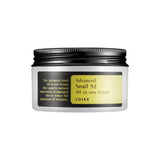
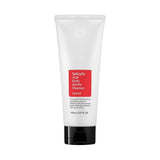


A granular scrub and an acid exfoliant both aim for the same result—smoother skin and a clearer complexion—but they never act on your skin in the same way.
The difference lies in the method. A scrub exfoliates through mechanical friction using particles, while a chemical exfoliant dissolves dead cells with acids like AHAs or BHAs, without any rubbing. The right choice mainly depends on your skin's tolerance and what you're trying to correct.
You've probably confused the two before, and that's okay; most skincare routines mix them without truly distinguishing. We're going to clarify what differentiates these two actions, how to choose based on your skin type, and how to incorporate them without irritating your skin barrier.
Looking for a Korean scrub or exfoliant directly? Gentle formulas based on acids or fine grains, adapted for every skin type. (see selection)
Scrub vs. Exfoliant: The Difference in One Sentence 🧴

A scrub removes dead cells through physical abrasion using micro-particles, whereas a chemical exfoliant dissolves them through a reaction with active ingredients like AHAs, BHAs, or PHAs, without any mechanical contact on the skin.
Both actions share the same ultimate goal: faster cell renewal and refined skin texture. It's the method of action that changes everything, and therefore, which skin types each method is suitable for or risky for.
Scrub: A Mechanical Action on Your Skin 🌾
A scrub contains micro-grains—sugar, apricot kernel powder, jojoba beads—that detach dead cells from the surface during massage. The effect is immediate; skin appears smoother from the first use.
This mechanical action also stimulates local blood circulation, which gives a temporary healthy glow. The downside is that friction can be physically aggressive for the epidermis if it's too frequent or too forceful.
Scrubs are best suited for normal to oily skin types, which can tolerate light friction without reacting. For sensitive, reactive, or already weakened skin (e.g., by acne), it's best to avoid them and opt for chemical exfoliation.
Chemical Exfoliant: AHAs, BHAs, and Company 🧪
Chemical exfoliation relies on acids that dissolve the intercellular cement holding dead cells together, without any friction. AHAs (glycolic acid, lactic acid) work on the surface and are suitable for dull skin or skin with small wrinkles. BHAs (salicylic acid) penetrate the pores and target imperfections and blackheads.
COSRX's BHA Blackhead Power Liquid perfectly illustrates this approach, formulated to deeply unclog pores without damaging the skin barrier. It's one of the most well-documented products for blemish-prone skin, in line with what we detail in our complete review of COSRX.
For sensitive skin, there's an even gentler version: LHAs, a derivative of salicylic acid with a larger molecule that penetrates more slowly. Anua's Heartleaf LHA Moisture Peeling Gel combines this gentle exfoliation with soothing heartleaf, a plant the brand uses in most of its range, as explained in our Anua review.
Specialist's tip: Never mix a high concentration AHA and BHA on the same evening if you're a beginner. The skin barrier won't have time to adapt, and the result is almost always irritation. Introduce only one active ingredient at a time, over two to three weeks, before adding a second.
Which Exfoliant to Choose Based on Your Skin Type? 🔍

The choice is not random. Oily skin tolerates a pore-targeting active better, dry skin needs a much gentler approach, and mature skin mainly seeks to stimulate cell renewal.
| Skin Type | Recommended Active | Product | Frequency |
|---|---|---|---|
| Oily or combination, blemish-prone | BHA | COSRX BHA Blackhead Power Liquid | 2 to 3 times a week |
| Dry or sensitive | LHA | Anua Heartleaf LHA Moisture Peeling Gel | Once a week |
| Dull or mature | AHA, BHA, PHA, LHA Complex | COSRX The AHA BHA PHA LHA 35 Peel | 1 to 2 times a week |
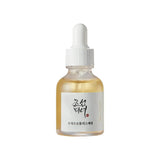
| Normal, gentle physical scrub | Fine particles | Beauty of Joseon Apricot Blossom Peeling Gel | Once a week |
For dull or mature skin, a multi-acid complex like COSRX's targets both irregular texture and radiance, by stimulating cell renewal more effectively than an isolated acid. This is a higher concentration, therefore reserved for skin already accustomed to chemical exfoliation.
Mistakes That Damage Your Skin Barrier ⚠️
The first mistake is over-exfoliation. Skin exfoliated too often becomes red, tight, and reacts to everything, even products it previously tolerated well. Warning signs include a slight burning sensation after application or abnormally shiny skin.
The second mistake is using a granular scrub on skin with active breakouts. The particles can reopen pimples and spread acne-causing bacteria to other areas of the face. In this case, a BHA is always preferable to a mechanical scrub.
The third and most common mistake is exfoliating without subsequent sun protection. Freshly exfoliated skin is more sensitive to UV rays, and without SPF the next day, the risk of pigmentation spots significantly increases.
Your Post-Exfoliation Routine, Step by Step 🧖♀️
Exfoliation temporarily weakens the skin barrier, so the subsequent routine should be repairing and hydrating, never aggressive.
- A hydrating toner, based on thermal water, heartleaf, or rice, to prepare the skin without aggressing it.
- A soothing serum or essence, to deeply boost hydration.
- A nourishing cream, to seal in hydration and calm any potential tightness.
- Sun protection the next day, without exception, especially after an AHA or BHA.
In summary, scrubs work by friction and are suitable for skin that tolerates mechanical action well, while chemical exfoliants work by dissolution and can be adapted to almost all skin types, provided the right acid is chosen. In both cases, the subsequent routine is just as important as the exfoliation itself.
If you're unsure about your skin type or which active ingredients it tolerates, the easiest way is to take the free skin diagnostic test and then explore the selection of Korean scrubs and exfoliants tailored to your profile.

