


Dull and tired skin is most often a signal of a lack of hydration, slowed cell renewal, or a weakened skin barrier. The good news is that these three mechanisms respond well to Korean active ingredients, provided you target the real cause rather than just applying a brightening serum to the wrong skin type.
In this article, we'll break down the real causes of a dull and tired complexion, the mistakes that worsen the situation, and a routine adapted to your skin type to restore radiance without unnecessarily complicating your skincare regimen.
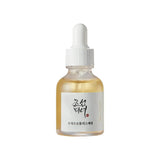
Are you looking directly for a Korean brightening serum? Selection of serums and ampoules adapted to each skin type, with documented active ingredients for dull complexions. (see Korean serums)
Dull skin: what's really happening beneath the surface? ✨
Dull skin results from the accumulation of several simultaneous imbalances. Understanding which one dominates for you completely changes your skincare strategy.
Slowed cell renewal is the most common cause. Skin naturally renews its cells in about 28 days in young skin, but this cycle can stretch to 45-60 days with age, stress, or chronic dehydration. Dead cells accumulate on the surface, creating an opaque layer that poorly diffracts light: as a result, the complexion appears grayish even on clean skin.
Dehydration of the stratum corneum plays a distinct role. When the water content of the epidermis drops below 10-15%, the skin surface becomes microscopically irregular and reflects light diffusely rather than directly. The complexion loses its luminosity without being clinically dry. This is why combination or oily skin can also appear dull.
Oxidation and oxidative stress constitute the third mechanism. Pollution, unprotected UV exposure, and chronic fatigue generate free radicals that damage membrane lipids and degrade superficial collagen. The skin takes on a yellowish or grayish tint depending on the phototype.
A study published in the Journal of Cosmetic Dermatology indicates that 72% of women aged 25 to 35 associate their dull complexion with lifestyle rather than intrinsic aging, validating the approach using active ingredients rather than heavy anti-aging treatments.
What are the real causes of dull and tired skin? 🔍

The causes fall into two categories: internal causes, on which skincare acts only indirectly, and external causes, directly addressable by your routine.
External causes addressable by routine:
- Lack of exfoliation: without regular removal of dead cells, no brightening active ingredient can penetrate effectively or act on new cells.
- Insufficient hydration routine: a dehydrated skin barrier does not reflect light evenly.
- Lack of sun protection: UV rays degrade endogenous hyaluronic acid and stimulate melanogenesis outside targeted areas, creating an uneven complexion.
- Overload of poorly sequenced products: applying niacinamide after low-pH L-ascorbic acid reduces the effectiveness of both active ingredients and can create slight redness that masks radiance.
Internal causes to consider:
- Lack of sleep: at night, the skin activates its cell regeneration and collagen synthesis. Below 6 hours, this process is truncated.
- Systemic dehydration: intracellular water nourishes the stratum corneum from within. Topical active ingredients do not compensate for insufficient oral hydration.
- Nutritional deficiencies: endogenous vitamin C is an essential cofactor for collagen synthesis. A deficiency reduces the skin's ability to defend itself against oxidation.
The K-Beauty approach assumes that dull skin is a symptom, not a permanent condition. The Korean routine does not isolate a single active ingredient but works in complementary layers to correct several mechanisms simultaneously.
The 4 mistakes that worsen a dull and tired complexion 🚫
What prolongs a dull complexion is rarely the absence of a good product. It's almost always using the wrong product at the wrong time, or ignoring a basic imbalance.
Mistake 1: exfoliating already weakened skin too often. A physical scrub twice a week on dehydrated skin increases sensitivity, alters the barrier, and paradoxically slows down cell renewal. Opt for a gentle chemical exfoliant such as a PHA (polyhydroxy acid) or a low-concentration AHA (glycolic 5-7%) once a week maximum if your skin is reactive.
Mistake 2: applying a vitamin C brightening serum to non-hydrated skin. L-ascorbic acid (pure vitamin C) is unstable and oxidizable. On dry and rough skin, it penetrates poorly and can irritate. The correct order: hydrating toner, then essence, then vitamin C serum on slightly damp skin to optimize absorption.
Expert tip: many people use their brightening serum directly after cleansing, on dry skin. This is the classic mistake. Dry skin has a contracted barrier, pores are tightened, and the active ingredient remains on the surface. First apply a hydrating toner, wait 30 seconds, and the serum will penetrate 2 to 3 times better.
Mistake 3: neglecting SPF, thinking that dullness only comes from the night. Everyday UV rays (windows, cloudy sky) silently degrade luminosity in the long term. Without daily sun protection, all brightening active ingredients from the evening routine are partially neutralized the next day.
Mistake 4: changing your routine too often. Most brightening active ingredients (niacinamide, vitamin C, exfoliating acids) require 4 to 8 weeks of regular use before results are visible. Changing products after 2 weeks because "it's not working" prevents proper evaluation of what works.
Which K-Beauty routine to restore radiance according to your skin type? 💧

K-Beauty offers a modular approach: a common base for all profiles, then adjustments depending on whether your skin is dry, combination, oily, or sensitive. Here are the essential steps.
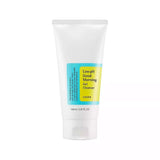
Common Step 1: gentle cleansing. A cleanser that is too aggressive (sulfates, high pH) destroys the hydrolipidic film and amplifies dehydration. Choose a cleanser with a slightly acidic pH (4.5-5.5) that respects the skin microbiome.
Common Step 2: hydrating toner. Korean toner is not an astringent alcoholic toner. It is the first layer of hydration, often formulated with hyaluronic acid or centella asiatica, which prepares the skin to absorb subsequent active ingredients. It rehydrates the stratum corneum and restores the surface film.
Common Step 3: brightening active serum. This is where the targeted work takes place. Two types of active ingredients dominate in K-Beauty for dull complexions:
- Niacinamide (vitamin B3) at 5-10%: inhibits melanin transfer to keratinocytes, reduces complexion unevenness, and strengthens the barrier. Well tolerated on all skin types.
- Stabilized vitamin C (ascorbyl glucoside, 3-hydroxypalmityl ascorbate): more stable than pure L-ascorbic acid, antioxidant, and tyrosinase inhibitor. Suitable for sensitive skin.
Adjustments according to profile:
| Skin type | Priority brightening active | Exfoliation frequency | Recommended moisturizer |
|---|---|---|---|
| Dry | Niacinamide 5% + hyaluronic acid | 1x/week max (PHA) | Rich ceramide cream |
| Combination | Niacinamide 10% + stabilized vitamin C | 1-2x/week (gentle BHA) | Light gel-cream |
| Oily | Niacinamide 10% + AHA 7% | 2x/week (AHA/BHA) | Oil-free hydrating lotion |
| Sensitive | Centella asiatica + niacinamide 4% | 1x/2 weeks (PHA) | Soothing barrier cream |
Common Step 4: SPF in the morning. Without daily sun protection, the routine loses 30 to 50% of its effectiveness on complexion unevenness. Korean formulas with hybrid mineral-chemical filters are lightweight and do not create a white cast on darker skin tones.
How long does it really take to see results on dull skin? ⏳
This is the question everyone asks when starting a new routine, and the honest answer is: longer than most brands claim.
The first visible effects vary depending on the active ingredient used:
- Immediate hydration (hyaluronic acid, centella, panthenol): 2 to 5 days. Skin appears smoother and plumper, the surface is more reflective.
- Niacinamide (melanin regulation): 4 to 8 weeks for a visible reduction in complexion unevenness. Results on redness may appear in as little as 2 weeks.
- Stabilized vitamin C (antioxidant + radiance): 6 to 12 weeks for a visible effect on the complexion. The antioxidant action is immediate but imperceptible to the eye.
- Chemical exfoliants (cell renewal): 3 to 4 weeks of regular use to feel a difference in texture and luminosity.
An 8-week period with a consistent routine is the minimum to assess whether the products are working for you. Before that, you are evaluating tolerance, not efficacy.
If your skin is deeply dehydrated and dullness has been persistent, start with 2 weeks of pure hydration focus (toner + cream, nothing else) before introducing brightening active ingredients. A restored barrier will make the active ingredients 2 to 3 times more effective.
Dull skin and tired face: what K-Beauty offers that other routines don't 🌿
The structural difference between a K-Beauty routine and a classic Western routine regarding dull skin lies in two principles.
The first: work on the barrier before active ingredients. K-Beauty systematically introduces a hydrating toner step between cleansing and active ingredients. For dull, dehydrated skin, this step is not optional: without it, brightening serums work on poorly prepared skin and penetrate unevenly.
The second: the multi-layer approach with low concentrations. Rather than a single concentrated product, K-Beauty layers several lightweight formulas that add up without irritating. An essence with 2% niacinamide + a serum with 5% + a cream with 2% provides a higher total concentration than a single 10% product, with less risk of irritation and more even penetration.
This logic is particularly relevant for routines to achieve smooth and luminous skin that describe the Korean philosophy of "glass skin": luminosity obtained through deep hydration and cell renewal, not through surface effect.
The most documented Korean ingredients for dull and tired skin also include fermented rice extract (rich in amino acids and natural enzymes), ginseng extract (antioxidant and microcirculation stimulant), and green tea EGCG (anti-inflammatory and protective against oxidative stress).
If you're directly looking for a Korean brightening serum adapted to your profile, the Korean serums and ampoules available on Holy Skin cover dry, combination, and sensitive skin types.
What to remember ✔
Dull and tired skin almost always results from the accumulation of three factors: slowed cell renewal, surface dehydration, and oxidative stress. These three mechanisms can be addressed by a targeted and correctly sequenced routine.
The two priorities before any brightening active ingredient: restore barrier hydration (systematic hydrating toner) and protect against UV rays (SPF every morning). Without these two foundations, niacinamide and vitamin C underperform.
Give your routine 8 weeks before drawing conclusions. Brightening active ingredients work on new cells, not on those already on the surface.
If you are unsure of your skin type, start with the free skin diagnostic to receive a selection adapted to your exact profile.

