

In Korea, sunscreen isn't just for vacations. It's the final step in any routine, morning after morning, no matter the weather. The result: skin that visibly ages slower and a more even complexion in the long term. It's not about genes; it's about habit.
If you're wondering why this step is non-negotiable in K-Beauty and how to adopt it without your skin hating it, this article answers everything, including how to choose the right product for your skin type.
Looking directly for a Korean sunscreen? Korean formulas are designed for daily use: ultra-light, non-greasy, no white cast. (see Korean sunscreen selection)
The Real Reason Behind the Korean Obsession with SPF 🔬
K-Beauty doesn't treat skin problems after they appear; it prevents them. And the main identifiable accelerator of skin aging is UV radiation. Dermatologists estimate that UV rays are responsible for about 80% of visible skin aging, including wrinkles, pigment spots, and loss of firmness.
UV rays are divided into two categories that behave very differently. UV-B rays cause burns (sunburns, redness), but they are largely filtered by clouds and windows. UV-A rays, however, penetrate deep into the dermis, trigger oxidative stress, degrade collagen, and cause pigment spots. They pass through clouds and glass, in cloudy weather as well as sunny weather, in winter as well as summer.
In Korea, this distinction is taught early and taken seriously. Korean cosmetic regulations (MFDS) require a double SPF + PA++++ marking on sun protection products, with SPF targeting UV-B and PA (Protection Grade of UVA) targeting UV-A. Buying a Korean sunscreen labeled PA++++ means maximum UV-A protection, not just against sunburn.
What UV Rays Do to Your Skin Daily, Even in the City 🏙️
The question isn't whether UV rays reach your skin in the city. They reach it all the time. The question is what dose and for how long you let them act without protection.
Walking 10 minutes to the office, eating on a terrace, driving with a window open, working near an exposed window: each of these situations exposes your skin to UV-A rays. None cause visible sunburn, but all contribute to cumulative exposure that, over years, shows on the skin.
This is precisely what Korean dermatologists call "silent" exposure. No pain, no immediate redness, but a gradual degradation of collagen and elastin that appears earlier than expected. Loss of elasticity begins as early as 25 if the skin is not regularly protected.
If you use active ingredients like retinol, vitamin C, AHAs, or BHAs, this reality concerns you even more directly. These ingredients increase the skin's photosensitivity, meaning that unprotected skin exposed to UV rays reacts more strongly and quickly. Applying these active ingredients without SPF in the morning is accelerating exactly what you're trying to correct.
Expert tip: Many think that a foundation with SPF 15 is enough. In reality, you never apply enough to achieve the indicated protection. The effective dose for an SPF treatment is 2 mg/cm² of skin, which corresponds to a generous hazelnut-sized amount for the face alone. Foundation is applied in a thin layer for a natural finish. These two logics are incompatible.
Why Korean Formulas Truly Make a Difference 🇰🇷
One of the reasons why daily SPF is so ingrained in Korea is that the Korean cosmetic industry has solved a problem that European sunscreens haven't fully addressed yet: daily wearing comfort.
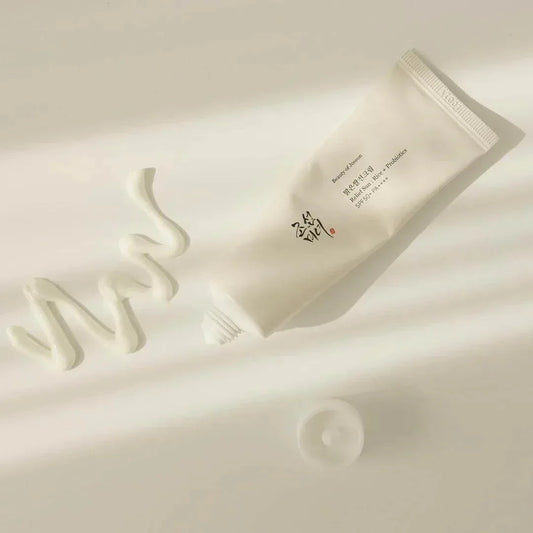
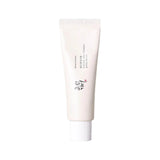
The latest Korean UV filters, especially hybrid organic-inorganic filters, offer a watery or serum texture that leaves no greasy film, no white cast, and no suffocating effect. This is structurally different from thick mineral formulas or traditional beach sunscreens. A Korean sunscreen like Beauty of Joseon's Relief Sun or SKIN1004's Sun Serum applies like a hydrating serum and disappears into the skin in seconds.
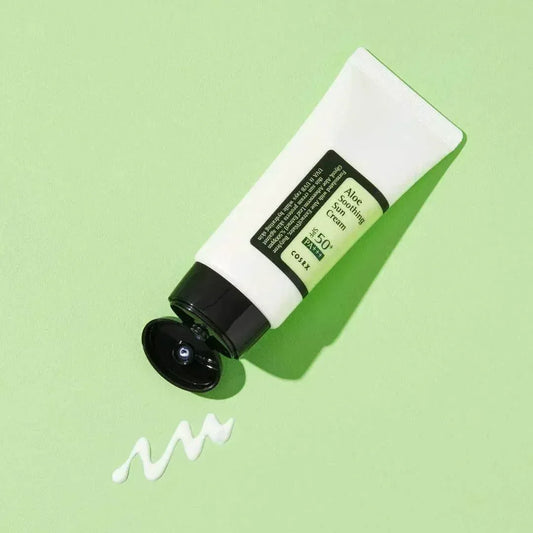
This lightness is not a compromise on protection. Korean SPF50+ PA++++ formulas ensure maximum UV-A and UV-B protection while containing hydrating, soothing, or antioxidant active ingredients integrated into the formula, such as centella asiatica, hyaluronic acid, fermented rice, and probiotics, depending on the product.
If you want to understand why Korean skin ages differently, daily sunscreen is the most direct explanation, much more so than genetics or 10-step routines. Our article on why Koreans have beautiful skin elaborates on this point in detail.
How to Integrate SPF into Your Routine Without It Becoming Burdensome ✅
The main obstacle to adopting daily SPF in France is the idea that it adds to an already long routine and that you have to manage an additional texture. K-Beauty has a pragmatic answer to this.
The golden rule of the Korean routine: SPF is always the last step, after moisturizer, before makeup if you wear any. It is not applied underneath; it is not mixed. This logic also protects the effectiveness of your active ingredients, which remain under the protective layer without UV interference.
To choose the right formula for your skin:
- Oily or combination skin: prioritize solar serums or watery textures. SKIN1004's Centella Sun Serum with centella asiatica controls sebum without drying.
- Dry or dehydrated skin: formulas enriched with fermented rice or hyaluronic acid, like Beauty of Joseon's Relief Sun, hydrate while protecting.
- Sensitive skin: mineral-hybrid filters are better tolerated. Round Lab's Birch Juice Sunscreen is formulated specifically for reactive skin.
- For touch-ups: a sunscreen stick like TOCOBO's Cotton Soft Sun Stick can be used over makeup without disturbing it.
Regarding Beauty of Joseon sunscreen in particular, our complete review with field tests details the differences between the range's formulas according to skin type.
Common Misconceptions Preventing Year-Round SPF Adoption ❌
In winter, UV rays are not dangerous. False. UV-B rays do indeed decrease in winter in temperate regions. But UV-A rays, responsible for deep aging, maintain about 95% of their intensity all year round. A minimum SPF30 is still recommended even in January.
Darker skin tones do not need SPF. Also false, and this is a particularly widespread idea that deserves to be debunked. Skin with a high phototype (IV to VI) naturally has more melanin, which offers partial protection against sunburn, but not against UV-A aging or the risk of melanoma. Dermatologists recommend SPF regardless of phototype. [STAT TO BE VERIFIED: epidemiological data melanoma phototype IV-VI in France]
SPF clogs pores. With current Korean formulas, no. Old-generation thick mineral sunscreens could pose this problem. Current serum formulas are non-comedogenic and dermatologically tested on acne-prone skin.
If I don't go out, it's useless. UV-A rays pass through windows. If you work near a window, you are exposed. The intensity is lower than outdoors, but the exposure remains real during 8 hours of telework.
Which Korean Sunscreen to Choose to Start? 🌿
If you've never incorporated SPF into your daily routine, starting with a Korean formula is the easiest way, because these textures are unlike anything you're familiar with in classic sunscreens.
| Product | Skin type | Texture | Highlight |
|---|---|---|---|
| Beauty of Joseon Relief Sun Rice SPF50+ PA++++ | Dry, sensitive, combination | Light cream | Fermented rice + probiotics, satin finish |
| SKIN1004 Centella Hyalu-Cica Water-Fit Sun Serum SPF50+ PA++++ | Oily, acne-prone, combination | Watery serum | Centella + hyaluronic acid, no residue |
| Round Lab Birch Juice Moisturizing Sunscreen SPF50+ | Combination to dry | Fluid cream | Birch sap, natural glow effect |
| TOCOBO Cotton Soft Sun Stick SPF50+ PA++++ | Combination to oily | Stick | Touch-ups over makeup, anti-sebum |
If you're not sure what your skin type is, the Holy Skin diagnosis gives you an answer in a few clicks and suggests a personalized selection, SPF included.
What It Actually Changes for Your Skin in the Long Term 📈
Adopting daily SPF doesn't produce visible results in 30 days. This is precisely what makes it a difficult habit to establish: the benefit is invisible in the short term and enormous in the long term.
What clinical studies document on skin that applies SPF50+ daily for 12 weeks: measurable reduction in the density of existing pigment spots (because melanin is no longer reactivated), stabilization of skin elasticity, and reduction in the appearance of new fine lines. [STAT TO BE VERIFIED: clinical study SPF50+ daily use 12 weeks, JAAD or British Journal of Dermatology]
What Koreans observe across a population that has been applying SPF since their teens: a visible difference in skin texture and density at 40 compared to the same phototypes without regular protection. No magic, just cumulative prevention.
SPF is the most well-documented anti-aging active ingredient that exists. Before retinol, before vitamin C, before PDRN. And it's also the cheapest to use, with Korean formulas costing between 12 and 20 euros for several months of daily use.
What to remember: Koreans don't wear sunscreen out of fear of the sun; they wear it because they understand that the skin visible at 40 is built at 25. Silent daily UV exposure – city, windows, clouds – accumulates without an alarm signal.
If you want to start with the right product for your skin, find the entire selection of Korean sunscreens tested and selected by Holy Skin. And if you're not sure about your skin type, the free diagnosis gives you a personalized answer in less than 2 minutes.