

You follow the steps, you've invested in good products, and yet your skin is acting up. Redness, breakouts, tightness. In most cases, it's not Korean skincare that's the problem, it's one of the seven mistakes below.
K-beauty is not just an aesthetic trend; it's a method built around respecting the skin barrier, adaptable to every skin type. Still, you need to avoid the missteps that sabotage results before the active ingredients even have time to work.
Looking directly for reliable Korean products for your routine? A tested selection, without unnecessary extras, adapted to every skin type. (see selection)
Not knowing your skin type, the basic step we too often skip 😬

Choosing a product because it's popular on social media, without checking if it matches your skin type, almost always yields the same result: excess sebum, dehydration, or enlarged pores. Each skin type (combination, dry, oily, acne-prone, sensitive) has specific needs that a product's popularity cannot replace.
Oily skin needs lightweight textures, often gel-based, that regulate sebum without drying it out. Dry skin, on the other hand, will react better to rich textures, based on shea butter or hyaluronic acid, which retain water in the upper layers of the epidermis. Using the opposite will worsen the imbalance you were trying to correct.
For brands and formulas adapted to each profile, our guide to the best Korean brands details the specialties of each according to their needs.
Skipping the double cleansing step 🧼
Double cleansing is the hallmark of the Korean routine, and it's not just for people who wear makeup. Cleansing oil dissolves makeup, sebum, and pollution particles accumulated throughout the day. The foaming cleanser then removes hydrophilic impurities like sweat or dust, which oil alone doesn't remove.
Skipping this step leaves residues that clog pores and prevent the active ingredients in subsequent treatments from penetrating properly. Poorly cleansed skin absorbs everything that comes after less effectively, including the most concentrated serums.
Applying too many products, too quickly 😵
The 10-step routine sounds appealing, but layering ten products without allowing each layer time to penetrate saturates the skin. The result: irritation, sticky residues, sometimes breakouts where there were none before. A well-chosen 4 to 5-step routine works better than a poorly executed long routine.
Specialist's tip: the most common mistake is not the number of products, but the speed of application. Allow each layer to absorb for 30 to 60 seconds before the next. Without this pause, textures mix on the surface instead of penetrating, and the desired effect disappears.
You can find pre-designed minimalist routines for specific needs in our Korean product buying guide.
Forgetting daily sun protection 🌞

UV rays remain the primary cause of skin aging, spots, and loss of radiance, even on cloudy days and indoors near a window. Korean routines systematically integrate an SPF50+ as the last step in the morning, never as an option.
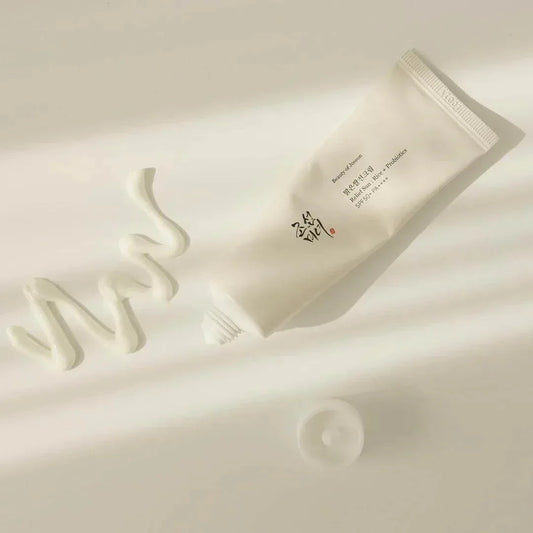
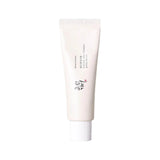
Opt for a moisturizing and light texture rather than a thick protection that leaves a white film. This is precisely the approach of Beauty of Joseon sunscreen, designed to remain invisible under makeup while providing effective protection.
Changing your routine every 3 days 🔁
A new serum spotted on social media, added to the routine, replaced three days later by another: the skin cannot keep up with this rhythm. Korean active ingredients are gentle but progressive; they need time to show results.
Allow on average 2 weeks for a visible hydrating effect, and 4 to 6 weeks for an impact on spots, fine lines, or imperfections. Changing products before this time means never allowing an active ingredient to do its job.
Neglecting exfoliation, or overdoing it 🧽
Exfoliation removes dead cells and revives radiance, but it's the most poorly balanced step. Too little, the complexion remains dull and pores get clogged. Too often, the skin barrier weakens and irritation appears. The recommended frequency is 1 to 2 times a week, with gentle enzyme or BHA exfoliants, especially for sensitive skin.
Using incompatible active ingredients ❌
Layering retinol, vitamin C, acids, and niacinamide illogically can cancel out their respective effects or sensitize the skin. Retinol combined with AHA strongly sensitizes the epidermis. Vitamin C combined with niacinamide in the same routine can reduce the effectiveness of both, depending on the formulations.
Korean skincare favors the gentle synergy of ingredients like ginseng, aloe vera, or centella asiatica, rather than the accumulation of powerful active ingredients. This is notably the approach of brands like SKIN1004, designed for routines without risk-taking.
Is Korean skincare really dangerous for the skin? 🧪
No, a cosmetic legally sold in France, regardless of its origin, complies with the European Cosmetics Regulation (EC No 1223/2009), which governs authorized concentrations and requires a complete INCI list. The real risk almost never comes from the country of manufacture, but from poor selection of active ingredients for your skin type, or from improper use, such as the errors seen above.
Some ingredients nevertheless warrant particular vigilance, regardless of their geographical origin. Glycolic acid, present in many exfoliants of all origins, has been the subject of a warning from the French National Academy of Medicine regarding a risk of acute renal failure in case of misuse on large areas of skin. Source: Académie nationale de médecine. This is not a reason to avoid all products containing it; it is a reason to respect recommended usage frequencies and avoid application on damaged skin.
Specialist's tip: the useful reflex is not to flee Korean cosmetics, but to read the INCI list before purchase as you would for any brand. The first ingredients on the list are the most concentrated. If a synthetic fragrance or an exfoliating active ingredient appears at the top of the list on a product intended for reactive skin, that is the signal to watch, not the flag of the manufacturing country.
For a routine built without risk for reactive skin, a selection designed for this profile precisely limits exposure to the active ingredients most likely to irritate; see the sensitive skin routine.
For fabric or hydrogel patches and pads, which are very common in Korean routines, the material itself (cellulose, hydrogel) is generally well tolerated. The point of vigilance is rather with the adhesive for allergy-prone skin, hence the interest of a test in the crook of the elbow 24 to 48 hours before the first application on the face, especially if you have a history of skin reaction.
Three things to remember: most problems come from a poorly constructed routine, not from an inherently dangerous product. Patience takes precedence over quantity; a short and respected routine beats a long routine that is abandoned after three days. And the safety of a product is verified on its label, not on its country of origin.
Don't know your skin type yet? Take our free skin diagnostic to identify the routine that suits you, or directly discover our selection of Korean products.