


Cold weakens the skin barrier in just a few hours: skin turns red, feels tight, and peels in patches. The good news is that Korean routines are designed precisely for this. They focus on barrier reconstruction and deep hydration, not the classic greasy occlusive products that clog pores and last only two hours.
This guide explains how to adapt your routine so your skin can get through winter without redness or discomfort, using Korean active ingredients that have proven effective on cold-exposed skin.
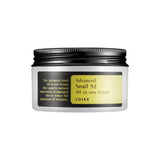
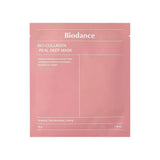
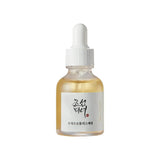
Looking for a Korean moisturizer for winter? Here's a selection tested on skin that's tight and weakened by the cold. (see Korean moisturizers)
How cold actually damages the skin ❄️
The skin barrier is a lipid layer that retains water in cells and prevents external irritants from entering. Below 10 degrees Celsius, sebum production drops, the skin's natural lipids stiffen, and the rate of water evaporation increases. Result: the barrier becomes porous in less than 48 hours of exposure.
The signs that your barrier is failing are specific: tightness within an hour of cleansing, red patches on cheeks and chin, a burning sensation with products you used to use without problems, and skin that "drinks up" cream immediately without feeling nourished.
Two factors worsen winter damage: forced-air heating (which drops indoor humidity to 20-30% vs. an ideal 50-60%) and rapid temperature changes when moving from cold outdoors to heating indoors. These repeated thermal shocks contract and dilate cutaneous blood vessels, leading to chronic redness on reactive skin.
Korean active ingredients that truly protect skin from cold 🧪

K-Beauty has developed a specific approach to cold that Western cosmetics haven't really conceptualized: rebuilding the barrier before it's damaged, not just coating it with greasy substances afterward.
Ceramide is the central active ingredient. It makes up 40 to 50% of the skin barrier's lipids, and this is precisely what gets depleted in winter. Korean formulas like those from SKIN1004 or COSRX incorporate ceramide complexes at functional concentrations (above 1% in effective formulas), whereas many Western creams list ceramides at the bottom of the INCI list as a symbolic gesture.
Panthenol (provitamin B5) attracts water to the superficial layers and accelerates the regeneration of epidermal cells. It is particularly effective on peeling skin or skin with micro-cracks due to cold. Effective concentrations: from 1%.
Beta-glucan is less known but widely used in Korean essences: it forms a protective film on the skin's surface while stimulating deep collagen production. It's a versatile active ingredient that works well for both prevention and repair.
Centella asiatica (CICA) has become the signature of Korean anti-irritation formulas. Its four active components (asiaticoside, asiatic acid, madecassic acid, madecassoside) reduce inflammation and strengthen the barrier simultaneously. A study published in the Journal of Ethnopharmacology (Kim et al., 2013) confirms its healing and anti-inflammatory properties.
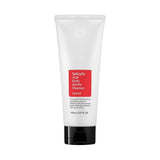
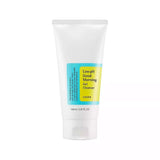
Expert tip: Many people upgrade their cream in winter but keep the same cleanser. This is a common mistake. An overly stripping foaming cleanser destroys every morning what your cream rebuilds at night. Switching to a low-foaming or oil-based Korean cleanser in winter is often more effective than changing your cream.
How to adapt your Korean routine in winter, step by step 📋
The winter routine isn't a different routine. It's the same structure as in summer, with adjusted textures and active ingredients. Here are the 4 concrete adjustments to make:
- Cleansing: switch to double cleansing in the evening (oil + low-foaming gel). In the morning, rinse with lukewarm water only if your skin is dry or combination. Hot water is an enemy of the lipid barrier.
- Layered hydration: first apply a watery essence (thick toner or ferment essence) on skin that is still slightly damp. The water on the surface boosts the absorption of subsequent active ingredients by about 40%. Then, a serum based on hyaluronic acid (high molecular weight to stay on the surface and form a film) or beta-glucan.
- Seal with a barrier cream: the ideal winter cream contains ceramides + panthenol + an emollient (shea butter or squalane). Avoid "gel" formulas in winter, even on oily skin. Watery gels don't have enough film-forming power for negative temperatures.
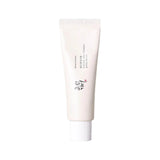
- SPF even in winter: UV rays continue to degrade collagen in winter, especially UVA rays which penetrate clouds. A Korean sunscreen with a milk or fluid texture should be applied as the last step in the morning and also protects against wind. This is the most underestimated step in the cold routine.
So, the morning routine consists of: gentle cleansing / essence / barrier cream + SPF. The evening: double cleansing / toner / repairing serum (CICA or panthenol) / richer cream.
Cold face protection: areas to prioritize 🧣

Not all areas of the face react to cold in the same way. Cheeks and around the mouth lose their lipids first because they are the most exposed and their sebum production is naturally lower. If you tend to get redness in winter, that's almost always where it starts.
For these areas, add a specific step: a Korean lip balm at night (lips have no sebaceous glands, they depend entirely on external care in winter) and a light extra layer of barrier cream on the cheekbones before going out, applied over your usual day cream.
The eye contour reacts differently: the skin there is 5 times thinner than on the rest of the face. Crow's feet deepen in winter not just because of the cold, but because of accumulated dehydration. A Korean eye cream with hyaluronic acid and retinaldehyde (a gentle form of retinol, well tolerated in winter) keeps the area hydrated and preserves elasticity.
Skin irritated by cold: what makes it worse without us realizing ⚠️
Some common habits are counterproductive in winter. Here they are, ranked by frequency:
- Exfoliating more because it's peeling: flakes in winter are often a sign of a repairing barrier, not an accumulation of dead cells. Exfoliating at this stage damages the regenerating layer. Limit to a gentle enzymatic exfoliation once a week maximum.
- Adding acids (AHA, BHA) without buffering: niacinamide and panthenol can compensate for acid irritation in winter. Do not use strong AHA without immediately sealing with a barrier cream afterwards.
- Drinking less because it's cold: cellular dehydration is the same in winter. The low humidity of heated interiors pulls water out of cells just as effectively as summer heat.
- Neglecting SPF: winter UVA still accounts for 70 to 80% of summer UVA. Collagen degradation occurs all year round.
If your face is persistently red in winter, the first reflex is to simplify: maximum 3 products (cleanser, barrier cream, SPF) for 2 weeks. The barrier reconstitutes in 2 to 4 weeks without aggressors. Then reintroduce active ingredients one by one.
Red face from cold: when it's more than just the weather 🔴
Persistent redness even indoors, visible vessels on the sides of the nose and cheeks, skin that reacts to any temperature change: these signals may indicate early couperose or rosacea, not just simple winter sensitivity. The distinction is important because the treatments are not the same.
Rosacea responds to anti-inflammatory active ingredients (5% niacinamide, centella asiatica, aloe vera) but is worsened by certain popular K-Beauty active ingredients like strong retinol, AHAs, and very warming formulas. If you notice that your Korean routine seems to aggravate redness instead of calming it, taking the free Holy Skin diagnostic can help identify which active ingredients to avoid based on your exact profile.
What to remember to protect your skin from the cold ✅
In summary: cold attacks the lipid barrier, not surface hydration. Ceramides, panthenol, and centella asiatica are the three most effective Korean active ingredients for rebuilding it. The winter routine is more about choosing the right cleanser and cream texture than adding new products.
If you're starting from scratch or want to review your winter routine, the best first step is to replace your foaming cleanser with a gentle Korean cleanser and incorporate a ceramide-based cream. Results on tightness are visible in 5 to 7 days.
If you want a personalized selection based on your skin type (dry, combination, reactive skin), the free skin diagnostic provides a complete winter-adapted routine in 2 minutes.

