


Does your skin shine by midday, even when you haven't done anything special? In the majority of cases, it's excess sebum in the T-zone, but it’s not systematic: dehydrated skin can shine in exactly the same way. The nuance changes the entire routine you should adopt. We explain what is really happening under your skin, and how to adjust your skincare without falling into the trap of over-cleansing, which worsens the problem.
Looking directly for a routine adapted to shiny skin? A selection of Korean skincare products formulated to regulate sebum without drying out the skin. (view the oily skin routine)
Why does your skin really shine? 🤔

In the majority of cases, shine comes from an excessive production of sebum by the sebaceous glands, which are concentrated on the forehead, nose, and chin (the T-zone). This sebum has a normal protective role: it forms a film that limits water loss and protects against external aggressions. The problem arises when this production exceeds the skin's actual needs.
Several factors trigger this overproduction. Hormonal fluctuations (puberty, menstrual cycle, contraception) directly stimulate the sebaceous glands via androgens. Stress acts through another mechanism: cortisol pushes the skin to produce more sebum, even in profiles that do not naturally have oily skin. Heat and humidity add a third factor, which is purely environmental.
Genetics also play a significant role: the number and size of sebaceous glands vary from one person to another, which explains why two people exposed to the same conditions won't have the same level of shine by the end of the day. This factor cannot be corrected, but it can be regulated with the right active ingredients.
Another underestimated point: the products used themselves can maintain the problem. A cream that is too rich for your skin type, or conversely, a cleanser that is too harsh, maintains an imbalance that the skin tries to correct by producing more sebum.
Which Korean active ingredients really regulate sebum? 🌿
Several active ingredients appear repeatedly in Korean formulations designed for shiny skin, each with a different mechanism.
Niacinamide, present at 2 to 5% in the majority of Korean serums, regulates sebum production while strengthening the skin barrier. It is an active ingredient compatible with almost all routines, including those with salicylic acid.
Centella Asiatica, a central ingredient in many Korean ranges for sensitive, blemish-prone skin, soothes micro-inflammation linked to excess sebum without drying. It pairs well with reactive oily skin, a common profile among people who layer exfoliating actives without giving their skin time to stabilize.
Zinc PCA has a direct sebum-regulating action and limits the bacterial proliferation associated with blemishes. It is often found alongside salicylic acid in formulas targeting both oily skin and enlarged pores.
Clay, used as a mask once or twice a week, absorbs excess surface sebum without a cumulative effect on the skin. It is an occasional step, not a replacement for your daily cleanser.
Oily skin or dehydrated skin: how can you tell? 🔍
This is the point most routines miss: skin that shines is not necessarily oily skin. Dehydrated skin, lacking water in its upper layers, reacts by secreting more sebum to compensate. The visual result is identical, but the cause is opposite, and so is the required routine.
| Observed sign | Oily skin | Dehydrated shiny skin |
|---|---|---|
| Touch sensation | Oily all day, even after cleansing | Tight for a few hours after cleansing, then gets shiny |
| Pores | Enlarged, visible to the naked eye | Little-marked or fine |
| Reaction to rich skincare | Worsens shine | Reduces shine |
| Area concerned | Mostly T-zone, sometimes cheeks | Diffused, sometimes more pronounced in the evening |
If you recognize yourself in the dehydrated column, the "clean harder" reflex will worsen the shine instead of reducing it. It's the most frequent mistake, which we address below.
Which routine to adopt based on your profile? 🧴

The foundation remains the same for both profiles: gentle cleansing, light and non-comedogenic hydration, and adapted sun protection. What changes is the dosage and the type of active ingredient.
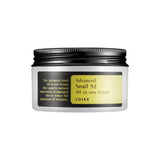
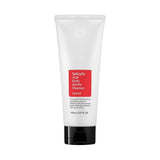
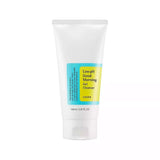
In the morning, a gentle cleanser is enough to remove the excess sebum accumulated during the night without attacking the skin barrier. For oily or acne-prone skin, an active ingredient like salicylic acid at a low concentration (0.5 to 2%) helps to deeply unclog pores. This is a cornerstone of the COSRX range, particularly adapted for blemish-prone skin.
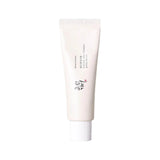
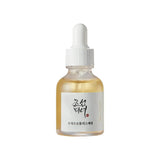
Hydration should never be skipped, even for oily skin. A gel or fluid, non-occlusive texture regulates sebum production rather than stimulating it through a rebound effect. Finish with sun protection that has a matte finish: recent Korean formulas, such as those from Beauty of Joseon, are designed not to leave a greasy film.
In the evening, makeup removal comes before everything else, even if you aren't wearing makeup: pollution and sebum accumulated during the day must be removed before applying skincare. Double cleansing, using an oil then a gel cleanser, effectively removes residue without the need for scrubbing or using an aggressive product. This is when active ingredients like niacinamide or salicylic acid are most effective, as the skin is clean and receptive.
For the profiles identified as dehydrated in the table above, replace the daily salicylic acid with use two to three times a week, and prioritize a hydrating serum with hyaluronic acid the rest of the time. The goal is not to eliminate sebum, but to find a balance where the skin no longer needs to produce excess to compensate.
What adjustments to make outside of your routine? 🌱
A cosmetic routine isn't everything. A diet rich in simple sugars and processed products causes insulin spikes that indirectly stimulate sebum production. Sleep also plays a role: chronic fatigue weakens the skin's natural regulation mechanisms.
Tobacco and excessive alcohol also play a role, though less known, they are documented: they disrupt cutaneous microcirculation and accentuate sebum production imbalances in the medium term.
Regarding makeup, prioritize a mattifying, oil-free primer before foundation, and a light loose powder on the shiny areas first rather than over the entire face. Uniformly applied powder paradoxically accentuates a flat, matte effect, which is less natural than a targeted application. A setting spray at the end of your routine extends wear on the T-zone without needing to re-powder every two hours.
Which mistakes worsen shine? ⚠️
The specialist's tip: many people clean their skin two to three times a day as soon as they see shine. It's a trap: it removes the protective hydrolipidic film, and the skin reacts by producing even more sebum to compensate. The result is shine that returns faster and stronger than before. Cleansing morning and evening is enough, regardless of skin type.
Second frequent mistake: layering exfoliating actives (salicylic acid, glycolic acid, retinol) in the same routine. Used together without spacing, they irritate the skin barrier and trigger the same rebound effect as over-cleansing. A dermatologist trained in cosmetology generally recommends spacing these actives over different days during the introductory phase (Source: dermatological consensus on chemical exfoliation, link to be added manually).
Third mistake: skipping hydration for fear of worsening the oily effect. The opposite occurs in the majority of cases, as seen above with the compensation mechanism.
Fourth mistake, more subtle: changing your routine every two weeks because the results aren't immediate. The skin needs several weeks to adapt to a sebum-regulating active. Constant changes prevent you from observing whether a product works or not, and maintain the imbalance instead of correcting it.
If your skin shines for no apparent reason and is accompanied by significant inflammatory blemishes, a dermatological consultation can help rule out a hormonal cause that requires specific treatment.
Shine is neither an inevitability nor always a sign of oily skin. Identifying your true profile, maintaining a gentle and consistent routine, and avoiding excessive cleansing or exfoliation is usually enough to achieve a matte complexion that lasts.
If you are not sure about your skin profile, the free skin diagnostic helps to precisely identify your needs before choosing a routine. You can also directly discover the oily skin routine designed to regulate sebum gently.

